Independent comparisons. We may earn from shop links. More info

Weed burner for patio and driveway

Updated: October 2026

You have block joints full of seedlings, a run of slabs, a gravel strip, or a black tarmac drive, and the listing says “patio and driveway” as if those were one material. A weed burner for patio and driveway is plausible on a concrete or clay joint and a poor idea on asphalt. The flame does not know the difference. You do, before you light it. The wands and hose kits are compared on our [gas weed burner comparison](/hub/weed-control/weed-burner-gas), from amazon.co.uk listings read on 16 October 2026. This page is only the surface. A “patio and driveway” line in the bullets is a sales claim, not a test of bitumen, resin or timber.

You have block joints full of seedlings, a run of slabs, a gravel strip, or a black tarmac drive, and the listing says “patio and driveway” as if those were one material.

Our top picks

On this page

Block joints are the job these wands are sold for

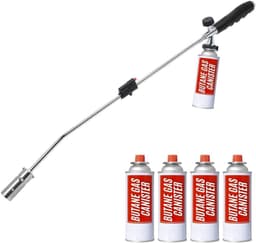
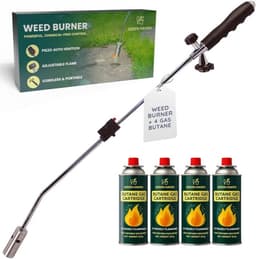
Seedlings in the sand between concrete blocks are the job UK reviews on the Onkruidbrander and Green Haven wands actually describe. A brief flame dulls a young broadleaf weed. You come back when it regrows, because the root is still in the joint. The Royal Horticultural Society, on weeds on hard surfaces, still points people to a knife, a brush and a taproot puller, and treats burners as a limited option rather than the cure. Garden Organic allows an occasional flame on young weeds, after you have checked the crack for insects. Picture a 3 m path of block paving with chickweed and a few small dandelions in the joints, on a damp morning, with a bucket of water already by the step. A wand with cans in the box, such as the Onkruidbrander at 78 cm, can reach those cracks without a cylinder on the path. You wilt the leaf and move. If the blocks are already loose, heat will not re-bed them. A whole drive that has lost its joints needs repointing, not another afternoon with a torch. How long to hold the flame, and when to stop because the garden is dry, stays on how to use a gas weed burner. This page only decides whether the surface is a candidate.

Slabs, resin and decking

Large concrete or stone slabs draw a split opinion, and this folder has not measured the mark. On a Gransnet gardening thread, some people fear that something like 20 seconds will mark slabs and still leave taproots, one person says stone and concrete cope with a quick pass, and another gave up and regrouted with a jointing compound. A quick pass on sound stone or concrete is what some users report. A long pass is how the sceptical half got its worry. We have no measurement either way. Resin-bound and composite surfaces are the clearer refusal. Corelp, writing about patio weeds, warns that a blowtorch can mark composite and resin. A flame that is brief on a concrete joint can gloss or scar them. If your patio is resin-bound, leave the torch in the box. Decking and the timber edge of a sleeper bed are a fire problem before they are a stain problem. Shropshire Fire and Rescue Service warns about flame into fences and decking. A wand aimed along a deck board is aimed at fuel. Use a knife in the gap, or accept the weed, rather than proving how close you can hover. The same caution sits beside a timber fence at the end of a concrete run.

Tarmac is a different surface

A tarmac drive is bound with bitumen. Heat softens that binder, which is why Driveway Guys tell people not to flame weeds on a tarmac driveway. You can scar the binder and still leave the weed. David Wilson Homes’ note on asphalt also says not to pull roots out: use a tarmac-safe treatment and scrape gently. Listings that say driveway, including both Green Haven pages, Gloria and HoldOneLight, do not split block paving from asphalt. If your drive is blocks, you are in the first section of this page. If it is blacktop, you are not a customer for this flame, however long the hose is. A 5 m Gloria hose makes it easier to reach the far end of a drive you should not be heating. Reach is not permission. Where blocks meet a tarmac apron, stop at the joint. Blocks have joints you can see. Tarmac is a continuous black skin. Resin looks like gravel glued flat. Guessing from the listing title is how the scar happens.

Gravel and the edge by a fence

Gravel is a more plausible flame job than a lawn edge, and it is still a fire problem if the stones hide dry leaves or sit against a fence. Garden Organic’s occasional flame is for young weeds you can see, after you have checked for insects. A thick gravel drive full of established docks will shrug off one pass and leave you holding a hot tube. The Royal Horticultural Society’s hoe or knife is the better default when the weed is rooted in soil rather than in a 10 mm joint. Keep the flame off the fence and off dry grass. Shropshire’s warning is the limit. If the weeds are only in the lawn edge, a hoe does that job without a gas can. On a long block drive, a wand at 78 cm is a stoop, which taller Onkruidbrander and Green Haven reviewers already report. A hose with a stated length, such as Gloria’s claimed 5 m, is the shape of tool people then look at, and it still needs a regulator the Gloria listing does not name. Wand versus hose, and what has to be in the box, is the gas weed burner buying guide. Which row is worth shortlisting is the best gas weed burner page.

Common questions

Will it clear weeds between block pavers?
It can wilt young weeds in the joints, which is what UK reviews on these wands describe, and the plants often return. The Royal Horticultural Society still treats a burner as a limited tool and points to a knife for roots. Use a brief pass on a damp day, with water ready, and expect a repeat. A 90-minute drive in one Onkruidbrander review, or about 7 m on one Green Haven can, is that reviewer’s note, not your schedule.
Can it damage patio slabs?
It can, if you linger. Some patio users say stone and concrete survive a quick pass. Others worry that a longer hold marks the slab and still leaves the root. This comparison has not measured that mark. Keep the flame on the weed until the leaf dulls, and stop. Resin-bound and composite are a firmer no, because those surfaces are already reported as easy to scar with a blowtorch.
Can I flame a tarmac drive?
Leave the tarmac alone. Bitumen softens with heat, which is the reason driveway advice says not to use a flame weeder on asphalt. A listing that says driveway has not carved out an exception for blacktop. Scrape gently and use a treatment meant for tarmac if you need to do something. Pulling the root out can damage the surface as well.
Is gravel a better flame job than a lawn edge?
Open gravel, with young weeds you can see and no dry litter against a fence, is closer to the hard-surface job than a soil edge in the lawn. You still check for insects and you still stop at timber. A lawn edge is a hoe or a half-moon. Flame along grass is how the fire risk moves off the paving and into the border.
Do driveway weeds come back?
Yes, often. Flame hits the top. Seeds in the joint and any root that survived will show again, which is why Garden Organic talks about repeating the pass and why the RHS does not retire the knife. If every joint on a block drive has lost its sand, repointing beats a season of cans. The burner does not refill the joint.
Is a wand or a hose better on a long drive?
A hose is the less painful reach if the drive is long, the surface is block rather than tarmac, and you already have the right cylinder fitting. Gloria claims 5 m and a 94 cm class body, and it does not name a regulator. A 78 cm wand is what taller users say makes them stoop, which on a long drive is a long stoop. Neither tool belongs on asphalt.

Related pages

Sources

Public UK sources listed below, last checked on 16 October 2026. Shelf prices and star lines are the amazon.co.uk listing figures. Temperatures and BTU figures are seller claims, not a test run for this page.

  1. Royal Berkshire Fire and Rescue Service: weed burners (retrieved 16 October 2026)
  2. Essex County Fire and Rescue Service: shed fire, 14 July 2025 (retrieved 16 October 2026)
  3. RHS: weeds on hard surfaces (retrieved 16 October 2026)
  4. Calor: storing gas bottles (retrieved 16 October 2026)
  5. Flogas: connecting a propane cylinder (retrieved 16 October 2026)
  6. Liquid Gas UK: consumer guidance sheet 39 (retrieved 16 October 2026)
  7. Liquid Gas UK: propane versus butane (retrieved 16 October 2026)
  8. Driveway Guys: do not flame tarmac (retrieved 16 October 2026)