Independent comparisons. We may earn from shop links. More info

Electric weed burner for a patio and driveway

Updated: October 2026

You are on the back patio with grass in the slab joints, and the same weeds are starting in the block paving of a short drive. An electric weed burner for a patio and driveway is a mains hot-air wand for those joints, not a butane torch and not a lawn tool. The heat is meant to rupture leaf cells so the top wilts over the following days. Established roots often return, and some surfaces should never meet the nozzle. Listings and public UK sources were checked on 16 October 2026, with no lab test of slabs. A qualifying purchase through our links can earn a commission at no extra cost to you. The [electric weed burner comparison](/hub/weed-control/weed-burner-electric) lists the corded models. The question here is which hard surfaces can take a short pass, and which you should leave alone.

You are on the back patio with grass in the slab joints, and the same weeds are starting in the block paving of a short drive.

Our top picks

On this page

Patios and block paving

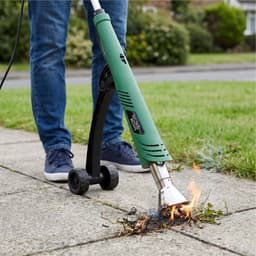
Joints in stone, brick and concrete are the use these wands are sold for. The weed sits in the sand or mortar line, so a narrow nozzle and a moving pass matter more than a dark patch on the slab. Patient Gardener notes that weeds in those joints return unless the joint is cleaned and refilled. GardenScout describes a brief moving pass on blocks, and DIY Gardening suggests a hidden corner first if you are unsure the slabs will mark. Printed highs in this set are 600°C or 650°C, with a low setting around 50°C to 80°C. Greenfields B092MP5KG4, at £22.99 with 4.1 from 162 reviews, lists 50°C and 600°C. Reviewers praise paving and drives, though loose stone is weaker and grass in the joints returns. Marksmen’s title includes the word lawn, which is not a reason to treat turf as a joint. Keep the nozzle moving on the weed. Holding it still for minutes can discolour a slab, even where the stone survives a short pass. If the hidden corner marks, stop and scrape. A whole drive is a larger job than this patio pass.

A whole drive

A short drive beside the house can work when a socket is close. Printed leads in this set are 1.8 m or 2 m, so plan an outdoor reel, fully unwound, on a 30 mA RCD. Electrical Safety First describes that RCD for outdoor tools, and a coiled reel on a 2000 W load can overheat. The Greenfields listing prints neither watts nor a cable length, so do not assume it reaches the far edge. You work joint by joint, which is why Patient Gardener finds an electric burner slow on a whole drive. A stated 2000 W tool is about 53 pence an hour at full draw on Ofgem’s rate for 1 October to 31 December 2026 in England, Scotland and Wales, not in Northern Ireland, and not where watts are unstated. If the drive is long, or the socket is far away, gas is usually more practical, though the dry-weather fire risk remains. That choice is set out on the electric versus gas weed burner page.

Surfaces to leave

Tarmac needs caution. Amtech’s reply says gaps, gravel and block paving are the intended use, and weeds through tarmac are not, because heat can soften the surface. That is seller advice, in line with GardenScout. If the drive is coated rather than jointed, leave the wand in the shed. Artificial grass is off limits, because As Good As Grass states that a burner melts the pile. Decking is wood, and Amtech says to keep off wood and plastic. On 29 August 2025, Royal Berkshire Fire and Rescue Service reported electric and gas burners starting fires in dry weather that spread to fences, sheds and a car. They advise against use in those conditions, with heat on the weed, water ready, and a cool-down before storage. If the fire leaves the joint, call 999. No listing prints an IP rating, so rain is out. Gravel is not a patio: Amtech lists it as intended, while Greenfields reviews find loose stone weaker, so it stays unsettled here. Aim only at the weed in a stone, brick or concrete joint. Growth in that joint still tends to come back.

Why the joint fills again

One Saturday does not clear a patio. Heat wilts the top over the following days, and established roots often return. The Royal Horticultural Society says perennial weeds need repeated removal of top growth. A seller claim that the root dies in one pass conflicts with that, so it is not used here. Grass returning in the joints is what the paving reviews already describe. After the leaves collapse, clean and refill the joint, as Patient Gardener advises, or the gap invites the next weed. A longer burn does not replace that refill, and it raises the chance of a mark or a fire compared with a short pass. Call a gardener if invasive roots under a path have already survived repeated heat.

Common questions

Is block paving a fair use for an electric weed burner?
Yes, when the weed is in the joint and you keep a short moving pass. Listings here name patios and drives, and Greenfields reviews mention paving as work people have done. It is a poor match for coated tarmac or for turf. Test a hidden corner first, and scrape if that patch marks.
Will a full driveway take all afternoon?
A long driveway can, because you treat each joint and printed leads are only about 1.8 m to 2 m. Patient Gardener calls electric burners slow on a whole drive and points bigger jobs to gas. A short run by the door is smaller if the reel is unwound on a 30 mA RCD. Ask an electrician if that socket is unknown.
Can an electric weed burner mark patio slabs?
It can, if a 600°C or 650°C nozzle stays in one spot. Test a hidden corner, then move along the joint. DIY Gardening suggests that test because slabs differ, and these listings have no surface-safety trial. If the corner browns, stop.
Can you use a weed burner on tarmac?
Leave tarmac alone. Amtech says heat can soften it, and weeds through the coating are not the use they describe. Jointed block paving is the closer match. If the driveway is coated, scrape the crack rather than heating a patch in the middle. This warning is seller and publisher advice, not a lab result.
What about artificial grass and decking?
Do not use the burner on either. As Good As Grass says artificial grass melts, and decking is wood that seller advice says to avoid, along with plastic. Royal Berkshire Fire and Rescue Service has seen burner fires reach fences, sheds and a car in dry weather. Keep water ready, and cool the tool before storage.
Do the weeds stay gone after one Saturday?
Usually they do not. The leaf wilts over the following days, and established roots often return. Clean and refill the joint, then use a short pass on new growth rather than a long burn. The Royal Horticultural Society’s approach is repeated removal of top growth, so one Saturday only starts the job.
Where should the nozzle never point?
Keep it off artificial grass, decking, plastic, dry fences, sheds, and dry material that can carry a flame. Keep it off tarmac if softening matters, and off the lawn. Rain is out, because no listing prints an IP rating, and gravel is not settled here. If flames leave the joint, call 999.

Related pages

Sources

Public UK sources from the research digest, last checked on 16 October 2026. Shelf prices and star lines are the amazon.co.uk figures in the display file. Printed temperatures are maker claims, not a measured nozzle temperature. The Draper manual is an example of another tool's timings and does not apply to these ASINs. The Ofgem unit rate is for England, Scotland and Wales, not Northern Ireland.

  1. Electrical Safety First: garden (retrieved 16 October 2026)
  2. Electrical Safety First: extension leads and cable reels (retrieved 16 October 2026)
  3. GOV.UK: Electrical Equipment (Safety) Regulations 2016 (retrieved 16 October 2026)
  4. legislation.gov.uk: regulation 35, BS 1363 plugs (retrieved 16 October 2026)
  5. Ofgem: price cap, 1 October to 31 December 2026 (retrieved 16 October 2026)
  6. Royal Berkshire Fire and Rescue Service: weed burners, 29 August 2025 (retrieved 16 October 2026)
  7. RHS: non-chemical weed control (retrieved 16 October 2026)
  8. Draper 68696 manual (example only, not these ASINs) (retrieved 16 October 2026)