Artificial grass drainage layer: one sheet in a base

An artificial grass drainage layer is the permeable sheet under the stone, not the lawn. Overlap, one seller's stone depth, and when clay still holds water.
On this page

The turf is in the trailer, the soil sticks to your boots, and the only new material in the car is a folded white sheet. It is easy to treat that sheet as the whole job. An artificial grass drainage layer is the permeable geotextile in the base, the piece that keeps soil fines out of the stone. It does not make a fall, it does not empty a clay lawn, and it is not a weed membrane. A drive, and a soakaway that takes water from a building, are different jobs.
The stone depth below is one turf seller's published sequence, not a measurement made for this page and not a British Standard. Prices and star lines are the amazon.co.uk figures recorded in the drainage fleece comparison, not a live recheck. There was no laboratory test. A qualifying purchase through the links can earn a commission at no extra cost to you.
In short
Put a permeable non-woven sheet on the excavated ground, overlap the joins, and cover it with stone the same day. One seller's sequence uses 3–4 inches of 25 mm stone and then a fine blinding. That depth is their instruction. On clay, the sheet still needs a fall and an outfall, or the lawn holds water.
What the base is doing
A synthetic lawn sheds rain onto whatever you built underneath. Water has to cross the stone and leave the area. The sheet's job, in the project note Spudulica publishes, is to stop the sub-base layers mixing, so soil does not pump up into the stone and the stone does not sink into the soil. That is separation.
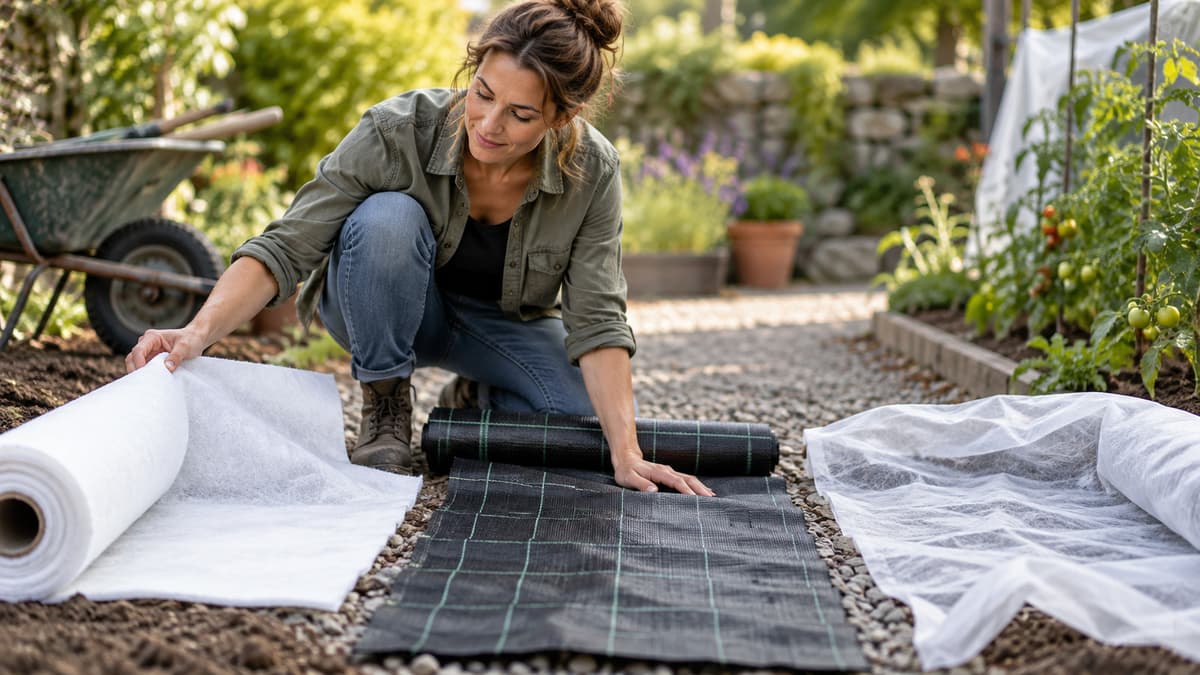
Weed membrane under fake grass is a common search, and it points at the wrong product for this layer. A weed membrane is there to block light. Drainage fleece is there to let water through and hold fines back. UK reviews of the garden fleeces in this set describe grass rooting into the fabric, so the sheet is not a weed cure on its own. Growtivation's note on fabric under artificial grass says the grass itself blocks the light. Seedlings in decorative gravel are a weed membrane job.
There is a hard limit on what a 100 gsm title can mean. Merchant guides treat about 100 gsm as a domestic starting point for light separation. These listings mostly print that weight and do not print an opening size, a flow rate, or a puncture figure. If your lawn paperwork names a grade, buy that grade. A star average on amazon.co.uk is not a substitute.
Where the sheet sits
Geotextile under artificial grass belongs on the firm ground you have excavated, before the stone goes down. Verde Sports publishes one sequence for its own geofabric: the woven sheet on the excavated ground, then 3–4 inches of 25 mm stone, then a fine blinding, then the grass. That is one installer's order, and the fabric in that shop is woven. It is not a national rule.
Growtivation's chooser prefers a non-woven under artificial grass because a woven sheet can snag the backing, and because the grass, not the fleece, cuts out the light. Spudulica's project note uses non-woven so the sub-base layers do not mix. If you follow Verde's stone order, do not swap in a black woven weed membrane and assume the two sheets are the same component. Geofabric before stone, in the separation sense, is a permeable non-woven.
Lay the sheet flat. A UK review of the Spudulica 2.25 m by 10 m piece, used under artificial grass, put the overlap at 150 mm or more. Do not average that with a 200 mm or 300 mm lap from a different note. Buy the next area up if the join would land on the edge. The how to lay drainage fleece page is the trench order, and a lawn is wider, so the same lap eats more square metres.
Stone, overlap, and cover
How deep the stone sits is the question the sheet cannot answer. Verde Sports states 3–4 inches of 25 mm stone, about 75 to 100 mm, then a fine blinding before the grass. Treat that as that seller's instruction for its woven product, not a depth measured here. MOT Type 1, mentioned in a patio review, is a crushed aggregate for hard surfaces, not this lawn build-up.
Cover the fabric before you finish for the day. Lotrak's note on polypropylene treats ultraviolet light as an installation exposure: the sheet is specified to be buried, and inhibitors only limit damage while you are still laying it. A UK review of a 2.25 m by 3 m cut noted a white colour under light chippings, so a thin cover can leave the sheet visible. Covering geotextile after you lay it is the longer note.
- Mark the area, and do not dig until you are clear of pipes and cables.
- Excavate for the stone and the blinding your grass note asks for, and shape a fall toward an outfall that already works.
- Lay the non-woven sheet and lap the joins. A UK review under artificial grass used at least 150 mm.
- Cover the sheet with stone the same day, then the blinding, then the grass.
- Keep a black weed membrane out of this stack. Light exclusion is a separate job.
A cut wide enough for the lawn
Width matters more than the word fleece on the title. The top pick on the drainage fleece comparison is the Spudulica 1.1 m by 8 m piece: 8.8 m² of stated 100 gsm non-woven at £29.55, 4.9 out of 5 from 45 amazon.co.uk reviews. Reviewers describe a narrow trench, including a 300 mm trench in clay with rounded gravel and a perforated pipe. Forty-five reviews are a small sample, and the technical row and the bullets do not use the same material name. A 1.1 m strip is the wrong shape for a lawn, because each seam spends sheet on overlap.
A small lawn wants a width nearer 2.25 m. The Spudulica Caisse cut is 2.25 m by 8 m, 18 m² at a stated 100 gsm, £37.55, with 4.5 out of 5 from 87 reviews. It is the best value in this set for area rather than a trench strip, about £2.09 per square metre on the recorded price, and it has no puncture figure. The 2.25 m by 10 m piece is £44.06, 4.5 from 103 reviews, and a UK review used it under artificial grass. Its specification table does not state a gsm, and a review reports a piece advertised at 100 gsm that arrived stamped Lotrak 80. The drainage fleece buying guide sets out that gap. Choosing ground fabric separates this fleece from weed membrane and from frost fleece.
Clay, and when you need an outfall
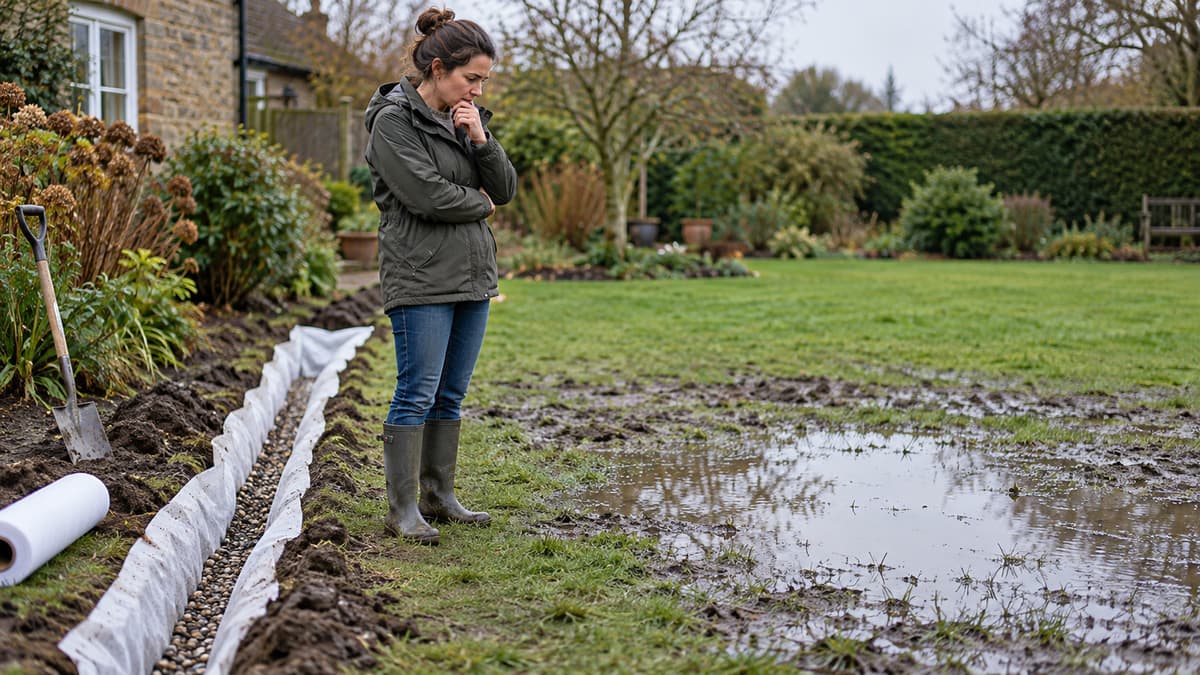
Non-woven fleece under a synthetic lawn does not dry a clay garden. The sheet can stop the stone sinking into the clay, and it can let water through. It cannot invent a slope or a place for the water to arrive. If the lawn sits in a hollow, you are building a pond with a green lid. Shape a fall toward an outfall that already works. A wet lawn on clay is the longer account of that limit.
Laying the grass on bare soil skips the stone those sequences use. On clay the water stays, and a sheet alone is still not an artificial grass sub base. Water from a roof or an extension is not a garden fleece and a heap of 25 mm stone. English building-control notes treat soakaways as their own job, and Scotland and Northern Ireland use their own drainage documents. If you need a digger, you are next to the house foundations, or you cannot find an outfall, use when to call a drainage contractor.
Common questions
Does fake grass need a drainage layer?
Should the sheet under the backing be woven or non-woven?
How much stone goes under artificial grass?
Will the fleece stop weeds by itself?
How much overlap should I leave?
Can I lay artificial grass straight on soil?
What if the garden is clay?
Which comparison lists the fleece?

Peter F. is the editor for DIY & tools at productscompared.co.uk. Comparisons in this category are checked against amazon.co.uk listings, review evidence and public UK sources.
Related articles
A wet lawn on clay
Fleece does not give a clay lawn a fall or an outfall. Standing water needs a route out.

Covering geotextile after you lay it
Polypropylene fleece is specified to be covered. Sunlight is an installation exposure.
Choosing ground fabric
Drainage fleece, weed membrane, and frost fleece share a word and do different jobs.