Independent comparisons. We may earn from shop links. More info

Wasp trap bees: a title that names bees is a warning

Updated: 17 October 2026

Wasps at the picnic table, or workers taking honey at a hive, make a hanging pot look like the quick answer. You want the wasps gone and the honeybees left. A wasp trap bees search usually lands on a listing that says bee catcher, or that tells you to add vinegar. Those lines are seller copy on amazon.co.uk. The listings in this set were checked on 16 October 2026, with the Health and Safety Executive page on honeybees and the National Bee Unit’s wasp guidance. This was not a lab test. A qualifying purchase can earn a commission at no extra cost to you. Shape and reviews are on the [wasp trap comparison](/hub/traps/wasp-trap).

Wasps at the picnic table, or workers taking honey at a hive, make a hanging pot look like the quick answer. You want the wasps gone and the honeybees left.

Our top picks

On this page

Honeybees are not the target

The Health and Safety Executive treats honeybees as important pollinators and, in the vast majority of circumstances, not as pests. Insecticide against them is a last resort, and a label harmful to bees must not be used where bees forage. A bait pot does not make honeybees a pest you should clear. A title that says bee catcher is advertising a catch. Ram’s 4-pack puts bee beside wasp and hornet, V·Colokishi sells its pair as a bee trap, and WenYa names carpenter bees. On lavender, that sweet liquid does not sort honeybees from wasps. The HSE page never mentions household vinegar in a bait pot, so a shop line cannot borrow that guidance. A nest by the house, where someone has a sting allergy, is a job for a pest controller. How you mix and empty a pot, when a pot is appropriate at all, sits on the how to use a wasp trap page.

What vinegar claims are, and what they are not

CKB’s glass bottle suggests a teaspoon of vinegar if you are worried about honeybees. Both plastic CKB packs say vinegar may reduce interest from bees, and Trendecor says vinegar stops bees being attracted. Those sentences are listing copy, not an HSE result and not a National Bee Unit method. Nothing from HSE or the Bee Unit says vinegar makes a trap safe for honeybees or bumblebees. On the V·Colokishi 2-pack, one amazon.co.uk reviewer used water, sugar, vinegar, and soap, caught wasps, and saw no bees. Aspectek’s claim of selective entries that reduce bee catches is the same class of evidence: a printed line, not a catch rate. The Bee Unit’s objection is bycatch of native invertebrates, not honeybees alone. Keep any pot off flowers and away from hives, and treat vinegar as unproven. Entrances and leaks are on the wasp trap buying guide.
CKB LTD CKB LTD glass wasp trap

Testsieger

CKB LTD CKB LTD glass wasp trap
8.1/10about £12.99

What the National Bee Unit says about traps near hives

Fact sheet 29 says traps meant to stop wasps predating colonies are unlikely to be particularly effective, and they carry a high risk of killing other native invertebrates. The tools on that sheet are a smaller entrance, a robbing screen, careful feeding, and a strong colony. A jam jar on the landing board sits outside that advice. A later note for Scottish beekeepers leaves that sheet in place. If prevention fails, selective trapping near hives may be warranted, away from the entrance. Prevention on the hive comes first, and that narrower allowance is not a description of these sweet pots. One Aspectek reviewer, a beekeeper with three hives, said the printed apple-cider-vinegar recipe reduced wasps taking honey, which is a note about wasps, not honeybees spared. Catch evidence sits on the best wasp traps page.

How the pots in this set talk about bees

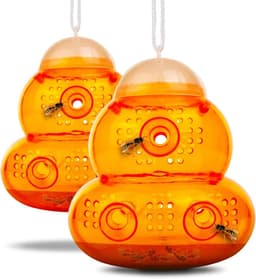
Ram’s title includes bee, while two bullets describe a fruit-fly catcher. V·Colokishi sells the pair as a bee trap. Trendecor names bees as a target beside wasps and yellowjackets. Yellowjacket is a US name for social wasps, not a separate species in a British garden. WenYa names carpenter bees, which are not honeybees. DXPETA and XIAOjnHONG state no bee note. If pollinators are the worry, skip a title that names bees. A fake nest will not protect a hive.

Yellow-legged hornet is a different report

Report a darker hornet with one pale band on the fourth abdominal segment and yellow-tipped legs. The European hornet is larger. Photograph it from a safe distance, stay away from any nest, and keep a garden bait pot out of the response. Use the UK Centre for Ecology & Hydrology form, the Asian Hornet Watch app, or alertnonnative@ceh.ac.uk. GOV.UK’s honeybee pest guidance and the National Bee Unit’s yellow-legged hornet pages treat a suspected sighting as a report. Monitoring traps with escape gaps are not the pots compared here. Sting care, if someone is stung, stays with the NHS. For a nest by the house, where someone is allergic to stings or honeybees are nearby, call a controller.

Common questions

Will vinegar keep honeybees out of a wasp trap?
No finding from the Health and Safety Executive or the National Bee Unit says that it will. CKB’s glass listing suggests a teaspoon of vinegar if you are worried about honeybees. The plastic packs say vinegar may reduce interest from bees, and Trendecor says vinegar stops bees. If you use a pot, assume a sweet liquid can still take pollinators.
Why do some titles say bee catcher?
The listing is offering bees as a catch. Ram puts bee next to wasp and hornet, V·Colokishi sells the trap as a bee trap, and WenYa names carpenter bees. That wording is a warning when you want honeybees and other pollinators left alone.
Does one review that saw no bees prove the mix is safe?
It does not. On the V·Colokishi 2-pack, one UK reviewer used water, sugar, vinegar, and soap, caught wasps, and reported no bees. There is no count of bees nearby and no second garden. A note about fewer wasps at three hives is one report about wasps on a different trap. Neither replaces the Bee Unit’s warning on other native invertebrates.
Is a protein bait in spring safer for bees than sugar?
It has not been shown to be. Hobby pages suggest meat or bacon early in the year and sugar, jam, or honey later, and some still mention beer. The National Bee Unit’s concern is bycatch of other native invertebrates. Treat spring protein as an unproven suggestion beside sugar.
What if I think I have seen a yellow-legged hornet?
Photograph it from a safe distance and stay away from the nest. Report it through the UK Centre for Ecology & Hydrology form, the Asian Hornet Watch app, or alertnonnative@ceh.ac.uk. Look for a darker insect, one pale band on the fourth abdominal segment, and yellow-tipped legs. A European hornet is larger. A garden bait pot is not the control method.
Should I hang a sweet trap on flowers or next to hives?
Leave flowers and the hive entrance alone. Sweet bait draws whatever is feeding there, including honeybees and other invertebrates. Fact sheet 29 puts a smaller entrance, a robbing screen, careful feeding, and a strong colony ahead of traps. A later Scottish note allows selective trapping near hives only after those steps fail, and not at the entrance.

Related pages

Sources

Public UK sources on wasps, nests, stings, and hornet reporting. Prices, stars, and review counts are the amazon.co.uk listings for these ten ASINs, captured on 16 October 2026. Prices on amazon.co.uk move.

  1. RHS, Wasps including hornets (retrieved 16 October 2026)
  2. BPCA, wasp control (retrieved 16 October 2026)
  3. BPCA, low- and no-chemical management of wasps (retrieved 16 October 2026)
  4. BPCA, sugar-seeking wasps (retrieved 16 October 2026)
  5. NHS, insect bites and stings (retrieved 16 October 2026)
  6. NHS, anaphylaxis (retrieved 16 October 2026)
  7. GOV.UK, honey bees: pests and diseases (retrieved 16 October 2026)
  8. Historic England, mammals, reptiles and insects on historic sites (retrieved 16 October 2026)