Independent comparisons. We may earn from shop links. More info

Mole or vole: identify garden signs before trapping

Updated: 17 October 2026

Is the damage in your garden from a mole or vole? Large spoil heaps usually point to a mole, while soft shallow runs and eaten plants fit field or bank voles. Holes on a ditch, stream or pond bank create a third and more serious possibility: a protected water vole. Guessing from an amazon.co.uk product title can lead you to buy the wrong mechanism or place a kill trap where none should be used. Identify the signs first, then use our [vole trap comparison](/hub/traps/vole-trap) only after the likely animal and site are clear. A qualifying purchase can earn a commission at no extra cost to you.

Is the damage in your garden from a mole or vole? Large spoil heaps usually point to a mole, while soft shallow runs and eaten plants fit field or bank voles.

Our top picks

On this page

Molehills are the mole’s signature

A molehill is excavated soil pushed up from a tunnel, often forming a conspicuous heap rather than a neat open entrance. You may also see raised ridges where a shallow feeding tunnel passes under turf. According to the RHS, moles feed on soil invertebrates. They are not burrowing through a lawn to eat bulbs or roots. Plant damage can occur as an indirect result of tunnelling, but chewed stems and bark point elsewhere. Several hills do not necessarily mean several moles. Outside the breeding period, one animal may occupy a small garden and produce multiple heaps as it maintains a network. Counting hills is a poor way to decide how many traps to buy. The useful question is where the active main run lies, not which mound looks largest. An open hole is also not required for a mole diagnosis. The tunnel is normally closed, and the heap is spoil from below. A visible small entrance linked by soft surface tracks fits the vole pattern more closely. Old signs can overlap, because voles may use abandoned mole tunnels, and one garden can hold both animals at different times. If the evidence is a line of conventional molehills away from water, the next choice is usually between a claw and a buried tunnel-style trap. Our tunnel trap or claw guide explains when each shape makes sense without treating all spring traps as the same design.

Shallow runs and eaten plants point to voles

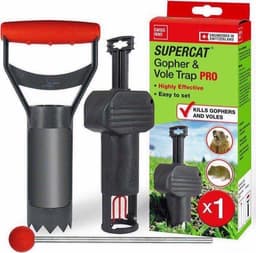
Field and bank voles make shallow runs and feed on plant material. A soft lawn with small soil heaps is more likely to show vole activity than classic mole tunnelling, according to the RHS. In beds and borders, look for a combination of small openings, worn tracks through vegetation, missing seeds or damage to stems and roots. One nibbled plant alone is not enough, because mice and other garden animals can leave similar feeding signs. Field voles tend to favour grassy cover, while bank voles are associated with hedges, woodland edges and dense vegetation. For a householder choosing a trap, the exact distinction between those two is often less important than separating both from a mole and from a waterside water vole. A shallow-run trap such as the vertical SuperCat family is built around different placement geometry from a claw used in a mole tunnel. Do not use the species field on a marketplace listing as your identification guide. In this comparison, some products have catalogue labels such as mouse or rat that conflict with the title or mechanism. Review counts have the same limit: even thousands of reviews cannot show which animal made the marks in your lawn. If shallow runs occur well away from water and plant feeding supports a garden vole diagnosis, compare handling and installation in our vole trap buying guide. If the openings occur on a bank, stop before moving soil or vegetation.

By water, treat it as a water vole until identified

Water-vole burrows are commonly around 4–8 cm across, often wider than high, and may open at, above or below the waterline. PTES guidance also points to cropped lawns near entrances, feeding remains and latrines as useful signs of current use. Burrows may extend several metres from the water, so an opening does not have to sit directly at the edge to deserve caution. A burrow alone is not conclusive. It may be old or belong to another animal, and prints can be difficult to interpret. That uncertainty is a reason to pause, not permission to place a trap. Do not dig into the bank, block an entrance or attempt to flush out its occupant as an identification method. Water voles and the places they use for shelter or protection are legally protected. Intentional killing or taking is an offence, and reckless damage, destruction or obstruction of a shelter can also be unlawful. Some activities may require a licence, but a consumer trap listing does not supply one and calling the product a vole trap changes nothing. Field and bank voles are not the same scheduled animal as the water vole. That distinction does not make an uncertain waterside set safe. Leave the site undisturbed and seek advice from a competent ecologist or relevant authority when field signs suggest water voles. Do not catch and release an animal to settle the question.

What to buy after you know

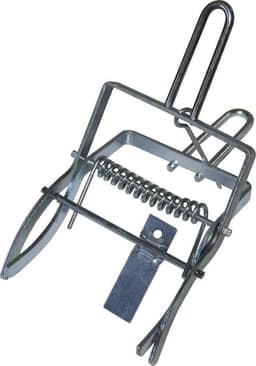
For conventional molehills and a confirmed main mole run, a claw or half-barrel mechanism is the relevant family on this shelf. The choice depends on the run, the number of positions and whether you can control a strong spring safely. A multi-pack may cover several routes, but only when you can locate, record and inspect every armed trap. For a shallow, straight vole run away from water, the vertical SuperCat family is the closer mechanical match. The kit version includes a probe and hole cutter, while the bare single and two-pack do not include those tools in their style names. That does not make the SuperCat a default for every mound: its manufacturer’s shallow-run instructions differ from the guidance for a mole’s deeper main tunnel. If the signs still do not settle the species, do not buy on the assumption that one trap will cover both jobs. Revisit the site in daylight, compare fresh activity and obtain expert identification where necessary. The purchase can wait. A wrongly placed spring trap creates more risk than a delayed decision. Once the animal and mechanism are established, follow the manufacturer’s instructions and the relevant national guidance, including a straight run and a daily check.

Common questions

What does a molehill look like compared with a vole run?
A molehill is a noticeable heap of excavated soil over a closed tunnel system. Vole activity is more likely to appear as shallow soft tracks, small openings and plant feeding, sometimes with modest soil disturbance. Use a combination of signs because weather, old tunnels and other animals can blur one isolated clue.
Do voles leave hills?
Voles can leave small soil heaps, and the RHS notes that a soft lawn with small heaps may be vole damage rather than mole activity. They do not usually produce the substantial classic molehills associated with deeper excavation. Shallow runs and chewed vegetation strengthen the vole interpretation.
Is a field vole protected like a water vole?
Field and bank voles are not the same legally protected species as the water vole. That does not justify trapping an unidentified animal on a waterside bank. Water-vole protection extends to their shelters, so uncertain bank holes should be left undisturbed until a competent identification has been made.
Can moles and voles use the same tunnels?
Yes, voles can use old mole tunnels, and both animals may occur in the same garden. That is why a tunnel alone is not enough. Give more weight to current signs: large spoil heaps and an invertebrate-feeding pattern for moles, or shallow tracks and eaten plants for voles.
What should I do if I still cannot tell?
Do not set a trap. Photograph the signs without disturbing them, note their distance from water and observe whether fresh spoil, feeding or latrines appear. Near water, seek specialist advice promptly. Elsewhere, a professional mole catcher or pest technician can assess the run before any spring is armed.

Related pages

Sources

Public UK sources for mole-trap depth, spring-trap rules, and water voles. Listings are the amazon.co.uk captures for these seven ASINs, not a live reload on 17 October 2026. Prices on amazon.co.uk move.

  1. Foxes, moles and mink (England) (retrieved 17 October 2026)
  2. Small Ground Vermin Traps Order 1958 (retrieved 17 October 2026)
  3. Pests Act 1954, section 8 (retrieved 17 October 2026)
  4. Wild Mammals (Protection) Act 1996 (retrieved 17 October 2026)
  5. Water voles, GOV.UK (retrieved 17 October 2026)
  6. RHS moles (retrieved 17 October 2026)
  7. RHS mice and voles (retrieved 17 October 2026)
  8. PTES, surveying water voles (retrieved 17 October 2026)