Independent comparisons. We may earn from shop links. More info

How to set a mole trap: straight run and daily check

Updated: 17 October 2026

Learning how to set a mole trap starts before you touch the spring. You need to rule out a protected water-vole site, find a straight run that is actually in use, and follow the instructions for the mechanism in your hand. A poorly chosen spot can fill the trigger with soil or produce an empty fire, while an armed trap left unchecked creates an avoidable welfare problem. Our [vole trap comparison](/hub/traps/vole-trap) shows the mechanisms on the current amazon.co.uk shelf. This guide explains the placement sequence without ranking them. A qualifying purchase can earn a commission at no extra cost to you.

Learning how to set a mole trap starts before you touch the spring.

Our top picks

On this page

Do not set yet if the ground is by water

Stop if the suspected run is in a bank beside a pond, stream, ditch or other water. Water voles use burrows that are commonly about 4–8 cm across, often wider than high, and entrances may sit at the waterline or below it. A cropped patch of vegetation, feeding remains or latrines can indicate current use, although a hole by itself may be old or belong to another animal. Water voles and their shelters are protected. Intentionally killing or taking one, or recklessly damaging, destroying or blocking access to a place used for shelter, can be an offence. Do not use a kill trap as a way to discover what lives in the hole, and do not tell yourself that vole trap on the packaging resolves the legal risk. If the site is uncertain, leave it undisturbed and obtain competent identification. Our mole or vole guide sets out the UK field signs. If the damage is ordinary molehills or shallow runs well away from water, locate the active route rather than setting beside the most visible heap.

Find a straight run that is still in use

A molehill marks excavated spoil, not necessarily the best setting point. Probe carefully between fresh hills, along a fence or across a line of surface disturbance, looking for the slight drop that suggests a tunnel. Choose a straight section rather than a junction or bend. A trap sitting at an angle can leave gaps, catch loose soil on its plate or let the animal push material around the trigger. For moles in England, GOV.UK advises placing a commonly used spring trap in the main tunnel at least 150 mm below ground. That is guidance for a mole’s main run. By contrast, Swissinno’s SuperCat instructions describe a shallow vole run no deeper than about 15 cm and a vertical opening of roughly 6 cm. The numbers look similar, but they do not make the two jobs interchangeable: use the depth and geometry that belong to the identified animal and the specific trap. Uncover only enough ground to fit the mechanism correctly, and keep the removed turf intact so it can form a close cover without dropping loose earth onto the trigger. Our vole trap buying guide explains why run depth, soil and hand strength should be considered before purchase.

Arm the trap you actually bought

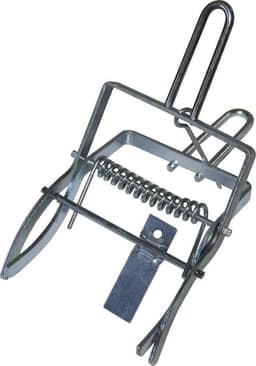
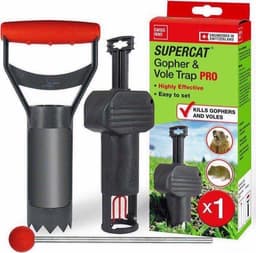
For the Swissinno SuperCat, locate a shallow, straight vole run with the probe. Make a vertical hole about 6 cm wide, extending roughly 2 cm into the tunnel floor, and align the trap openings along the run. Pull the handle until it locks, keeping fingers away from the working parts. The manufacturer says no bait is required. Close gaps around the opening with leaves or grass to exclude light and draught without packing soil into the mechanism. Do not force the supplied plastic cutter through stones or thick roots. A review of the probe kit describes the cutter as flimsy. If the ground cannot accept the intended opening cleanly, stop and reconsider the location or mechanism rather than improvising a loose fit. A claw or half-barrel mole trap is buried in the selected main run according to its own instructions. Wear suitable gloves for grip and keep your hands clear of loaded jaws or springs. Seat the trap firmly, preserve the tunnel line and use only enough loose soil to restore darkness without fouling the trigger. Reviews in this comparison mention stiff plates, bent claws and empty fires where soil obstructed the moving parts. A half-barrel lies in the tunnel, a claw closes spring-loaded jaws, and the plastic SuperCat stands vertically over a shallow run. The tunnel trap or claw guide compares their trade-offs. The wire trap also needs its exact instructions, but its three stored UK reviews describe missed triggers or poor fit, so this evidence does not support improvising with it.

Check daily and act on what you find

In England, check a mole trap at least once a day while it is armed. Swissinno similarly says to inspect its SuperCat by the next day at the latest. A dropped handle or changed indicator tells you to look promptly. It does not confirm a catch and should never become an excuse to wait several days. Approach carefully and make the spring safe in accordance with the manufacturer’s instructions before removing or resetting anything. If the trap has fired empty, inspect the site rather than arming it immediately in the same condition. Loose earth on the trigger, a placement at a bend, a hole that admits light or a mechanism that does not fit the run are all plausible causes. If an animal is alive, the job is unfinished. GOV.UK says a live-caught mole must be killed humanely, while wider animal-welfare law makes avoidable suffering a serious concern. This guide will not prescribe an improvised killing method. If you are not willing and competent to deal promptly with a live animal, do not arm the trap; use an experienced pest professional instead. Record where each trap is placed, especially if vegetation can hide it, and prevent children or pets reaching the site until every trap has been removed or made safe.

Common questions

How do I know whether a run is active?
Look for a plausible line between fresh signs and probe for a consistent tunnel, favouring a straight section over a bend or junction. Fresh spoil helps but does not prove current use on its own. If activity remains uncertain, monitor without arming a trap or ask a professional to assess the site.
How deep should a mole trap be in England?
GOV.UK advises setting commonly used spring traps in the mole’s main tunnel at least 150 mm below ground. That does not mean every shallow vole trap uses the same installation. Follow the identified species, mechanism and manufacturer’s instructions rather than transferring one depth figure to every product.
Why did the trap fire but catch nothing?
Common practical causes include loose soil on the trigger, placement at a bend, an opening that lets in light or a trap that does not fit the run. Make the trap safe, inspect the geometry and clear only what the instructions permit. Repeated empty fires suggest you should reassess the run or mechanism.
How often must I check?
For mole trapping in England, check at least once every day. Swissinno says its SuperCat should be checked by the next day at the latest, which supports the same practical routine. Check sooner when an indicator changes, and never leave an armed trap in place when you cannot maintain the schedule.
Can I set a trap beside a pond?
Not until water voles have been competently ruled out. Waterside burrows, cropped vegetation, feeding remains and latrines can indicate a protected animal and shelter. Do not disturb the bank or set a kill trap as a test. Leave the area alone and seek specialist advice if the signs are uncertain.

Related pages

Sources

Public UK sources for mole-trap depth, spring-trap rules, and water voles. Listings are the amazon.co.uk captures for these seven ASINs, not a live reload on 17 October 2026. Prices on amazon.co.uk move.

  1. Foxes, moles and mink (England) (retrieved 17 October 2026)
  2. Small Ground Vermin Traps Order 1958 (retrieved 17 October 2026)
  3. Pests Act 1954, section 8 (retrieved 17 October 2026)
  4. Wild Mammals (Protection) Act 1996 (retrieved 17 October 2026)
  5. Water voles, GOV.UK (retrieved 17 October 2026)
  6. RHS moles (retrieved 17 October 2026)
  7. RHS mice and voles (retrieved 17 October 2026)
  8. PTES, surveying water voles (retrieved 17 October 2026)