Independent comparisons. We may earn from shop links. More info

Vole trap buying guide: mechanism, pack and hands

Updated: 17 October 2026

Finding raised soil or soft tracks through a lawn does not immediately tell you which trap to buy. This vole trap buying guide puts the decisions in the right order: identify the likely animal, choose a mechanism you can set safely, then decide how many traps justify the spend. Our [vole trap comparison](/hub/traps/vole-trap) covers the seven amazon.co.uk listings and their captured GBP prices. The shelf mixes shallow-run vole traps, mole traps and misleading species fields. Start with the ground rather than the brand name on the box. A qualifying purchase can earn a commission at no extra cost to you.

Finding raised soil or soft tracks through a lawn does not immediately tell you which trap to buy.

Our top picks

On this page

Name the damage before the brand

A conventional molehill is a heap of excavated soil pushed up from a tunnel. Moles feed mainly on invertebrates, so damaged roots are usually incidental rather than the reason they tunnel. Shallow, soft runs through grass or beds, small openings and nibbled plants fit field or bank voles better. A trap designed to stand vertically over a shallow run is not interchangeable with a claw or half-barrel buried in a mole tunnel. Water changes the decision completely. If the holes are on a pond, stream or ditch bank, particularly where you also see cropped vegetation or latrines, do not set a kill trap until the animal has been identified. Water voles and their shelters are legally protected, and disturbing or blocking a burrow can itself be an offence. Our mole or vole guide explains the field signs and the point at which you should seek specialist advice. Do not let an amazon.co.uk species field overrule those signs. Several listings on this shelf use mouse, rat or a shared category rank even when the mechanism and title suggest a different animal. Treat those fields as catalogue data, not proof that a trap suits the run in your garden.

Four mechanisms on this shelf

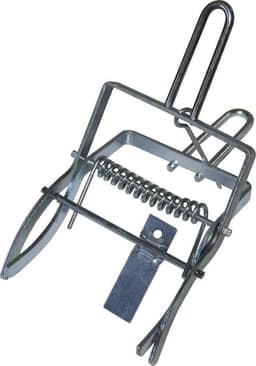
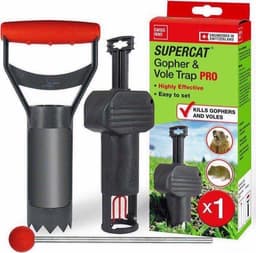
The Swissinno SuperCat family is a vertical plastic snap trap for a shallow, straight run. The single trap is about £17.99, the version with probe and hole cutter about £30.98, and the two-pack about £34.39. It uses no bait, but the installation geometry matters: the manufacturer describes a 6 cm opening and a run no deeper than about 15 cm. The kit is more useful if you do not already have suitable probing and cutting tools, although reviews say the plastic cutter can struggle in stony soil. The REPELEM five-pack at about £18.99 is a metal half-barrel for mole runs. Its pack size spreads traps across several runs, but the listing omits dimensions and reviews warn that the spring demands care around fingers. A half-barrel lies within the tunnel and works through a different trigger arrangement. It is not a cheaper SuperCat. Claw traps close spring-loaded jaws in a mole run. The Pest-Stop at about £7.99 is the cheapest claw in this comparison, while the REPELEM three-pack is about £15.99. Reviews report catches but also stiff setting, bent parts and empty triggers when soil obstructs the plate. If grip strength or hand mobility is limited, a low price does not make a stiff claw a sensible purchase. The wire two-pack at about £4.99 is the cheapest listing, yet all three stored UK reviews were negative. Complaints included a trap that was too long for a vole run and soil being pushed through without firing it. For a closer examination of these mechanisms, see tunnel trap or claw.

Pack size, hands and sensible price bands

On this shelf, an entry purchase is under £10, the middle band is roughly £16 to £19, and the upper band is about £31 to £35. Those are comparison bands from these captures, not permanent market prices: amazon.co.uk prices can change. The cost per trap is only useful after you have chosen the right family. Five unsuitable traps remain poor value even when the per-unit figure looks attractive. A small lawn does not automatically need a large pack. One active mole can create several hills, and several visible openings need not mean several animals. A multi-pack becomes useful when you have identified more than one likely main run and can inspect every armed trap at least daily. If you can only check one or two positions reliably, buying five encourages careless deployment rather than better control. Consider the whole setting task before ordering. A strong metal spring can be durable, but it may be awkward or unsafe for someone with reduced hand strength. The SuperCat handle is easier for many users to read from above, although accurate probing and a clean opening still take care. A plastic cutter may work neatly in soft turf yet meet stones or roots in a mature bed. If you want a recommendation rather than a decision framework, our best vole trap page gives one conditioned top pick and one best-value mole option.

What an online listing can and cannot prove

A high star rating or review count shows customer activity around a listing. It does not prove that the reviewer had the same animal, soil or setting method as you. The standalone SuperCat has 6,424 reviews in this comparison, but the stored UK review sample is divided and one reviewer says it is a vole trap rather than a mole trap. That is a reason to inspect the intended use, not to count votes and skip identification. Seller descriptions also use words such as humane, approved and professional. Treat humane as seller wording unless a precise, relevant basis is supplied. The Small Ground Vermin Traps Order 1958 excludes spring traps commonly used in mole runs from its approval list. That exemption is not a government approval badge for a particular ASIN. A shared category rank is not three independent performance measurements. In England, GOV.UK advises setting common spring traps in a main mole tunnel at least 150 mm below ground and checking them at least once a day. If you cannot make those checks, leave the trap unarmed and use a professional service. None of the price or pack calculations applies where signs suggest a water-vole bank.

Common questions

Do I buy a vole trap or a mole trap?
Buy only after identifying the signs. Molehills and deeper main tunnels point towards a claw or half-barrel mole trap. Shallow runs with plant feeding, away from water, may suit a vole-labelled vertical trap such as the SuperCat. Holes on a waterside bank require identification before any trapping because they may belong to protected water voles.
Is a high review count enough?
No. Review totals combine buyers with different animals, soils and expectations, while Amazon catalogue fields can also conflict with the title. Use reviews to spot repeated handling or failure issues, then check the mechanism, dimensions and intended run. A large count is not evidence that a trap suits the animal in your garden.
How many traps does a small lawn need?
There is no reliable number based on lawn size alone. One mole may make several hills, so first locate likely active main runs. Buy only as many traps as you can place correctly and inspect at least daily. For many small gardens, that checking limit is more useful than a pack recommendation.
What if the garden backs onto a ditch?
Stop before setting anything on or near the bank. Look for oval waterside burrows, cropped vegetation, latrines and feeding remains, but remember that one sign alone may be inconclusive. If water voles may be present, obtain specialist advice rather than testing the site with a kill trap.
Is the cheapest wire pack a sensible start?
Not on price alone. The pack at about £4.99 is inexpensive, but the three stored UK reviews for this comparison were all negative and described poor fit or failed triggering. A better starting point is the correct mechanism for the identified run, even if that means one suitable trap rather than two unsuitable ones.

Related pages

Sources

Public UK sources for mole-trap depth, spring-trap rules, and water voles. Listings are the amazon.co.uk captures for these seven ASINs, not a live reload on 17 October 2026. Prices on amazon.co.uk move.

  1. Foxes, moles and mink (England) (retrieved 17 October 2026)
  2. Small Ground Vermin Traps Order 1958 (retrieved 17 October 2026)
  3. Pests Act 1954, section 8 (retrieved 17 October 2026)
  4. Wild Mammals (Protection) Act 1996 (retrieved 17 October 2026)
  5. Water voles, GOV.UK (retrieved 17 October 2026)
  6. RHS moles (retrieved 17 October 2026)
  7. RHS mice and voles (retrieved 17 October 2026)
  8. PTES, surveying water voles (retrieved 17 October 2026)