Mouse or rat droppings: identify the signs before trapping

Compare mouse and rat droppings, tracks, gnaw marks and body shape, then choose the right-sized trap or know when to call a pest professional.
On this page
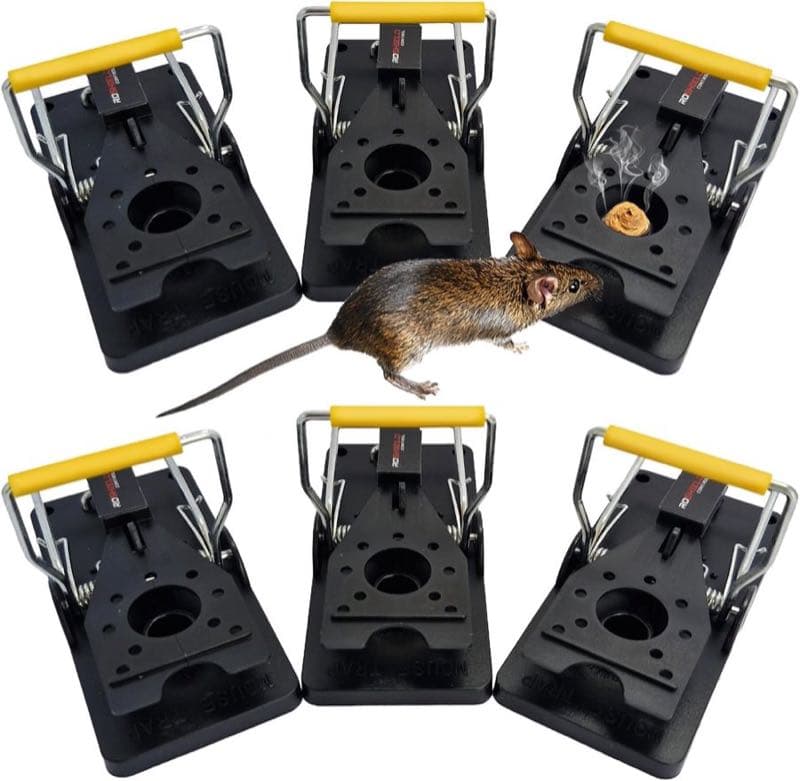
Finding dark pellets behind a kitchen unit creates an immediate temptation to buy the first trap you see. Pause long enough to identify mouse or rat droppings, because a trap designed for one animal may be ineffective for the other. Start with size and shape, then confirm with footprints, gnaw marks, body proportions and where the activity sits.
The size notes below are from the British Pest Control Association. Peter F. did not measure droppings in a lab, and a qualifying purchase through our links can earn a commission at no extra cost to you.
In short
Mouse droppings are usually about 5 mm long and often pointed at both ends, while rat droppings are commonly around 10 mm and substantially thicker. Do not identify a rodent from one damaged pellet. Compare several signs, then choose a purpose-made mouse trap, a correctly sized electric rat trap, or professional help if the evidence stays mixed.
Start with the droppings
Put on disposable gloves, keep children and pets away, and inspect several pellets without handling them directly. The British Pest Control Association gives a useful starting point: mouse droppings are about 5 mm long and usually pointed at both ends, whereas rat droppings are about 10 mm long. A ruler beside the droppings is more useful than a photograph with no scale. Do not crush or move them simply to obtain a measurement.
Mouse droppings are often compared with grains of rice because they are small and narrow. Rice grains vary, and the colour or condition of a dropping changes with age and diet. Rat droppings tend to look broader and more substantial, often in clusters, so the difference is more than an extra few millimetres of length.
Count does not settle the question. BPCA says a mouse can leave about 80 droppings a day, while a rat may leave up to 40 in a night. A cupboard containing dozens of pellets can reflect one active route over time. Record where you found them, clean the area safely, and see whether fresh signs return. Fresh droppings are generally darker and may look slightly glossy, while older ones become duller and drier. Household humidity makes visual ageing imprecise. Avoid sweeping or vacuuming dry rodent waste, which can disturb contaminated dust. Follow current public-health cleaning advice and ventilate the space before cleaning.
Use several signs, not one
Rodents leave routes as well as droppings. Mice often travel close to walls and units, using small gaps around pipes, floorboards or cupboards. Rats also favour edges and cover, but their larger bodies can leave broader tracks and heavier wear along a regular path. Do not scatter flour or tracking dust where it can contaminate food, be inhaled, or be reached by a child or pet.
Look for gnaw marks on food packets, timber, plastic and cables. Fine paired grooves and small openings support a mouse diagnosis. Larger tooth marks, splintered edges or a noticeably enlarged hole suggest a rat. Repeated gnawing changes the opening, so neither sign is a perfect ruler. Damaged electrical cable is a reason to isolate the area and seek competent help, rather than continue investigating by touch.
Dark smear marks can appear where oily fur repeatedly brushes a wall, joist, pipe or tight opening. A well-used rat route may produce a broad, greasy mark, but dirt around a kitchen edge can look similar. Check whether the mark connects shelter with food or water, and whether droppings or prints sit beside it. One stain with no supporting evidence is not enough. Light scratching in a wall void may come from mice, while heavier movement under floorboards may suggest rats, but building materials can amplify a tiny animal. Note the room, time and direction on two or three nights. Sound can locate activity. It rarely identifies the species by itself.
House mice may shred paper, fabric or insulation into a hidden nest. Rats use bulkier material and may burrow outdoors near sheds, compost, drains or dense cover. Do not reach into a nest or burrow, and do not block a suspected route until you know whether that could trap an animal inside the building.
Mouse or young rat?
A clear sighting helps if you judge proportions rather than apparent length. An adult mouse usually has a fine, pointed muzzle, relatively large ears and eyes, delicate feet and a slender tail. A rat looks heavier through the head and shoulders, with smaller-looking ears relative to its head, larger feet and a thicker tail. Adult brown rats are much larger than mice. BPCA describes an adult rat with a body around 23 cm and a weight that can exceed half a kilogram. A juvenile rat can still create genuine uncertainty, so use those figures as context rather than a threshold.
Do not depend on whether the tail looked long during a second-long dash. Compare thickness at the base and the animal’s overall build if a camera captured it. Camera perspective can exaggerate whatever is closest to the lens. Mouse prints are smaller and finer, whereas rat prints are larger, with hind feet often more obvious, and a tail may leave a line between them. Photograph a print beside a ruler. If signs disagree, label the identification uncertain. Small droppings beside heavy gnawing can mean broken pellets, old and new activity overlapping, or more than one pest. That is a reason to gather evidence, not to install both sizes of lethal trap throughout a room.
Match the trap to the rodent
Trap size is part of how a trap works. A small mouse may take bait from a rat-sized device without operating it as intended, while a mouse trap lacks the dimensions and power required for a rat. For signs that consistently indicate mice, compare purpose-built traps on the mouse trap comparison. The top pick there is the Roshield six-pack, ASIN B01NB0QNPI, about £9.99, with 4.2 from 2,882 reviews on this ASIN. The bullets name a welded kill bar and a larger trigger plate for mice. The target line also says rat, dimensions are not on the listing, and reviews warn that fingers get caught while setting. Place any chosen device as its instructions specify, usually on an active route, and keep it away from children, pets and non-target wildlife.
Where measurements and heavier signs indicate rats, use a rat-specific solution such as those in the electric rat trap comparison. An indoor electric unit is not automatically weatherproof, and a powerful mechanical trap needs a station other animals cannot reach. Rats can be cautious around new objects, so random repositioning every few hours can work against a considered placement. Remove accessible food, manage waste, repair leaks and proof entry points with materials the rodent cannot readily gnaw. If you seal the only obvious hole while animals remain inside, they may open another route. Where the route involves drains, cavities or roof space, get professional advice.
What not to set
Do not answer uncertain identification by putting adhesive boards around the room. Rodent glue traps raise serious welfare issues, and the law is not uniform across England, Scotland and Wales. The glue trap law guide sets out that position. A live listing is not proof that a product is lawful for your use. Avoid poison as an identification tool. Rodenticides bring risks to children, pets and wildlife, and a poisoned rodent may die in a void you cannot reach.
Homemade traps create unpredictable force, escape and non-target risks. A device that injures an animal is not a successful result. A live-catch box is not maintenance-free: it needs frequent checks and a lawful plan for the animal. Do not set any trap you cannot inspect. Do not place traps only where droppings are most visible. Pellets can collect below a shelf, away from the route. Follow edge marks, prints, gnawing and shelter, and keep every device off food-preparation surfaces.
When to stop guessing
One night of careful observation often improves a weak first impression. Measure intact droppings, map the locations, photograph footprints or damage with a scale, and note sounds or sightings. If the evidence points the same way, you can choose a trap and watch whether activity falls.
Call a qualified pest professional when measurements conflict, signs continue after proofing and trapping, or rats appear inside the occupied part of the home. Professional help is also the sensible step when activity involves drains, wiring, inaccessible cavities, or a household member who cannot safely check traps. A food business should not treat a retail trap as a substitute for its hygiene duties. Seek urgent advice if a rodent has bitten someone, contaminated exposed food, or damaged live wiring. Keep people and animals away from that area. Identification is there so the response matches the animal, not so you delay while chasing certainty the signs cannot give.
Common questions
How can I tell whether droppings are from a mouse or a rat?
Can a young rat be mistaken for a mouse?
How many droppings does a mouse leave in a day?
What do rodent smear marks look like?
Should I use the same trap for mice and rats?
Are rodent glue boards a suitable alternative?
When should I call a pest professional?

Peter F. is the editor for DIY & tools at productscompared.co.uk. Comparisons in this category are checked against amazon.co.uk listings, review evidence and public UK sources.
Related articles

Glue trap law in England, Scotland, and Wales
Check the nation before you set any adhesive board. England, Scotland and Wales do not share one rule.
How often to check a trap
An insect card and a live cage run on different clocks. A forgotten trap tells you nothing useful.

Live traps and the rules on release
A cage that holds an animal alive still leaves the release question, which is not always lawful.