Glue trap law UK: England, Scotland and Wales differ

Glue trap law UK is not one ban. England uses a rodent-risk offence, Scotland bans vertebrate glue from July 2026, and Wales banned use in October 2023.
On this page
You have a glue board in the basket because you saw droppings along the skirting, or a cockroach behind the fridge. The packet may say mouse, rat, insect, or nothing you can trust. Glue trap law UK does not follow that wording. It follows the nation you are standing in, and whether the glue can take a rodent or another vertebrate.
England, Scotland and Wales do not share one yes or no. Peter F. drew the legal points from the Glue Traps (Offences) Act 2022, GOV.UK’s pest-control page, the Scottish Government notice for 1 July 2026, and the Welsh Government announcement that use was banned from 17 October 2023. Product examples come from amazon.co.uk listings stored on 15 October 2026. There was no lab test, and this page does not measure your board. A qualifying purchase through our links can earn a commission at no extra cost to you.
In short
Glue trap law UK is three rules. In England it is an offence to set a glue trap for a rodent, or in a way that risks catching one, and GOV.UK lists rodent glue traps among methods you cannot use. In Scotland, since 1 July 2026, use, supply and possession are offences for vertebrate animals, and invertebrates are stated as not covered. In Wales, use has been banned since 17 October 2023. A board a mouse can walk onto is the vertebrate problem. Northern Ireland is not decided here.
The glue trap ban in England is a rodent-risk test
If you are in England, start with the animal the glue might catch, not with the picture on the box. The Glue Traps (Offences) Act 2022 is the offence text. The point recorded for this page is setting a glue trap for a rodent, or setting it in a way that risks catching one. GOV.UK’s pest-control page lists rodent glue traps among the methods you cannot use on your property. A title that says humane, or non-toxic, does not change those two sources. Setting a glue trap so a rodent may be caught is an offence unless a licensed pest controller sets it. Buying the packet does not make you that controller, and this page does not set out the licence. A star rating on amazon.co.uk is not one.
You do not have to print the word mouse on a label for the risk to be real. Droppings along a skirting, a board on that run, and glue a small foot can meet are the situation the offence describes. A cockroach in the same kitchen does not rename the board. This page will not say that every folded insect card in England is an offence, because the Act as used here is a rodent-risk test. It also will not say that your card passes. The sources do not give a penalty figure this page will repeat.
Glue traps in Scotland since 1 July 2026
Scotland’s rule is already in force. The Scottish Government notice took effect on 1 July 2026. It covers three acts: use, supply and possession. That is wider than a rule which only bites when the board is on the floor. A board in a cupboard is part of the question if the trap is one the ban covers. This page will not invent a disposal method for a board you already own.
The animals in scope are vertebrates. The same notice says invertebrates are not covered. A cockroach is an invertebrate. A mouse, a rat, a bird, or a pet with a backbone is not. If the board can catch the vertebrate, the invertebrate sentence does not rescue it. Size, where you lay it, and what has already been visiting the room decide which sentence you are in.
Amazon.co.uk can still show a listing to a UK address after 1 July 2026. A live product page is a shop record. It is not a Scottish clearance, and an add-to-basket button is not evidence that supply is lawful. Supply is named in the notice, and so is possession. A parcel posted from England does not move you onto English rules for the evening. If you would not be surprised to find a mouse on the board, you are outside the invertebrate sentence.
Glue traps in Wales since 17 October 2023
Wales took a different date and a different shape of ban. The Welsh Government announced that a ban on the use of glue traps came into force on 17 October 2023. The Agriculture (Wales) Act text cited here describes a glue trap likely to catch any animal. “Any animal” is wider than “rodent”, and wider than the vertebrate line Scotland published later. Copying Scotland’s invertebrate exception into a Welsh kitchen uses a sentence the Welsh materials in this file do not contain.
A packet bought before that date does not carry a private exemption we can find in the announcement. We are not adding a grace period or a household exception. The phrase we have is “any animal”. A cockroach is an animal. So is a mouse. The announcement used here names use. Scotland’s notice names use, supply and possession together. Pretending the two bans match goes beyond this file. If you are about to lay the trap, use is the word that already answers you. Whether a retailer commits an offence by listing one is a further question these sources do not settle.
A householder in Cardiff and a householder in Manchester can open the same amazon.co.uk page and stand under different rules. The shared fact is the glue, not the offence. In Wales, read the use ban before you peel the backing. In England, read the rodent-risk offence.
A cockroach card is not a mouse trap
A cockroach is an invertebrate. The British Pest Control Association describes sticky traps as a way to monitor German cockroaches and Oriental cockroaches, not as a way to clear an infestation. BPCA’s figures put a German adult at about 10–15 mm, with two dark stripes, and an Oriental adult at about 20–24 mm. Those sizes are theirs, not a kitchen measurement of ours. They explain a folded paper card. They do not explain a sheet the width of a kickboard.
In the cockroach-trap batch stored from amazon.co.uk on 15 October 2026, the cards kept are folded glue boards. Pestmatic and Hoy Hoy say monitoring on the listing. Super Ninja’s bullets say the card kills. The Health and Safety Executive line used in that research is that a trap sold only to monitor can sit outside biocidal product rules, while catch or kill claims can pull it inside. This article does not say any ASIN is authorised. None of the raw files printed an HSE number. A kill claim aimed at cockroaches is a biocides question. It is not a licence to catch mice.
One object left that comparison because it was the wrong animal. BREANIFULL sheets, ASIN B0FR8ZTXP5, were about 120 cm and were reviewed as rat and mouse sheets. Super Ninja’s 12-pack, ASIN B0BQ3DGXQP, is the top pick of the cockroach trap comparison because it is a baited card sold for cockroaches in that batch. It is not a recommendation to lay glue for rodents. The kill wording does not settle England’s risk test, Scotland’s vertebrate ban, or the Welsh use ban.
Placement is where a small card still fails. Cockroach monitors go under appliances and at the joint of wall and floor, which is also where mice travel. Glue on that run can take a cockroach and can take a mouse if the mouse can get a foot on it. “I bought it for insects” is motive. The risk is the board, the gap, and the droppings you already saw.
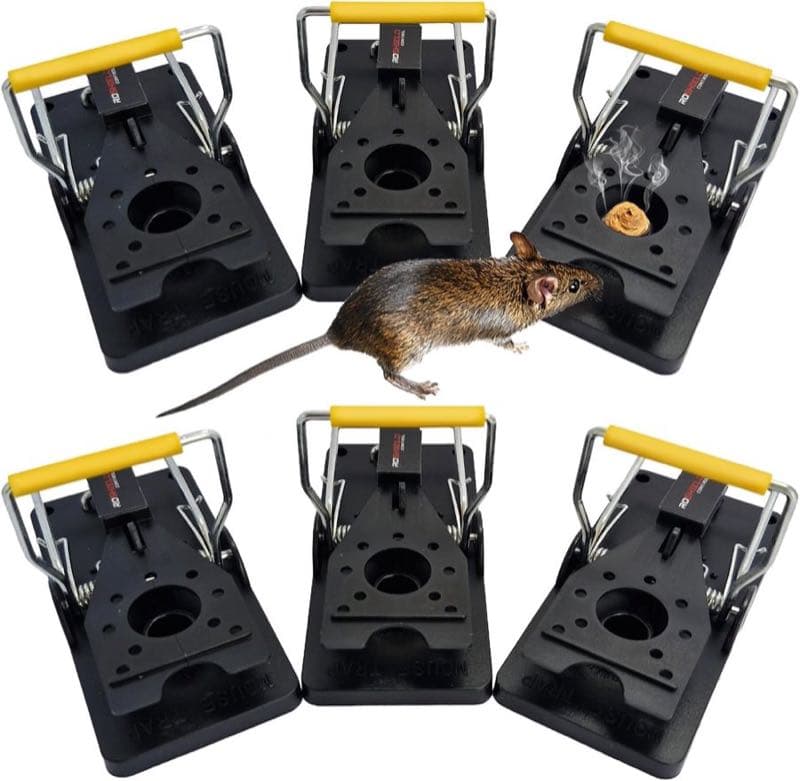
If the animal is a mouse or a rat, leave the glue in the basket. The top pick in the mouse trap comparison is the Roshield six-pack of snap traps, ASIN B01NB0QNPI, about £9.99, with 4.2 from 2,882 reviews on this ASIN. The bullets name a welded kill bar and a larger trigger plate for mice. The listing’s target line also says rat, and it gives no dimensions. For an indoor electric chamber aimed at rats, use the electric rat trap comparison. A mouse trap that is too small for a rat wastes the night. A rat-sized glue board is not the correction.
What this page will not decide
Northern Ireland is the gap you should not fill with a neighbour’s rule. The Act cited here is the English offence. The Scottish notice is Scotland’s. The Welsh announcement is Wales’s. None of them is a Northern Ireland statute, and this research did not check one. Amazon.co.uk selling to a Northern Ireland address does not turn the listing into a legal digest. The Republic of Ireland is a different state, and this article does not carry these rules across that border.
We also will not decide that your card is safe because it is small. We did not time how long an animal stays stuck. “Non-toxic” on a listing talks about poison. It does not mean open glue cannot hold a pet’s paw. If you are using an insect monitor where that use is allowed, check it on a short interval. Looking often does not licence a rodent board.
A café, takeaway or shop that finds cockroaches is not in the same position as a householder with one card. Retail glue does not close a food-hygiene duty. A cage is not the automatic lawful substitute, because catching an animal alive leaves a release question this article does not answer. Before you peel a backing, name the nation, name the animal, and name whether a mouse could walk onto that glue. If you cannot answer the third without hoping, do not set the board.
Common questions
Are all glue traps banned in the UK?
Does the English offence cover a small cockroach card?
Can I still buy glue traps in Scotland?
What changed in Wales in October 2023?
Do I need a licence to set a glue trap?
What if a mouse could walk onto an insect board?
Is Northern Ireland the same as England, Scotland or Wales?
What should I buy instead for mice?

Peter F. is the editor for DIY & tools at productscompared.co.uk. Comparisons in this category are checked against amazon.co.uk listings, review evidence and public UK sources.
Related articles

How to tell a mouse from a rat
Droppings and body shape decide the trap. A mouse trap and a rat trap are different buys.

Sticky insect traps show activity
A moth, fruit-fly or cockroach card shows insects are present. It does not clear the harbourage.

Live traps and the rules on release
A cage that holds an animal alive still leaves the release question, separate from whether glue is lawful.