Independent comparisons. We may earn from shop links. More info

How to set a pigeon trap

Updated: 21 October 2026

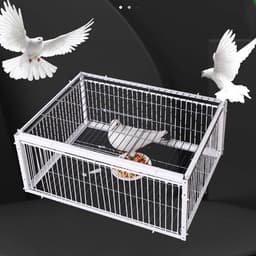
The cage is on the bench, or it is still a flat pack of panels and cable ties, and you want to know how to set a pigeon trap without guessing a method the listing never printed. Two cages match that job on size: the ybaymy at 60 × 40 × 26 cm, and the HFSAZJ at 40 × 30 × 26 cm. This page stays with closure, food and water, and the inspection clock. It does not describe killing a bird. Prices sit on the [bird trap comparison](/hub/traps/bird-trap). Peter F. used GL33, NatureScot GL01/2026 and the amazon.co.uk reviews, as held on 19 October 2026. If you buy through our links, we may earn a commission at no extra cost to you.

The cage is on the bench, or it is still a flat pack of panels and cable ties, and you want to know how to set a pigeon trap without guessing a method the listing never printed.

Our top picks

Gonetre Gonetre bird catching net

Best overall

Gonetre Gonetre bird catching net
7.2/10about £18.19
ybaymy ybaymy four-door pigeon cage

Alternative

ybaymy ybaymy four-door pigeon cage
3.6/10about £37.99
On this page

Before it is set

Do not set the cage because it has been delivered. Taking a wild bird in Great Britain is restricted by the Wildlife and Countryside Act 1981. A general licence is an exception for an authorised person, a named species, a named purpose and a permitted method. England’s GL33 for 2026 is the standard conditions for trapping. It is not itself permission to take birds. If you cannot point to the species and the purpose, the cage stays unset. The nation split is on bird trap rules in the UK. The design those conditions call a pigeon trap is a mesh cage birds walk into through a one-way entrance to reach food. It is not a compartment with a live pigeon in it. Before any bait goes in, the door has to meet the frame and you have to be able to open the cage yourself. GL33 says a trap in use must be inspected at least every 25 hours, close enough to see the animal, any decoy, food, water and the mechanism. Do not set it if that visit will fail, including in severe weather. A camera is not that inspection. Scotland, under NatureScot GL01/2026, is at least every 24 hours. Wales, on NRW general licence 002, uses 25 hours and requires the cage to be made incapable of holding birds when it is not in use.

What the UK reviews show on assembly

UK buyers say the HFSAZJ arrives as pieces joined with cable ties, with no instructions. One says the door was the wrong size for the panels. If the door does not meet the opening, the cage is not set. Extra ties build the failure the review described. One reviewer called the finished cage sturdy, which only helps after the door fits. Another said a 40 × 30 × 26 cm box was not big enough. Measure it before you spend a morning on the ties. The ybaymy listing talks about straps or ropes. A UK reviewer said pigeons got in and then left through the sides within three days, and that assembly was fiddly. The stated mesh is 2 cm. If you can see daylight at a joint you did not mean to leave, do not set it. Leave it incapable of holding a bird, or return it. The fuller review notes are on the best bird trap page. Pigeons that never enter are a different failure. Do not answer it by putting a live pigeon in a compartment. The decoy lists on the England licences used here do not name feral pigeon or wood pigeon. If nothing walks in over the days you are allowed to run the cage, unset it.
Gonetre Gonetre bird catching net

Testsieger

Gonetre Gonetre bird catching net
7.2/10about £18.19

Food, water and the clock

The listings do not give a bait recipe, and the reviews say the instructions were missing. Once a trap is set, food and water have to be there to see at the inspection. A decoy, if your licence allows one at all, needs food, water and the shelter that licence specifies. NatureScot GL01/2026 adds a perch on the 24-hour round. If your permission does not include a decoy, do not add one. You are close enough to see the animal, the water and the door. Note the time. The next visit has to fall inside 25 hours in England and Wales, or 24 hours in Scotland. NRW’s food-premises licence asks for checks twice a day. Once a bird is inside, the Animal Welfare Act 2006 applies. A section 8 set-aside, on room to stretch the wings, is not permission to leave a bird without water. If the catch is not the species on your licence, unset the trap and get advice.

When to stop

Stop when the cage does not close, when you cannot make the next inspection, or when the catch is not the species on your licence. Stop when a panel has bowed or a door has been tied half-shut. In Wales, general licence 002 says a feral-pigeon cage that is not in use must be rendered incapable of holding birds. Folding it and leaving the doors able to shut is not the same thing. Do not hide the trap or stretch the interval because the first days caught nothing. On a designated site, or with a bird you cannot name, get advice before the cage goes out again. Where a licence requires a bird to be killed, that licence sets the duty. This page does not turn that line into a method. Closure first, then the visit you can keep, then food and water. If any of the three is missing, leave the trap unset.

Common questions

How often must a set trap be looked at in England?
Under GL33 for 2026, at least every 25 hours while the trap is in use. The visit has to be physical and close enough to see the animal, any decoy, food, water and the mechanism. If you already know the next visit will be later than that, including because of severe weather, GL33 says do not set the trap. The 25 hours is a maximum gap, not a suggestion to look once every other day.
What counts as a physical inspection?
You are at the cage, close enough to see inside and to see whether it still works. Food, water and any decoy your licence allows are part of that look. A camera, a neighbour’s guess, or a plan to check on Monday does not replace it. Note the time, because the next visit is measured from this one. In Scotland the same kind of visit is due at least every 24 hours under NatureScot GL01/2026.
What should you do if the door does not meet the panel?
Do not set the cage. UK reviews of the HFSAZJ one-door cage, listed at 40 × 30 × 26 cm, say the door was the wrong size and that the kit is cable ties without instructions. Forcing the door with more ties builds the fault the review described. Return it, or store it so it cannot hold a bird. A door that almost fits is still open.
Why might pigeons walk straight out through the sides?
Because a joint has opened. On the ybaymy cage, listed at 60 × 40 × 26 cm with a stated 2 cm mesh, a UK reviewer said pigeons escaped through the sides within three days. The mesh figure is the listing’s claim. It is not a check of your assembled panels. If you can see a gap past the mesh after you have tied the cage, that gap is the exit, and the cage should not be set.
What if pigeons will not enter at all?
A UK review of the HFSAZJ cage says pigeons would not go in. That is a reason to unset it, not a reason to add a live pigeon as a decoy. The decoy lists on the England licences read for this page do not name feral pigeon or wood pigeon. Check that the door is the entrance the design is supposed to have, then stop if birds still do not walk through. Do not switch to a Larsen-style call bird.
Can you leave the cage set over a weekend you are away?
No. A Friday evening visit and a Monday morning visit is more than 25 hours, and it is more than Scotland’s 24 hours. GL33 tells you not to set the trap if you will miss the interval. Make the cage incapable of holding birds before you leave. A food-premises permission in Wales that requires two checks a day fails even sooner if the building is shut.
When should you unset the trap and stop?
When it does not close, when you cannot make the next inspection, when the catch is not the species on your licence, or when you are no longer sure what you have caught. Also when the cage has stopped being the design you were allowed to use because a side has opened. If the site is designated, or the bird is one you cannot name, get advice before you set anything again. Do not leave it set while you are away.

Related pages

Sources

Public UK sources from the research digest, plus amazon.co.uk listings for the seven traps. Shelf date 19 October 2026. Natural England issues the England general licences quoted here from 1 January 2026.

  1. Wildlife and Countryside Act 1981 (retrieved 19 October 2026)
  2. GOV.UK, bird licences (retrieved 19 October 2026)
  3. GL33 (2026), trapping wild birds (retrieved 19 October 2026)
  4. GL41, public health or safety (retrieved 19 October 2026)
  5. GL42, serious damage (retrieved 19 October 2026)
  6. NRW general licences 2026 (retrieved 19 October 2026)
  7. NatureScot, trap registration (retrieved 19 October 2026)
  8. DAERA, wildlife licensing (retrieved 19 October 2026)