Independent comparisons. We may earn from shop links. More info

115mm vs 125mm angle grinder

Updated: 22 October 2026

You have a 115 mm disc in one hand and a 125 mm disc in the other, and both will start to thread onto the same M14 spindle. The useful difference in a 115mm vs 125mm angle grinder is about 10 mm of diameter and a few millimetres of cutting depth, plus the guard that is built for only one of those sizes. Buy 115 mm when you want the lighter class for bolts, rust and tight access. Buy 125 mm when you need the extra depth and you will keep 125 mm discs. Never put a 125 mm disc under a 115 mm guard. This page sits beside the [115 mm angle grinder comparison](/hub/tools/angle-grinder-115mm), which is 115 mm only. Peter F. used Screwfix, Toolstation, ITS and HSE HSG17. We did not measure a cut in a lab. A qualifying purchase can earn a commission at no extra cost to you. Updated 22 October 2026.

You have a 115 mm disc in one hand and a 125 mm disc in the other, and both will start to thread onto the same M14 spindle.

Our top picks

DEWINNER DEWINNER 850 W

Best value

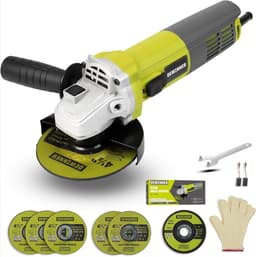
DEWINNER DEWINNER 850 W
7.4/10about £29.74
DCA DCA 860 W

Alternative

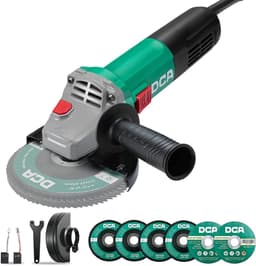
DCA DCA 860 W
7.2/10about £29.99
On this page

What the extra 10 mm actually buys

Screwfix publishes about 30 mm of cutting depth for a 115 mm grinder and about 38 mm for a 125 mm grinder. Those are retailer figures, and they are the clearest public comparison a UK shopper will see. Eight millimetres is the whole of the depth difference. Both sizes are still small angle grinders. A 230 mm hire tool is the step change. Toolstation describes 115 mm as light and precise, and less suited to heavy duty. It describes 125 mm as more versatile, and still short of heavy duty. ITS puts 115 mm with light DIY up to about 30 mm, 125 mm with general trade use, and 230 mm with paving and concrete. Norton's UK material calls 115 mm the common small size. In the amazon.co.uk set behind the main table, every body is 115 mm, corded, 650–900 W, and priced from £18.05 to £44.00. There is no 125 mm ASIN in that set. A 115 mm body here can be as light as the DCA's listed 1.67 kg or as heavy as the C P CHANTPOWER's 2.76 kg. If the job is a 20 mm box section or an M10 bolt, the extra 8 mm of published depth does not change the afternoon. A 40 mm bar in one pass is the wrong tool at either small size.

Why the disc will fit and still must not

Most small grinders in this class use an M14 spindle and a 22.2 mm or 22.23 mm bore. That is why a 125 mm disc can sit on a 115 mm tool and why the nut will start to turn. The spindle match is the trap. HSE's HSG17, written for abrasive wheels at work, says the guard is there to contain fragments and to stop you fitting an oversize wheel. The same guidance gives a portable-machine guard clearance of no more than about 6 mm on a new wheel. A 125 mm disc under a 115 mm guard either will not seat inside that clearance or will only seat if the guard comes off. Taking the guard off to make the disc fit is the failure the guard was designed to prevent. The disc diameter on the label matches the guard and the title of the tool. The bore matches the flange. The rpm printed on the disc is at least the no-load speed on the plate. In this 115 mm set those speeds run from 10,000 rpm to 12,000 rpm, and the Bosch plate is what you trust because the listing does not state rpm. If you already own a stack of 125 mm cutting discs, buy the 125 mm grinder.

Jobs that keep you on 115 mm

Stay on 115 mm for a seized bolt, a weld you are dressing, surface rust on a bracket, and a score across a tile. Those sit inside the roughly 30 mm depth Screwfix quotes. UK reviews in this set already describe that work: a Draper buyer cut exhaust bolts with a separately bought Bosch disc, a DEWINNER buyer cut box metal, and C P CHANTPOWER reviews mention pipe and rust. Tight access favours the smaller disc. A wheel-arch lip, a gate hinge, or a tile already on a wall gives you less room to swing a 125 mm wheel. Tiles are a fair 115 mm job when the piece is thin and you control the dust. A 50 mm patio slab is a different object. Scoring it from both faces with a small diamond blade is slow, and a single pass will not go through. ITS points paving and concrete at 230 mm. Overhead work also favours the lighter 115 mm body, with the side handle still fitted and both hands on the tool. The disc and guard sequence is on how to use a 115 mm angle grinder.

When to leave this category

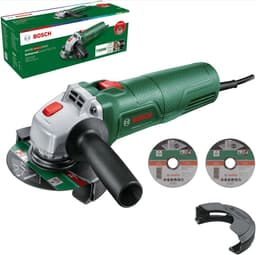
Leave the 115 mm comparison when the published depth is the thing you are short of. If you regularly cut material around 35–40 mm, a 125 mm tool and 125 mm discs are the matched pair. You then shop a 125 mm angle grinder comparison, with its own guard, its own rpm plate and its own discs. You do not buy a 115 mm body from this table and a 125 mm disc to be sure. The guard forbids that mix, whatever the spindle thread says. Leave both small sizes when the work is paving, thick concrete, or a deep cut in one pass. ITS puts that on a 230 mm grinder, which for most households is a hire tool for the day. Structural steel and load-bearing masonry belong with someone who does that work. Within 115 mm, once you have decided to stay, Bosch at £44.00 is the named DIY body with three cutting discs, and DEWINNER at £29.74 is six starter discs and a stated 240 V. Those picks assume the job fits about 30 mm. Steel specifics, including a 1 mm metal cutting disc, are on 115 mm for metal.

Common questions

What is the real difference between 115 mm and 125 mm?
About 10 mm of disc diameter, and about 8 mm of published cutting depth. Screwfix puts 115 mm near 30 mm deep and 125 mm near 38 mm. Toolstation calls 115 mm lighter and more precise, and 125 mm a bit more versatile, with neither size treated as heavy duty. Both remain small grinders on a similar spindle. A 230 mm tool is the large step. The depth figures are retailer guides. We did not verify them on a test cut.
Can I fit a 125 mm disc on a 115 mm grinder?
The disc will often start to fit, because both sizes commonly use an M14 spindle and a 22.2 mm bore. You still must not run it. HSG17 describes the guard as the part that stops an oversize wheel, with about 6 mm clearance on a new wheel for a portable machine. Removing the 115 mm guard to fit a 125 mm disc removes that protection. Buy the grinder that matches the discs you intend to spin.
Which size for bolts and rust?
115 mm is the size for bolts, brackets, surface rust and light weld dressing. The cut is shallow, the disc is easier to place in a wheel arch or on a gate, and a thin metal cutting disc does the work. UK reviews on tools in this 115 mm set already describe exhaust bolts, box metal, pipe and rust. A 125 mm disc adds a little depth you do not need for an M8 or M10 bolt, and it needs its own guard.
Which size for patio slabs?
A 50 mm slab is beyond one pass of either small grinder. Screwfix's 30 mm and 38 mm figures both stop short, even if you score from both faces. ITS points paving and concrete towards a 230 mm grinder, which most homes hire for the day. A 115 mm diamond blade can score a thin tile or a shallow joint. A slab wants the 230 mm hire. Control the dust. Brick and concrete produce silica.
Is 115 mm enough for tiles?
Yes for thin tiles and shallow scores, if you use a diamond blade rated for the tool's rpm and you keep the guard on. The Bosch reviews in this set mention tiling, and DCA reviews mention tiles and slate. A thick quarry tile or a full-depth cut in a 40 mm piece is where the 125 mm depth, or a second pass, starts to matter. Dust control matters on every tile, because the blade is only half the job.
Do both sizes use M14?
Most compact corded grinders in the UK use an M14 spindle, and the disc bore is 22.2 mm or 22.23 mm. That shared thread is why the discs interchange mechanically. In this 115 mm set, DCA, Dong Cheng and the KATSU 750 W state M14. Several other listings do not state the thread. Confirm the plate. The shared spindle is the reason the guard, and the diameter printed on it, has to be the deciding check.
Should I just buy 125 mm as a first tool?
Buy 125 mm first if your discs are already 125 mm, or if you know you need the extra depth around 38 mm. Buy 115 mm first if the work is bolts, rust, thin metal and tiles, and you want the smaller swing. Norton treats 115 mm as the common UK size for that reason. A first tool should match one disc class completely, including the guard. Owning both sizes means owning both guards and both piles of discs, which is a later decision.

Related pages

Sources

Public UK sources from the research digest, used for this page in October 2026. Prices, stars and review counts are from the twelve amazon.co.uk listings in this comparison. HSE silica limits, HAVS figures and PUWER apply at work. They are not a certificate for a domestic grinder, and they are not a personal exposure limit for a weekend cut.

  1. HSE, HSG17 Safety in the use of abrasive wheels (retrieved October 2026)
  2. HSE, PUWER L22 (retrieved October 2026)
  3. Screwfix, Angle grinder buying guide (retrieved October 2026)
  4. Toolstation, Angle grinder buying guide (retrieved October 2026)
  5. Electrical Safety First, Angle grinders (retrieved October 2026)
  6. HSE, Grinder vibration and noise bulletin (retrieved October 2026)
  7. HSE, INDG463 Control of exposure to silica dust (retrieved October 2026)
  8. Norton Abrasives UK, Why an angle grinder is essential (retrieved October 2026)