Independent comparisons. We may earn from shop links. More info

115mm angle grinder for metal

Updated: 22 October 2026

The bracket is in the vice, the bolt is rounded, and the 115 mm grinder on the bench is the tool you have. A 115mm angle grinder for metal is the right size for that bolt, for thin box, for surface rust and for dressing a light weld, as long as the disc is a metal cutting or flap disc rated for the tool and the cutting guard stays on. The published depth is about 30 mm. Thicker section is a different tool. The bodies we compared are on the [115 mm angle grinder comparison](/hub/tools/angle-grinder-115mm). Peter F. used amazon.co.uk reviews, Draper and Bosch disc pages, and Electrical Safety First. We did not time a cut. A qualifying purchase can earn a commission at no extra cost to you. Updated 22 October 2026.

The bracket is in the vice, the bolt is rounded, and the 115 mm grinder on the bench is the tool you have.

Our top picks

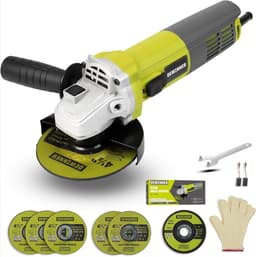
DEWINNER DEWINNER 850 W

Best value

DEWINNER DEWINNER 850 W
7.4/10about £29.74
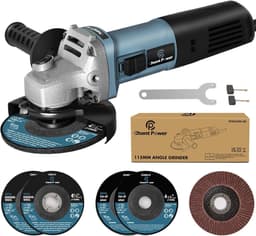
C P CHANTPOWER C P CHANTPOWER 900 W

Alternative

C P CHANTPOWER C P CHANTPOWER 900 W
6.8/10about £30.54
On this page

What 115 mm is good at on metal

This disc class is the everyday small grinder UK merchants sell for light metal. An exhaust bolt, a length of 20 mm box, a rust flake on a gate bracket, and the high spot on a tack weld are all inside a shallow cut. Screwfix's buying guide puts a 115 mm tool at about 30 mm of depth. That is their figure. It is enough for thin stock and for a bolt you can roll and finish from the other side. A one-pass cut through 40 mm bar is beyond that figure. UK reviews in this set already describe that work. A Draper Storm Force buyer cut exhaust bolts with a Bosch 115 mm disc bought separately. A DEWINNER review cut box metal, and roof tiles, on the same £29.74 tool. C P CHANTPOWER reviews talk about pipe and rust, on a 900 W kit that lists five wheels. DCA reviews mention light metal alongside tiles and slate. Those are homeowner jobs. The corded bodies here are 650–900 W. Read that as occasional DIY, then choose the disc. If you are still deciding whether 125 mm would take a thicker piece in one pass, the depth gap is only about 8 mm on Screwfix's figures. That comparison is on 115 mm or 125 mm.

The disc, not the wattage

The consumable does the cutting. A typical metal cutting disc for this tool is 115 mm across, 1 mm thick, with a 22.23 mm bore. Draper's 94770 is that size: Type 41, marked EN 12413, 13,300 rpm and 80 m/s, sold for steel and sheet. Your grinder in this set turns at 10,000–12,000 rpm, so a disc at 13,300 rpm is above the tool, which is the direction the mark has to work. The disc's maximum must be at least the no-load speed on the plate. A disc marked under the tool's speed is the wrong disc, even if the bore fits. Bosch Professional's UK page for a 115 × 1 × 22.23 mm INOX disc is the stainless option when staining matters. It is described as iron-free. An ordinary steel-cutting disc can leave iron that rusts on stainless. We do not have a UK instruction in this set for aluminium. If the piece is aluminium, use a disc the packet names for non-ferrous metal, and keep a light feed so the soft metal does not load the wheel. Kit discs in a £30 carton are starters. The DEWINNER's six discs and the DCA's six discs let you begin. The Draper and Einhell cartons do not include a cutting disc at all. EN 12413 is the buyer-facing mark on the label: diameter, bore, type and maximum rpm. Where a listing argues with itself, trust the plate.

Cutting versus grinding versus flaps

One job gets one disc, and the guard has to match. A Type 41 cutting disc is thin and is meant to cut at about 90 degrees. Explanations from trade suppliers such as Rennie Tool and Cromwell make the limit plain: you do not grind on the face of a cutting disc. Side load snaps it. The more enclosed cutting guard belongs on the tool for that cut. A depressed-centre grinding wheel, often Type 27, takes a shallow angle on the face, with the grinding guard. A flap disc, Type 27 or Type 29, is for rust, paint and weld dressing, again on the face, with the grinding guard. Swap the whole set when the job changes. Cutting a bolt, then flipping to the face of the same thin disc to clean it up, is how cutting discs fail. The DCA carton lists both a cutting guard and a grinding guard. Dong Cheng includes one flap disc and a case, so a cut still needs a cutting disc you buy. Sparks are an ignition source. Electrical Safety First wants the work clamped, both hands on the tool, and combustibles out of the spark line. Let the disc stop before you put the tool down. Ear protection matters on metal, because the cut is loud. Fitting the disc is on how to use a 115 mm angle grinder.

When 115 mm is the wrong tool

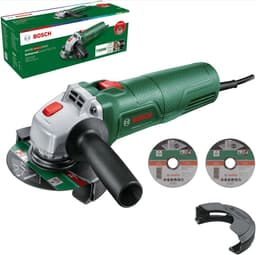
Stop at about 30 mm of depth, using the Screwfix figure as a ceiling. If the section is thicker, roll a bolt and finish from the second side only when you can do that safely in the vice. A solid bar you cannot roll, a structural section, or a cut that has to be square and full-depth in one pass is outside this category. A 125 mm tool buys only a few more millimetres. A 230 mm hire grinder is the usual next step for deep cuts. Structural steel, anything that carries a load, and any cut that might meet a hidden cable or pipe are professional jobs. So is a switch that stays on. In this set, one DEKOPRO 800 W review describes a switch stuck on, and more than one KATSU 750 W review describes a spindle lock that will not engage. Either fault ends the metal session. You unplug, and you return the tool. Which body to buy, once the job is genuinely thin metal, is the best 115 mm angle grinder page. The short version is the Bosch at £44.00 if you want three cutting discs and a named DIY brand, and the DEWINNER at £29.74 if you want six starters and a stated 240 V, 12,000 rpm plate. A 900 W sticker does not make a kit disc into a trade wheel.

Common questions

Can a 115 mm grinder cut steel?
Yes, thin steel. Bolts, sheet, light box and small pipe are the jobs this size is sold for, with a 115 mm metal cutting disc and the cutting guard on. UK reviews in this comparison mention exhaust bolts, box metal, pipe and rust. The tool has to be corded DIY wattage in the 650–900 W band if it is one of these twelve listings. The disc's marked rpm must be at least the speed on the plate. Thick plate and structural steel are outside that yes.
How thick can I cut?
Use about 30 mm as the published ceiling. That is Screwfix's figure for a 115 mm grinder, and we did not measure it. A bolt you can turn in the vice can be finished from the second side. A 40 mm bar in one pass is beyond this disc class. A 125 mm tool is only about 38 mm on the same retailer's guide. Deeper work is a 230 mm hire, with its own guard and discs. Forcing a thin disc to finish a deep cut overheats the wheel.
Cutting disc or grinding disc?
Use a thin Type 41 cutting disc, about 1 mm, for the cut, held square to the metal, with the cutting guard. Use a grinding wheel or a flap disc for rust and weld dressing, on the face, with the grinding guard. Do not grind on the face of a cutting disc. Trade explainers describe that side load as the way a cutting disc breaks. Draper's 115 × 1 × 22.23 mm metal disc is the shape to look for, marked EN 12413.
What about stainless or aluminium?
For stainless, use an iron-free INOX disc if staining matters. Bosch Professional UK sells a 115 × 1 × 22.23 mm disc on that basis. An ordinary steel disc can leave particles that rust on the surface. For aluminium, this comparison does not have a UK listing instruction to quote. Use a disc the packet names for non-ferrous metal, and keep the feed light so the wheel does not clog. The rpm rule is the same: the disc mark must meet or beat the tool.
Do kit discs from a £30 tool last?
Treat them as starters. The DEWINNER lists six and the DCA lists six, and DCA reviews call the supplied discs basic. Nobody in the captured UK reviews gives a count of cuts before a kit disc is finished, so we will not invent one. A 1 mm steel disc from a known abrasive maker, marked above your tool's rpm, is what you buy once the included wheel is done. Einhell and Draper do not include that first cutting disc. Budget one with the tool.
Why must I not grind with a cutting disc?
A cutting disc is thin and reinforced for a straight cut. Pressure on its face bends it and it can burst. Suppliers who sell 115 mm Type 41 discs describe them as cut-only. Dress rust or a weld with a flap disc or a grinding wheel, and change the guard when you change the disc. The extra minute on the bench is the whole safety difference. Sparks from either disc are still an ignition source, so the floor stays clear.
When is 125 mm or a 230 mm hire better?
Choose 125 mm when you need the few extra millimetres Screwfix puts at about 38 mm, and you will buy 125 mm discs and the matching guard. Choose a 230 mm hire when the section, the slab or the concrete is simply deeper than a small grinder. Stay on 115 mm for bolts, thin box, rust and light welds. The spindle may accept the larger disc. The 115 mm guard must not be asked to. That rule is the point of HSG17's guard, including at home.

Related pages

Sources

Public UK sources from the research digest, used for this page in October 2026. Prices, stars and review counts are from the twelve amazon.co.uk listings in this comparison. HSE silica limits, HAVS figures and PUWER apply at work. They are not a certificate for a domestic grinder, and they are not a personal exposure limit for a weekend cut.

  1. HSE, HSG17 Safety in the use of abrasive wheels (retrieved October 2026)
  2. HSE, PUWER L22 (retrieved October 2026)
  3. Screwfix, Angle grinder buying guide (retrieved October 2026)
  4. Toolstation, Angle grinder buying guide (retrieved October 2026)
  5. Electrical Safety First, Angle grinders (retrieved October 2026)
  6. HSE, Grinder vibration and noise bulletin (retrieved October 2026)
  7. HSE, INDG463 Control of exposure to silica dust (retrieved October 2026)
  8. Norton Abrasives UK, Why an angle grinder is essential (retrieved October 2026)