Independent comparisons. We may earn from shop links. More info

Cantilever or centre pole parasol

Updated: 22.10.2026

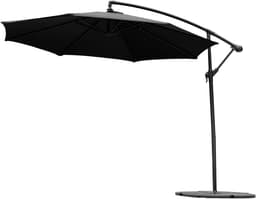
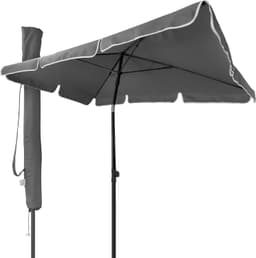
You are looking at two parasols that both say garden, and the dearer one is not an upgrade if your table already has a hole. A centre pole drops through that hole. A cantilever, also sold as a banana, offset, or overhanging parasol, stands the mast to the side so the space under the cloth stays clear. This page is only that choice. The listings are in the [parasol comparison](/hub/sun-shades/parasols). This is not a wind test.

You are looking at two parasols that both say garden, and the dearer one is not an upgrade if your table already has a hole. A centre pole drops through that hole.

Our top picks

On this page

Start with the furniture

Walk out to the table before you open another tab. If there is a hole, and the hole lines up with where people sit, a centre pole is the tool. The canopy is centred on the mast, which is what you want over a dining top. If you are still unsure, it is the hole, not the star rating. A 4.8 from a thin review count does not turn a side arm into the right mast for a table that already accepts a pole. A café or a roof terrace over a public path is a different case.

What changes besides the pole

The space under the cloth is the point of the arm. You can pull chairs out, or lie on a lounger, without a mast at the centre. You pay for that with a base beside the seats, so you need floor for the foot as well as for the people. Tilt and rotation are not the same feature. A centre pole often tilts the canopy on a joint. A cantilever may rotate around the mast only if that listing says so. One UK review of the Harrier 3 m says that parasol adjusts and swivels. The specification block does not name the control.

Wind and the base

The arm is a lever, so wind has a longer path into the base than it does on a centre mast. Schneider, writing about its own parasols, says a centre mast is more wind-stable because the load is central. Opal's sheltered-garden guide puts about 20 kg to 25 kg on a 3 m centre pole through a table, about 40 kg to 50 kg freestanding, and about 80 kg to 100 kg on a 3 m cantilever. When to close the canopy is on the parasol base and wind page.

Why the prices look inconsistent

On amazon.co.uk on 21 October 2026 many centre-pole canopies sat about £16 to £60 and cantilevers about £56 to £90, often before a proper base. Opal's prices with a base sit much higher, about £60 to £250 and about £120 to £500 and up. The VOUNOT 2.7 m is about £39.46, and reviews say the base is not in the box. The Harrier 3 m is about £69.99, listed at 14 kg, with the base not stated. The gap between those canopy prices is not the cost of an 80 kg foot.

In this comparison

Choose the VOUNOT 2.7 m when the table has a hole. You still buy a base, and you still close it in gusts. Choose the Harrier 3 m when the seats have no hole and you will buy the heavy base the shops describe for a side arm. The Harrier 2.7 m, about £37.99, is not a clean example of either type. The title says a garden parasol. The manufacturer reference says an overhanging cantilever. Who should skip each row is on the shortlist.

Common questions

Which is more stable in the wind?
Schneider describes a centre mast as more wind-stable because the load is central, and a side arm as something the wind can lever. That is that maker's account, not a test of these listings. A centre pole on about 10 kg can still topple, which is what some VOUNOT reviews describe. Close either type when it gusts.
Do I need a heavier base for a cantilever?
Yes, on the shop guides compared here. Opal's 3 m line is about 80 kg to 100 kg for a cantilever against about 20 kg to 50 kg for a centre pole. Shade Specialists go to about 120 kg for a cantilever of that size. The guides disagree on the number. They agree the side arm is the heavier problem.
Is a cantilever worth it for a dining table that already has a hole?
Not as a default. You already have the feature a centre pole needs, and you would be paying for an arm and a much heavier base to solve a problem you do not have. The hole is for a centre pole. A cantilever mast stands to the side, so forcing it into the hole wastes the mechanism.
What is a banana parasol?
A banana parasol is another name for a cantilever. The mast is at the side and the arm reaches over the seats. Offset, overhanging, and free-arm are the same family. The name does not tell you the base weight or whether a cover is in the box.
Can a cantilever rotate?
Some can, when the listing says so. One review of the Harrier 3 m says that model adjusts and swivels. The specification block does not name the control. Do not assume 360 degrees. A centre-pole tilt is different: the canopy tips, and the mast stays in the hole.
How do I tell if a listing is really a cantilever?
Look for cantilever, overhanging, banana, offset, or free-arm in the title, and for a mast at the side in the photos. The Harrier 3 m title does say cantilever. The Harrier 2.7 m title says a garden parasol with a crank, while the manufacturer reference says an overhanging cantilever. When those lines conflict, the listing has not told you which variation arrives. Do not guess from the price.

Related pages

Sources

Public UK sources and the amazon.co.uk listings compared on this page. Listings captured 21 October 2026. Updated 22.10.2026.

  1. NHS sun safety (retrieved 22.10.2026)
  2. Met Office UV codes (retrieved 22.10.2026)
  3. GOV.UK ultraviolet FAQ (retrieved 22.10.2026)
  4. BSI BS EN 13758-1:2002 (retrieved 22.10.2026)
  5. General Product Safety Regulations 2005 (retrieved 22.10.2026)
  6. Consumer Rights Act 2015 section 22 (retrieved 22.10.2026)
  7. Opal: parasol base weight (retrieved 22.10.2026)
  8. amazon.co.uk Garden Parasols best sellers (retrieved 22.10.2026)