When to close a parasol: the wind figure you should use

Close a parasol above about 25 km/h, about 16 mph, and whenever you leave it unused. A heavy base does not change that. Opal's 25 mph is a different number.
On this page
The canopy is tugging the pole, the plates are ticking on the slabs, and you are trying to decide when to close a parasol without a number you trust. Makers print a speed. A heavy base makes that speed feel optional. It is not.
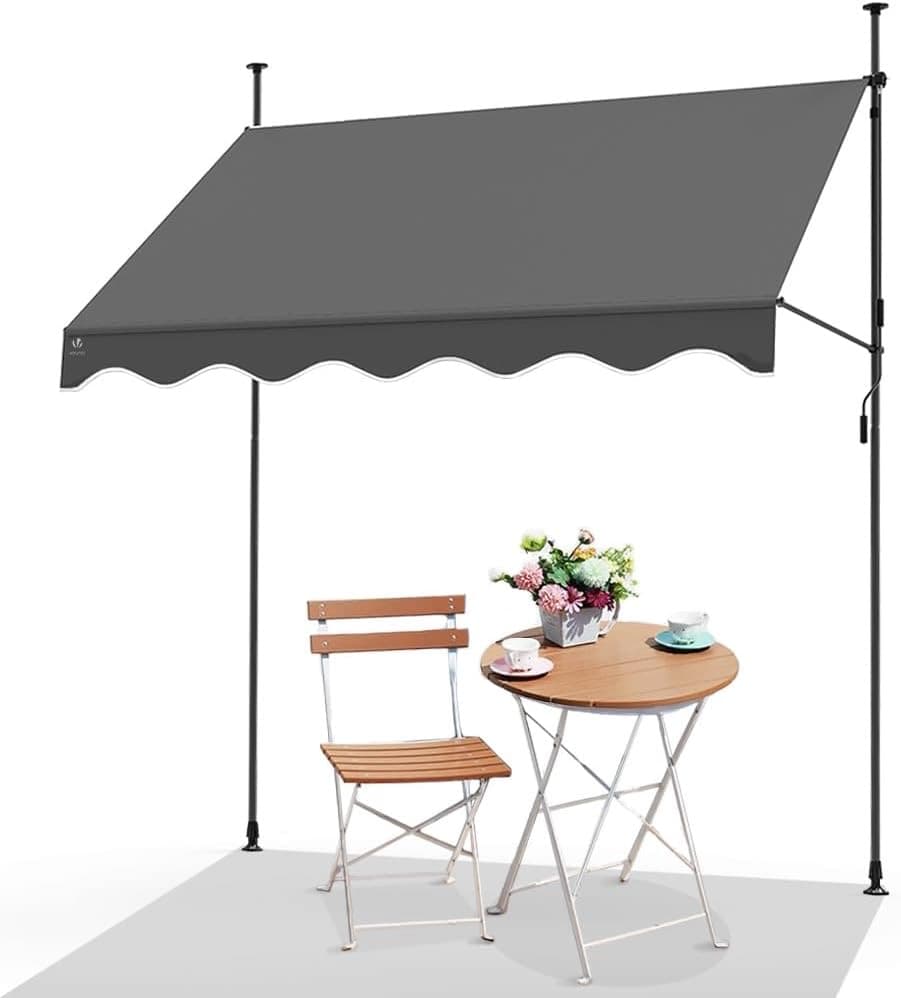
Products Compared put the Brollies and Parasols usage PDF next to Umbrosa's wind note and the Met Office storm advice on 16 October 2026. We did not measure your patio. The VOUNOT 2.5 × 1.2 m telescopic awning is the clamp awning in our standing set, about £64.99, and the listing prints no wind class. A purchase through our links can earn a commission at no extra cost to you.
In short
Close a parasol above about 25 km/h, about 16 mph, and close it when you leave, including overnight. Store it above 35 km/h if you are following the Brollies PDF. A heavy base does not replace that close. Opal's 25 mph is a higher, different figure. On a roof, the coast, or any exposed site, close the shade whenever it is unused.
The number makers print
Brollies and Parasols say to close the parasol over 25 km/h and to store it over 35 km/h. Umbrosa say close from 25 km/h, also written as 16 mph and Beaufort 4. Their scores assume a fixed mount in a wind tunnel. A plastic base, a table hole, or a balcony clamp is a weaker anchor. Use 25 km/h as the moment to close, and assume your setup reaches trouble earlier.
Twenty-five kilometres an hour is about 16 miles an hour, a breeze that moves small branches. Twenty-five miles an hour is stronger. Opal's base article says close above about 25 mph. This page uses 25 km/h as the earlier close.
No parasol British Standard turns 25 km/h into a legal wind class. BS EN 581 covers outdoor tables and seats, and it warns that a table hole may not hold a parasol. The AKTIVE 61151, a 175 cm square in our square parasol comparison, prints no wind class. A review on that page, from outside the UK, says wind broke the side bases. That is one comment, not a UK test. If the canopy is swaying, close it.
Why a heavy base does not change it
The base stops the pole walking. It does not stop the cloth being a wing. Plia and Opal talk about 80 to 100 kg for a 3 m cantilever because the arm is a lever. That weight is for ordinary use, not permission to leave a 3 m square open at 40 km/h. Nova Outdoor Living describe wind damage as the failure you prevent by closing the parasol. A tilted canopy shows more cloth to the wind, so tilt in calm air and close it when the breeze picks up.
A shell rated 80 kg with sand can sit nearer 60 kg with water. Christow print that pair for the same four shells. You can think the base is heavy and still be light. Even a genuine 80 kg does not change the close rule. The how to weigh down a parasol article is the fill and the pole diameter. This article is when you stop trusting the fill.
Overnight, storms, and exposed sites
Nova say never to leave a traditional parasol open overnight, and to close it when it is unattended. A still evening is not a forecast for the small hours. A Met Office storm warning is separate from the 25 km/h line. Secure the parasol, and a base that can slide, so furniture is not blown into windows and doors. Do that before the tiles start to lift. Securing furniture is not a wind rating the listing never printed.
Poggesi say to close parasols on exposed, roof, and coastal sites whenever they are unused. A roof terrace and a balcony facing the sea are that list. A sheltered side passage can wait for the 25 km/h signs, and you still close it when you leave. After a gale, check ribs and screws, which is the calendar in how often to check a parasol.
Sails and awnings
A shade sail has no runner to pull down. Wind loads the D-rings and the wall. If the cloth is flapping, ease the tension or take it off. A sail left up because it is meant to stay up is how fixings pull out of mortar. Our sun sail comparison is the cloth, not a wind certificate.
A standing awning should be wound in when the wind rises. The standing awning comparison includes the VOUNOT, 2.5 m by 1.2 m, with a manual crank and poles listed at 210–320 cm. It is 4.3 from 965 amazon.co.uk reviews, and no wind class is printed. United Kingdom reviews say to wind the cloth in, and that the side arms can lift if the cloth is slack. A crank that binds is a stop, not a cue to force it. Use 25 km/h as a fair trigger to wind in.
When a fitter should take over
Bolt a deck plate or set an in-ground socket only if you know the structure, or hand it to a fitter. A roof you do not own and a balcony slab you must not pierce are not Saturday experiments. Umbrosa's tunnel scores belong to a fixed anchor. Even after a proper bolt, close the canopy in wind. The fixing holds the pole. It does not make the cloth immune.
Stop if an arm has bent, a weld has cracked, or the runner grinds. Close it and speak to the retailer. A fault in ordinary use, when you closed the canopy as asked, is a different conversation from damage after the cloth was left up in a named storm. At about 25 km/h, close it. Above 35 km/h, store it if you follow the usage PDF. Every night, close it. On a roof or the coast, close it whenever you are not under it.
Common questions
At what wind speed do I close a parasol?
Is 25 km/h the same as 25 mph?
Does a heavy base let me leave it open?
What about overnight?
What about a roof terrace or the coast?
Do I close a shade sail the same way?

Peter F. is the editor for DIY & tools at productscompared.co.uk. Comparisons in this category are checked against amazon.co.uk listings, review evidence and public UK sources.
Related articles

How to weigh down a parasol
Fill to the kilograms the label assumes, then close the canopy anyway when the wind rises.

Parasol or shade sail
A parasol folds. A sail has to be eased off its fixings. Neither earns a windproof claim.

How often to check a parasol
Check at the start and end of the season, and again the day after a gale.