How often to check a parasol through a British year

Check a parasol at the start and end of the season, and again after a gale. Closing it while damp causes mildew. This is a calendar, not a buying guide.
On this page
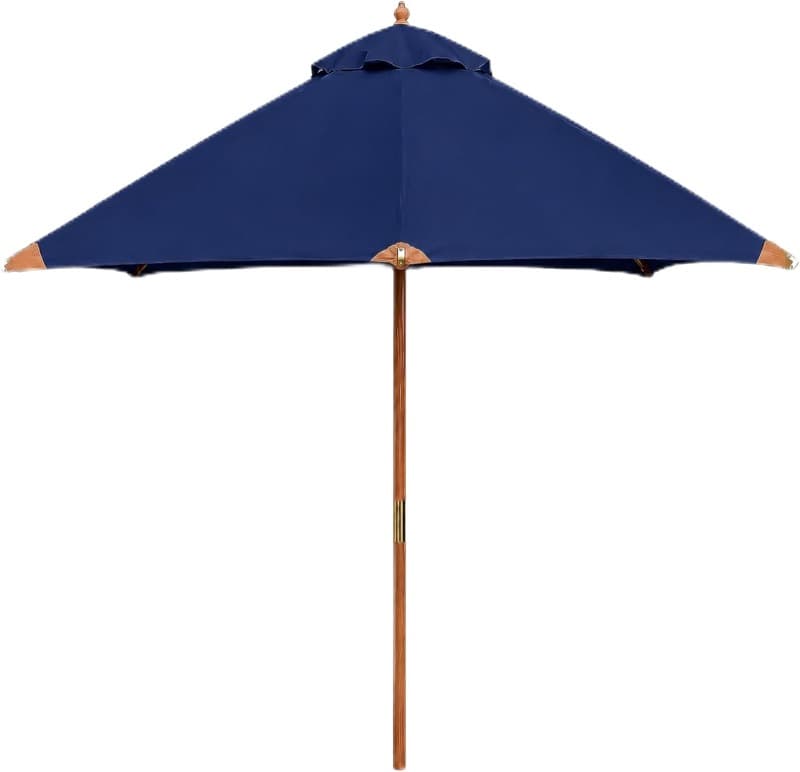
You put the parasol away dry in October, or you meant to, and in April you want to know how often to check a parasol so the first weekend does not start with a stuck runner. The calendar is short. The gale in July is the extra date. Products Compared read Tectona, Ruma, Cape and Co., and the Garden Marketplace hardwood pulley listing on amazon.co.uk on 16 October 2026. We did not run a lab test. This is a calendar, not a buying guide. A purchase through our links can earn a commission at no extra cost to you.
In short
Check and clean at the start and the end of the season. Through summer, brush the cloth and tighten screws every few weeks, and always after a windy day. Dry the canopy before you cover it. A crank gets silicone on the mechanism, not solvent on the cloth. A pulley still needs the screw, the cord, and the seam check. Stop if a rib is bent or the mechanism binds.
Start and end of the British season
Tectona's care page is the backbone: clean at the beginning and at the end of the season, and brush during it. In Britain that beginning is whenever you first want shade, often April or May, not a fixed bank holiday. Open the parasol on a dry, calm day. Walk the ribs with your hand. Look at the tips, the seams, and the place the runner or the pulley locks. Tighten every screw on the frame and the base collar. Barker and Stonehouse say to tighten screws regularly. Winter vibration and a damp shed loosen them even when you did nothing wrong.
Ruma's furniture calendar puts a mechanism check before summer. If you have a crank, turn it slowly through the full open. If it binds, stop. Smartwares' warning about forcing a crank applies here. The Garden Marketplace hardwood pulley on the wooden parasol comparison lifts on a cord. The listing does not state a crank, a canopy size, or a pole diameter. It lists the parasol at 10 kg, with 180 g/m² water-repellent polyester, and it does not say a base or a cover is included. Water-repellent is not a waterproof claim. The spring check is the cord and the ribs. The pulley should run without grinding. Free a stuck rib by hand. Do not invent a crank.
The end of the season is the same inspection, plus a real dry. Wash if it needs it, leave it open until the polyester is dry, then fold and cover. IKEA UK suggest a thorough clean of outdoor furniture about once a year. Doing that clean in autumn prevents the mildew you would otherwise find in spring. A cover on a damp canopy is how a check in October becomes spots in May. Store the parasol indoors if you can. Empty a water-filled base before a hard frost. That is a base job, and it belongs on the same weekend.
During summer, and after wind
Cape and Co. suggest a spring wake-up, a wipe every two or three weeks in summer, an autumn deep clean, and a dry winter store. That wipe is a cloth check, not a strip-down. Dust, pollen, and bird marks come off more easily if you do not leave them for a whole August. A clean canopy can skip a wipe. Belveo say to check after strong wind or about every five openings, and to rinse about every 15 days on the coast. Treat those intervals as that maker's schedule. An inland parasol opened every Saturday does not need a coastal rinse. A parasol that went through a gale needs the after-wind check even if you opened it yesterday.
Look for a rib that is no longer straight, a seam that has opened, a base that has shifted, and a grip screw that has backed off. A canopy you closed in time can still have a walked base. A canopy you left open can have a bent frame. Do not open a bent parasol to see if it still shades. Closing around 25 km/h is how you have fewer of these mornings. The check is how you notice the one you missed. A standing awning gets the same look on its arms and its crank. Wind it in when the breeze rises, then inspect before you wind it out again.
The canopy and the fixings are different jobs
The cloth wants dryness and a mild wash. The fixings want a tight screw and, if there is a crank, a lubricant that stays off the polyester. Ruma say silicone spray on the mechanism, not WD-40 on the fabric. Spray onto a cloth or mask the canopy. A pulley parasol may have no gearbox. Do not lubricate it out of habit. A stiff cord is often a twisted rib, not a dry bearing. The base grip is a fixing too. The kilogram can be correct and the screw loose, and the pole still walks. Once a year, confirm the pole diameter. The hardwood listing does not print one, and a stored UK review says the pole was too wide for an existing table hole. Checking often does not make the wrong base fit.
You can tighten screws on a dirty canopy. You should not fold a freshly washed canopy because you were done for the year. Dry first. The how to clean a parasol canopy page is the wash. This page is when you do it. A thorough clean belongs at each end of the season. Summer wipes stay light. After wind, look before you wash. Soap does not straighten a rib.
Stop when the structure is no longer sound: a cracked joint, a bent rib, a crank that binds, a pulley that chews the pole, or a base that cannot grip. Close it and leave it closed. A new fault on a recent purchase is a seller conversation, with photos. Your rights when a parasol fails is that conversation, and this page is not legal advice. Maintenance is screws, dryness, and a look after weather. It is not a repair of a failed weld.
Common questions
What do I check in spring?
What should I check after a windy day?
Do I oil the crank?
What about a wooden pole?
When is the check a reason to stop using it?

Peter F. is the editor for DIY & tools at productscompared.co.uk. Comparisons in this category are checked against amazon.co.uk listings, review evidence and public UK sources.
Related articles

How to clean a parasol canopy
Lukewarm water, no bleach, and a full dry before the cover goes on.

When to close garden shade in the wind
The extra check is the day after a gale, not only the first weekend in May.

Your rights when a parasol fails
A fault is not the same as a canopy left open in wind. Satisfactory quality depends on price and description.