How to weigh down a parasol so the pole stays put

Weigh down a parasol with the filled kilograms the chart assumes, a pole that fits, and a close when the wind rises. Do not average conflicting shop charts.
On this page
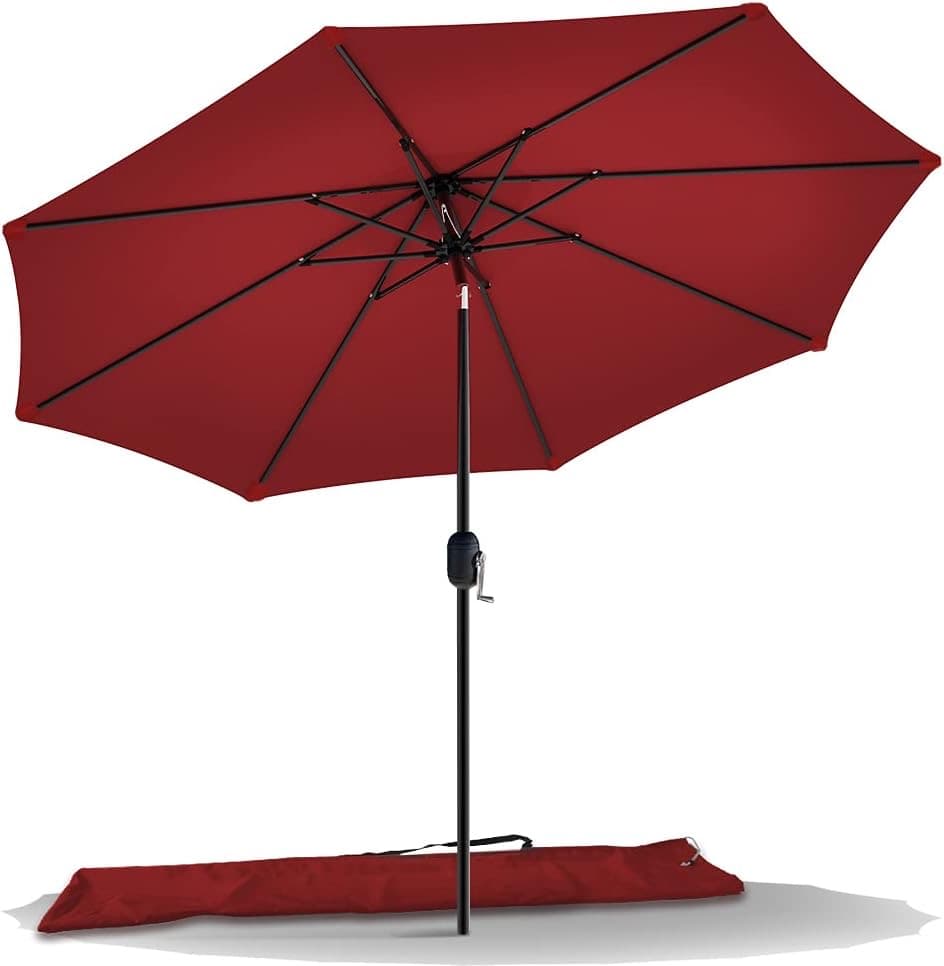
The pole leans after lunch, the plastic shell is sloshing, and you are looking up how to weigh down a parasol as if one more paving slab will finish the job. A slab might add a kilogram. It will not fix a socket of the wrong diameter, or a chart you read from the wrong row.
Products Compared lined up Opal, Plia and the retailer charts below, plus the VOUNOT 2.7 m listing in the tilting parasol comparison, on 16 October 2026. We did not weigh your base. A purchase through our links can earn a commission at no extra cost to you.
In short
Weigh the situation first: centre pole or cantilever, through a table or freestanding, sheltered or exposed. Fill to the kilograms the heavier chart assumes, with the fill the label used. Fit the pole, then close the canopy around 25 km/h anyway. The VOUNOT 2.7 m crank tilt has no base in the box. About 5 kg on the listing is the parasol, not ballast.
Weigh the situation before you weigh the base
A kilogram is only true for the case the writer had in mind. Opal split a 3 m centre pole into about 20 to 25 kg through a table in shelter and about 40 to 50 kg freestanding, and put a 3 m cantilever at about 80 to 100 kg. Plia say 20 kg and up for a freestanding centre pole under 2 m, 40 kg and up for 2.6 m to 3 m, and 80 to 100 kg for a 3 m cantilever. White Stores print about 9 to 12 kg for a 2 m parasol. Cosy Casa recommend 55 kg for one 3 m square cantilever. Do not average those lighter figures with Plia.
For an open patio, follow the heavier freestanding figure for the pole you own, even when the pole also drops through a table. The VOUNOT is a 2.7 m octagonal centre pole with a hand crank and a push-button tilt stated at about 45 degrees, so use Plia's 40 kg and up. The comparison shows about £39.56, 4.5 from 510 amazon.co.uk reviews, and no base. UK reviews there say wind can blow it over without one. Tilt adds sail area, and a 3 m cantilever chart does not apply. The 175 cm AKTIVE 61151, with a 28/32 mm pole, is the under-2 m case in the square parasol set.
Fill it the way the kilograms assume
The number on the box is the filled weight. Christow's four shells are 60 kg with water and 80 kg with sand. If you wanted the 80 and you added water, you bought the 60. Opal's picture of the gap is that sand is about half as heavy again as water, near 1.5 kg a litre against 1 kg, so a base sold as 100 kg can land nearer 65 to 70 kg on water alone.
Water can freeze and split the shell. Sand does not evaporate through a loose cap. Follow kiln-dried sand and then water only when your base says so, as on a Nova-style set sold as 20 kg a section toward 80 kg. Builder's sand is not automatically kiln-dried. A concrete or granite block is already the weight. John Lewis list those as finished kilograms, and a 15 kg block is not an 80 kg cantilever base. Two adults should move a filled base. Do not carry it upstairs alone.
Make the pole fit, then tighten the grip
Measure the pole where it enters the base, not halfway up the mast. Plia say most poles are 38 mm or 48 mm. The VOUNOT states 38 mm and a 0.7 mm wall, so the grip has to match 38 mm. A 48 mm socket lets it orbit, and the AKTIVE's 28/32 mm steel is a worse fit. Tighten the screw or clamp only after the pole is seated on the metal. Tape is not a reducer.
Through a table, freestanding, or a bolt
Through a table is the lightest honest case, and only in shelter. BS EN 581-3 warns that a hole in an outdoor table may not support a parasol. If the table rocks when you tug the pole, the hole is not the base. Add freestanding weight or move the parasol off the table.
Freestanding is the patio case: the heavier chart for that centre pole. For a cantilever, assemble the cross first, fill every section, then attach the parasol, which is the order MonsterShop give. A round plate under an offset arm is the wrong footprint. Opal say a cross is often about a metre across, so on a small balcony choose another shade rather than saw it down. A bolt into a deck or footing is a fitter's job. Do not drill a balcony you rent. Umbrosa's higher wind talk assumes a fixed anchor, and the bolt does not hold the cloth flat in a gale.
Close it anyway
Brollies and Parasols say close above 25 km/h and store above 35 km/h. A full sand base does not change that. Close the canopy if it sways, overnight, and whenever it is unused on a roof or the coast. About £39.56 was the cloth. The kilograms are the rest.
Common questions
How do I stop a parasol blowing over?
How heavy should the base be?
Should I use sand or water?
Will a 38 mm base fit a thinner pole?
Is the table enough?
Can I add patio slabs?
What if I need to bolt it down?

Peter F. is the editor for DIY & tools at productscompared.co.uk. Comparisons in this category are checked against amazon.co.uk listings, review evidence and public UK sources.
Related articles

Sand or water in a parasol base
Sand is heavier and will not freeze like water. Some labels want sand and then water.
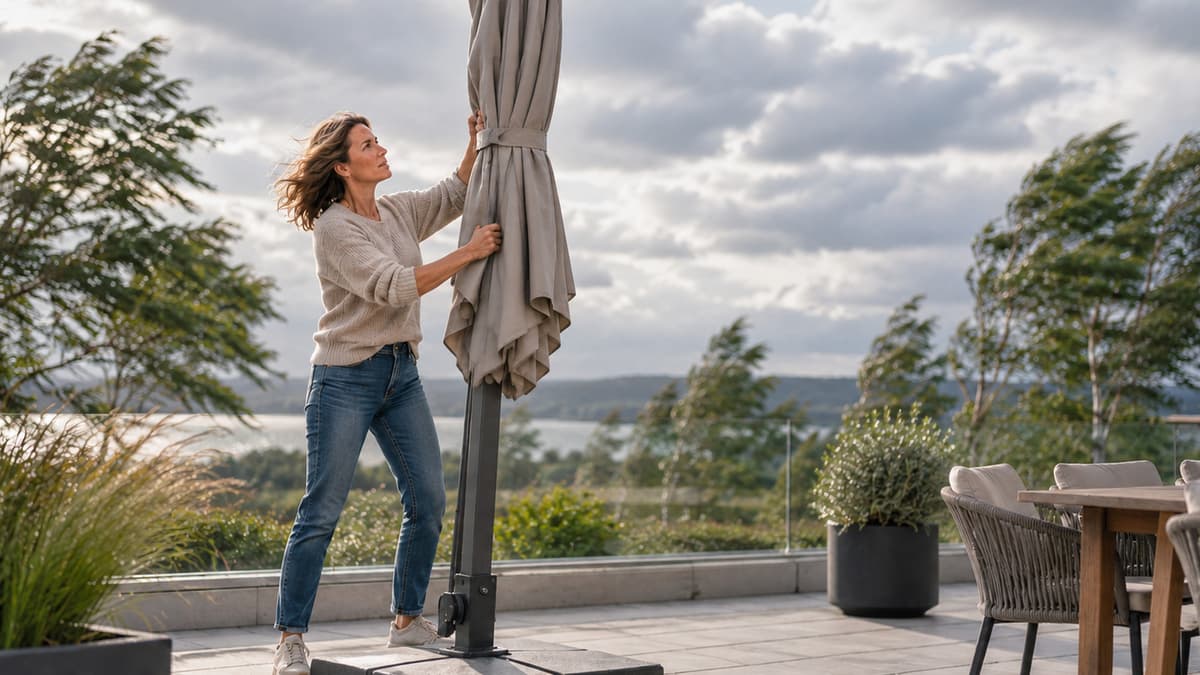
When to close garden shade in the wind
Even a correctly filled base is not a storm rating. Close the canopy around 25 km/h.

Your rights when a parasol fails
A fault is not the same as a canopy left open in wind. Satisfactory quality depends on price and description.