Parasol base sand or water: which fill hits the kilos

Parasol base sand or water only hits the printed kilos if you use the fill on the label. Water is lighter and can freeze. Some sets want sand, then water.
On this page
The shell says 80 kg, you filled it from the hose, and the parasol still shifts. Parasol base sand or water is why. The kilograms are the filled weight, and only for the fill the label used. Products Compared compared Christow, Opal, Belveo, and a Nova sand-then-water instruction on 16 October 2026. We did not weigh your base. A purchase through our links can earn a commission at no extra cost to you.
In short
Sand is heavier than water and does not freeze the same way. Christow's four shells are 80 kg with sand and 60 kg with water. Some sets say kiln-dried sand, then water. Follow the label. A concrete base is not filled. You still close the canopy around 25 km/h.
The kilograms are the filled weight
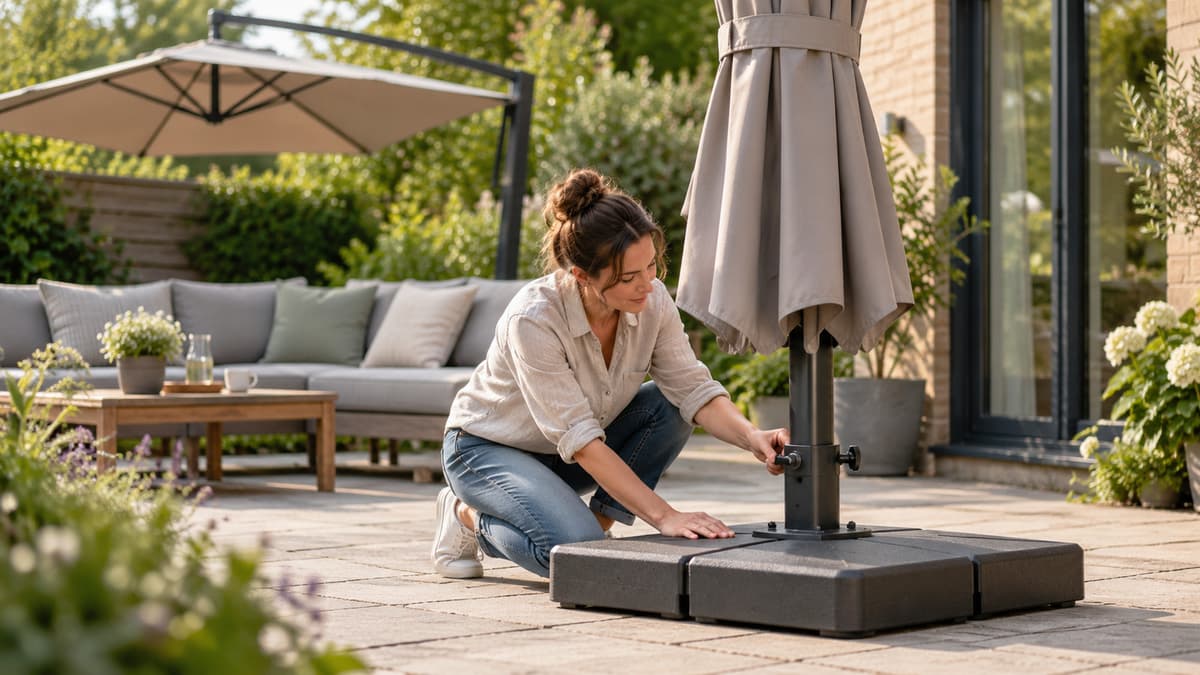
An empty cross base is a plastic frame. The number on it is the weight after the correct fill. Christow print both outcomes on the same four shells: 60 kg with water, 80 kg with sand. Stop at the tap and you own the lighter product. Opal put the gap down to density: sand about 1.5 kg a litre, water about 1 kg. A base advertised at 100 kg can sit nearer 65 to 70 kg on water alone. That is the wrong fill, not a faulty shell.
Charts of 80 to 100 kg for a 3 m cantilever, Plia's band and Opal's, mean that heavy condition, not a half-full water shell. MonsterShop say fill every segment before you attach the parasol. One empty corner leans. Fill them all, fit the pole, then tug the canopy on a calm day. A tug shows an empty section.
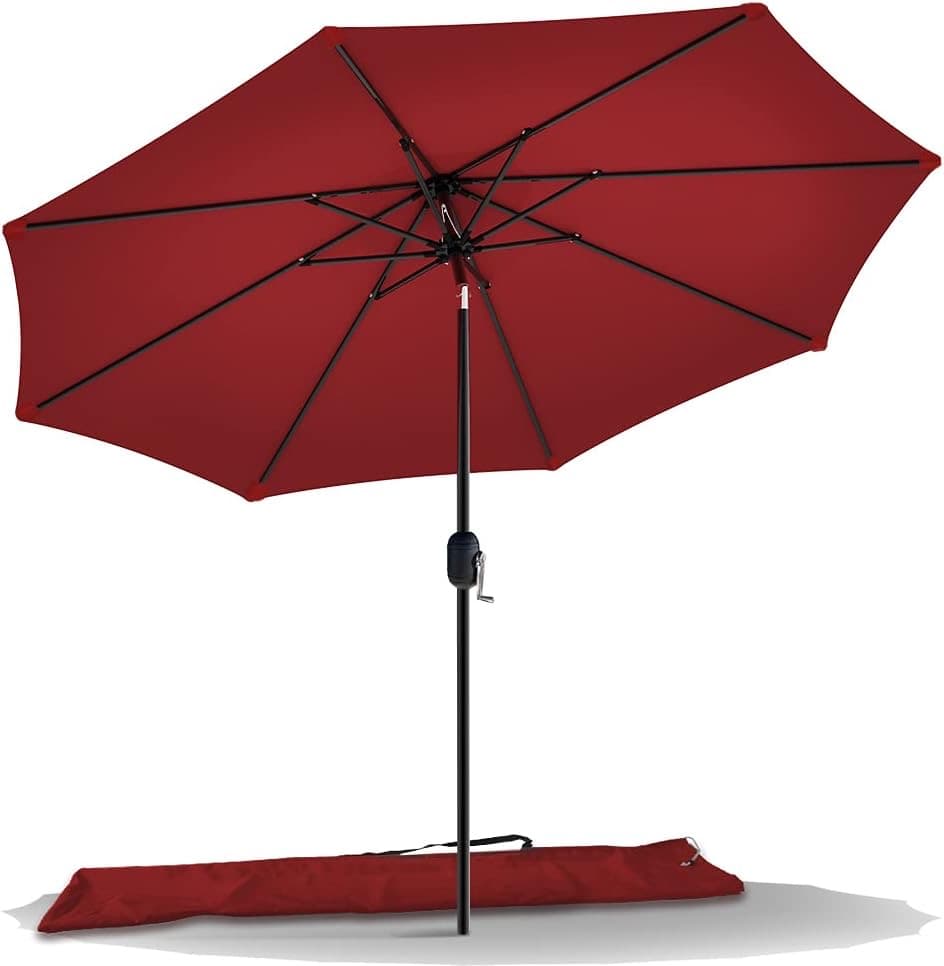
The VOUNOT 2.7 m crank tilt in the tilting parasol comparison does not include a base. About 5 kg is the parasol, on a stated 38 mm pole. The sand-or-water question starts when you buy a base for that pole. Pour the fill into the base, not the pole. Tilt does not change the density of water. Use the sand kilogram if the label offers it.
What sand does that water does not
Sand holds the higher kilogram in the same volume. It does not evaporate through a loose cap, and it does not expand when the patio freezes. Belveo prefer sand for stability and water when you empty the base often. Water suits a parasol you move every Sunday. It is a poor trade if the shell stays out all winter.
You can drain water and skip 20 kg sacks through the house. On a sheltered centre pole, the 60 kg Christow figure may be what the label rates. On a cantilever sold as 80 kg, water alone misses the claim. Do not average 60 and 80 and call 70 close enough. Which kilogram you need first is in how to weigh down a parasol.
Keep sand dry until it is in the shell. Wet builder's sand is not kiln-dried sand. It clumps, it stains, and a leaking cap leaves a pile on the slabs. A cracked water shell shows itself. A slow sand leak looks like dirt, and the kilogram falls every week.
When the instructions say both
Sand and then water is a third method, easy to misread as either. Romerils describe a Nova cantilever base rated 80 kg as kiln-dried sand saturated with water, about 20 kg a section, listed at £129 on the page we read. The sand is the mass. The water packs the gaps. Water alone is not their 80 kg. Sand alone may miss the pack they specified. Do the sequence they printed, in the sections they counted.
Do not copy that sequence onto a Christow shell with two separate ratings. Christow already state what water weighs and what sand weighs. Water on a full sand fill can overflow and stress the lid, and the result is neither published figure. One base, one instruction. If the leaflet is lost, look up that model.
A concrete or granite base is not filled. John Lewis have listed 15 kg and 25 kg concrete bases and a 60 kg granite pack as finished weights. Match those to the chart for your canopy. Do not drill them and pour water in. A 15 kg block is not an 80 kg cantilever base.
Winter and moving it
Empty water before a hard frost if the shell stays outside. MonsterShop's warning is crack and split. Sand can stay if the label allowed it. Empty the water on a mild day before the freeze, not after the plastic has split.
Moving house is water's best day: drain, carry the shells, refill. Sand means bags and two people. Barker and Stonehouse's note about two adults applies. A metre-wide cross will not turn on a stair. Empty it on the patio. Do not tip sand down a drain.
None of the fills changes the close. Above about 25 km/h, and overnight, close the canopy. An accurate 80 kg keeps the pole from walking while you sit there. It is not permission to leave cloth up in a gale.
An 80 kg sand fill is several sacks, often about 20 kg a section on the Nova pattern. Fill one section, cap it, then the next. If the cap threads cross, empty that section and start again. Write on tape what you used, and the date.
Common questions
Should I use sand or water in a parasol base?
Why is the base lighter than the box says?
Will water freeze and crack it?
Can I mix sand and water?
Is builder's sand the same as kiln-dried sand?
Does a tilting head change the fill?

Peter F. is the editor for DIY & tools at productscompared.co.uk. Comparisons in this category are checked against amazon.co.uk listings, review evidence and public UK sources.
Related articles

How to weigh down a parasol
The kilograms depend on a centre pole or a cantilever, and on whether the parasol stands free.
What garden shade costs in Britain
The canopy is the first line on the bill. Sand, or a finished base, is the line that lets it stand.

Your rights when a parasol fails
A faulty parasol is judged on satisfactory quality for the price and the description. This is not legal advice.