Parasol or shade sail: which shade fits the patio

Choose a parasol or a shade sail by what holds the cloth: a base you can move, or fixings and a fall for rain. Neither one is the more windproof option.
On this page
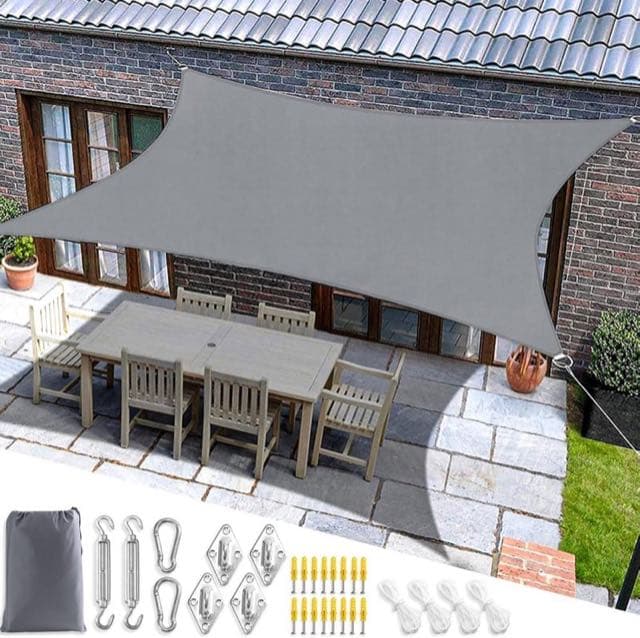
The patio is a square of slabs, the afternoon sun hits the table, and you are choosing a parasol or shade sail without being sure which one you can put up. A parasol is a pole and a canopy you open. A shade sail is a sheet you tension between fixing points. Products Compared separated sails out of the square-parasol set on 16 October 2026 because a sail is not a square parasol. We used UK install notes and NHS shade advice, and we did not stand either cloth in a wind tunnel. A purchase through our links can earn a commission at no extra cost to you.
In short
Choose a parasol when you can give it a base and you want to close it quickly. Choose a shade sail when you can fix it to something solid and give the cloth a slope for rain. A sail is not more windproof. A renter who cannot drill is usually looking at a parasol or a clamp, not a new set of wall eyes. Sunscreen still applies under both.
A pole you can move, or a sheet you tension
A garden parasol stands on a base or through a table. You move the base, or you leave the pole and close the cloth. The square parasol kept in that set, the AKTIVE 61151, is a 175 cm centre pole at £41.98 with no base stated. A cantilever moves the pole to the edge. Neither needs a hole in the house wall.
A shade sail has no pole under the cloth. Clara Shade Sails' install guide talks about turnbuckles and a slope so rain leaves. Shade Sail Boutique says the job can take about one to two hours if the posts already exist. Without those points, it becomes a building job. In the sun sail comparison, the Mokani 3 x 4 m rectangle is about £41.99 and includes turnbuckles, pad eyes, ropes and a bag. The wall or the posts still have to be there.
The cloth shapes are not interchangeable. A square parasol maps to a square table. A triangle sail needs three fixing points. A rectangle covers a long patio and still needs a fall. If you only wanted the pole out of the way, a cantilever does that without becoming a sail. The triangle shade sail comparison is the three-corner list.
Rain, wind, and taking it down
Rain on a parasol depends on the fabric claim. The AKTIVE listing prints UV30 and does not answer a waterproof question, so treat that canopy as shade. Rain on a sail depends on a waterproof cloth and a slope. A flat sail holds a puddle, then dumps it. The Mokani listing asks for a tilt of 20 to 40 degrees, and stored reviews still describe rain sitting in a sagging centre.
You close a parasol. Brollies and Parasols say close above 25 km/h and store above 35 km/h, including overnight. A heavy base does not entitle you to leave the canopy open. The Met Office tells you to secure loose garden items in a storm so they do not hit glazing. An open parasol is one of those items.
A sail stays up by tension, and in a rising wind that load moves to the wall, the post, or the eye. Taking it down means easing turnbuckles and removing the cloth, which is slower than closing a parasol. A sail is not more windproof because it has no pole to blow over. A standing awning is a frame you wind in. The standing awning comparison is where that frame lives.
What has to be fixed to the building
A freestanding parasol asks nothing of the wall and a lot of the floor: a level surface, a base of the right kilograms, and a socket that fits the pole. The AKTIVE pole is 28/32 mm, thinner than the 38 mm and 48 mm many bases expect. A sail asks nothing of a parasol base. D-rings, pads, and turnbuckles have to land in masonry, sound timber, or posts set for the load. Shade Sail Boutique's time estimate assumes those points exist.
Renters should assume drilling is off until the lease says otherwise. A clamp on a rail, or a small centre pole in a base, leaves with you. A sail kit with masonry screws does not. On a high exposed rail, close or remove the shade when you are not under it. Do not barbecue under either cloth. GOV.UK's outdoor fire guidance bars barbecues under awnings. If a sail changes a flat's exterior, ask before you drill.
Which comparison to open next
Open the square parasol comparison if you want a centre pole and a small square. Open the sun sail comparison if the pole is what you want gone, and the triangle shade sail comparison for three fixing points. Crocus, on a captured garden listing, showed triangle sails about £99.99 to £149.99 and square sails about £174.99 to £299.99. Those are that retailer's prices, not amazon.co.uk. A £41.98 parasol with no base is not cheaper than a sail once posts are included.
If you can place a base and you will close the cloth, buy a parasol and size it to the table. If you can fix into sound structure and you will slope the cloth, buy a sail. If you rent and you cannot drill, leave the sail in the basket. A cantilever is still a parasol, and it is not the AKTIVE. The NHS still wants sunscreen from 11am to 3pm, March to October, under whichever cloth you choose.
Common questions
Parasol or shade sail for a patio?
Which one comes down faster in wind?
Can I fit a sail without drilling?
Does a sail keep rain off?
Which shades a square table better?
What if I rent?
Do UV claims differ?

Peter F. is the editor for DIY & tools at productscompared.co.uk. Comparisons in this category are checked against amazon.co.uk listings, review evidence and public UK sources.
Related articles
What garden shade costs in Britain
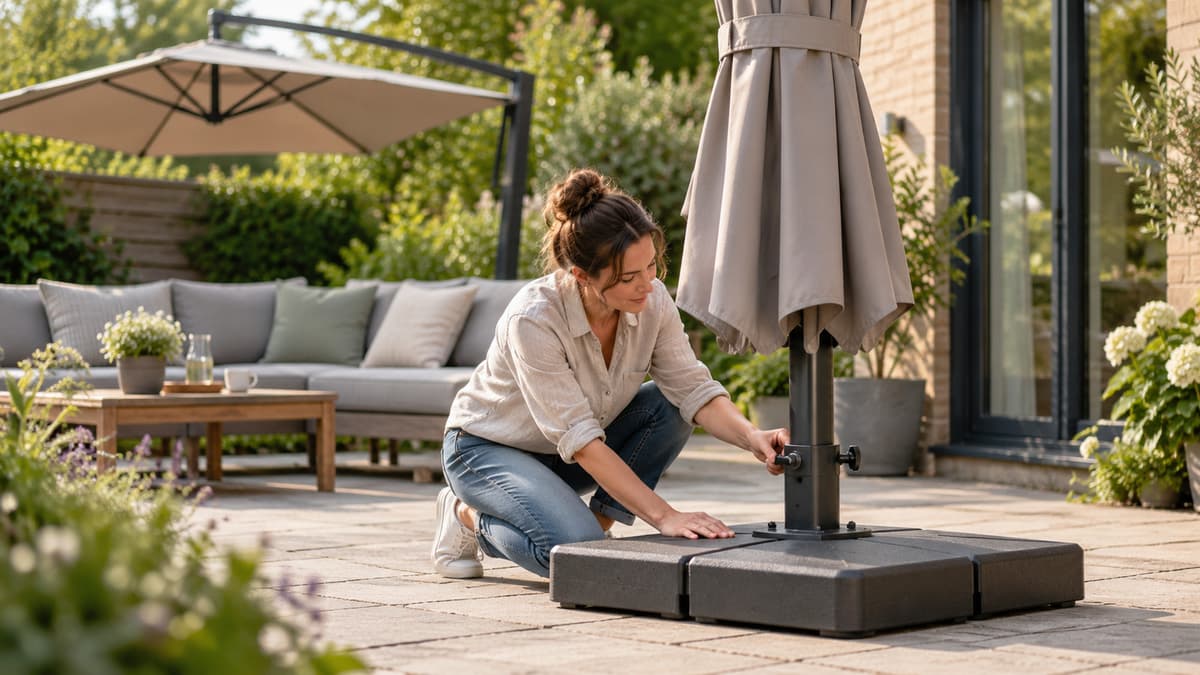
The canopy price leaves out the base. A sail's cloth price leaves out the posts and fixings.
What UV claims on shade mean
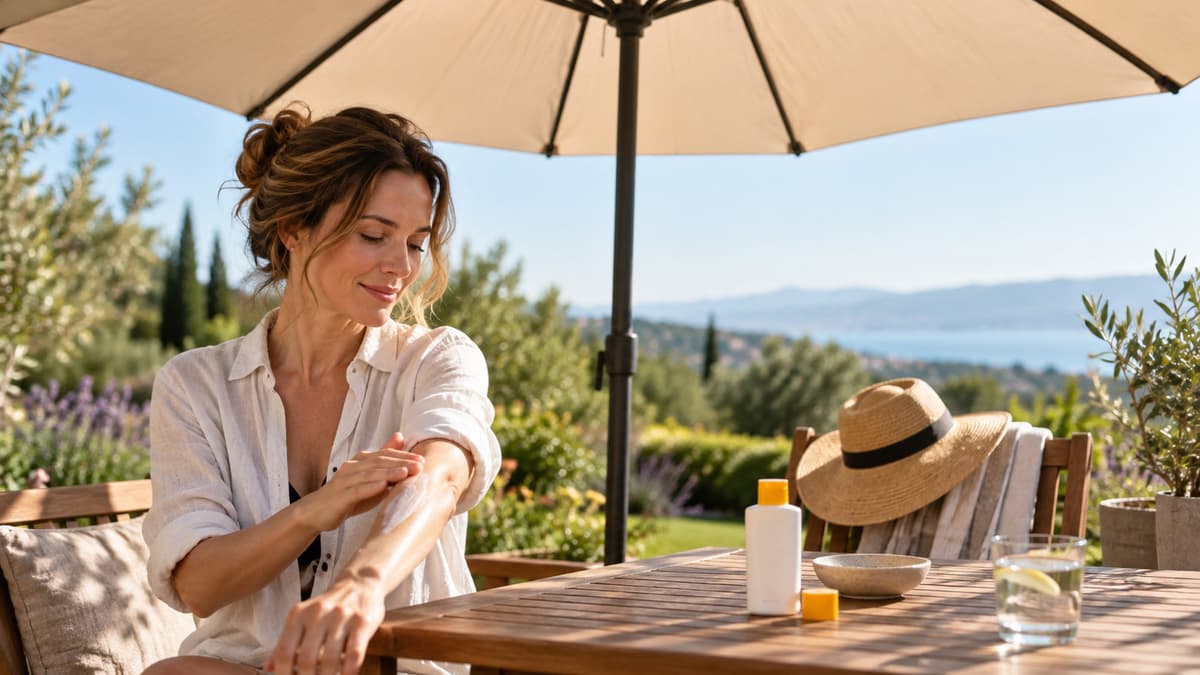
A UV30 line and a UPF print are fabric wording. Shade, clothing and sunscreen still belong together.
When to close garden shade in the wind
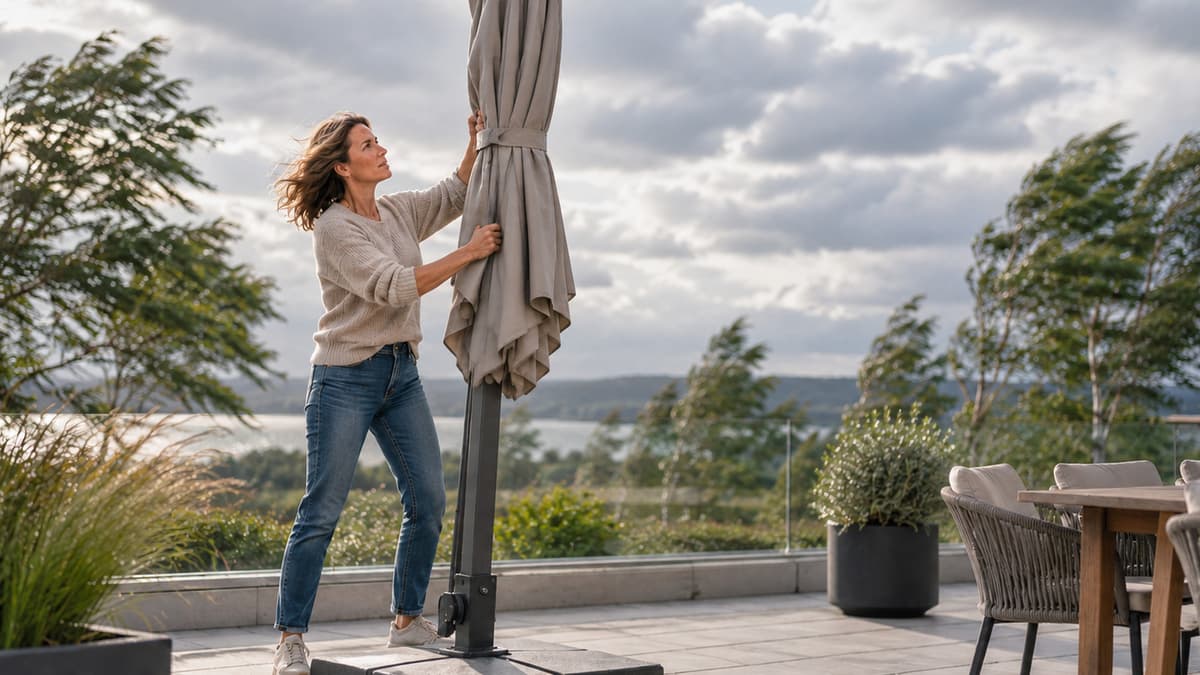
A heavy base is not a reason to leave cloth up. Close a parasol around 25 km/h.