UPF parasol meaning: what the shade claim leaves out
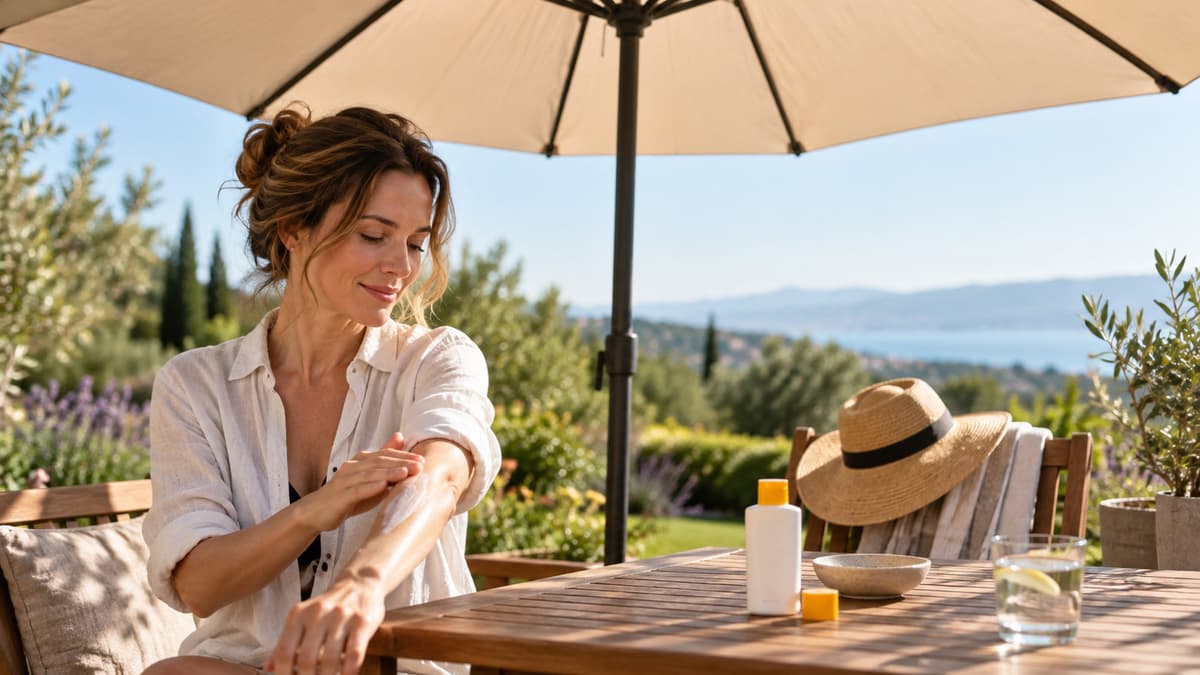
UPF on a parasol is a fabric claim, not a reason to skip sunscreen. UV30 is not the same words as UPF 50+. The NHS still want shade, clothing, and SPF.
On this page
The bullet says UV30 or UPF 50+, and you want the UPF parasol meaning before the sunscreen stays indoors. The number is a fabric claim, not a reason to skip the rest of sun safety. Products Compared read the NHS, Cancer Research UK, and the British Association of Dermatologists on 16 October 2026, and the UV lines on the listings we kept. We did not lab-test a canopy. A purchase through our links can earn a commission at no extra cost to you.
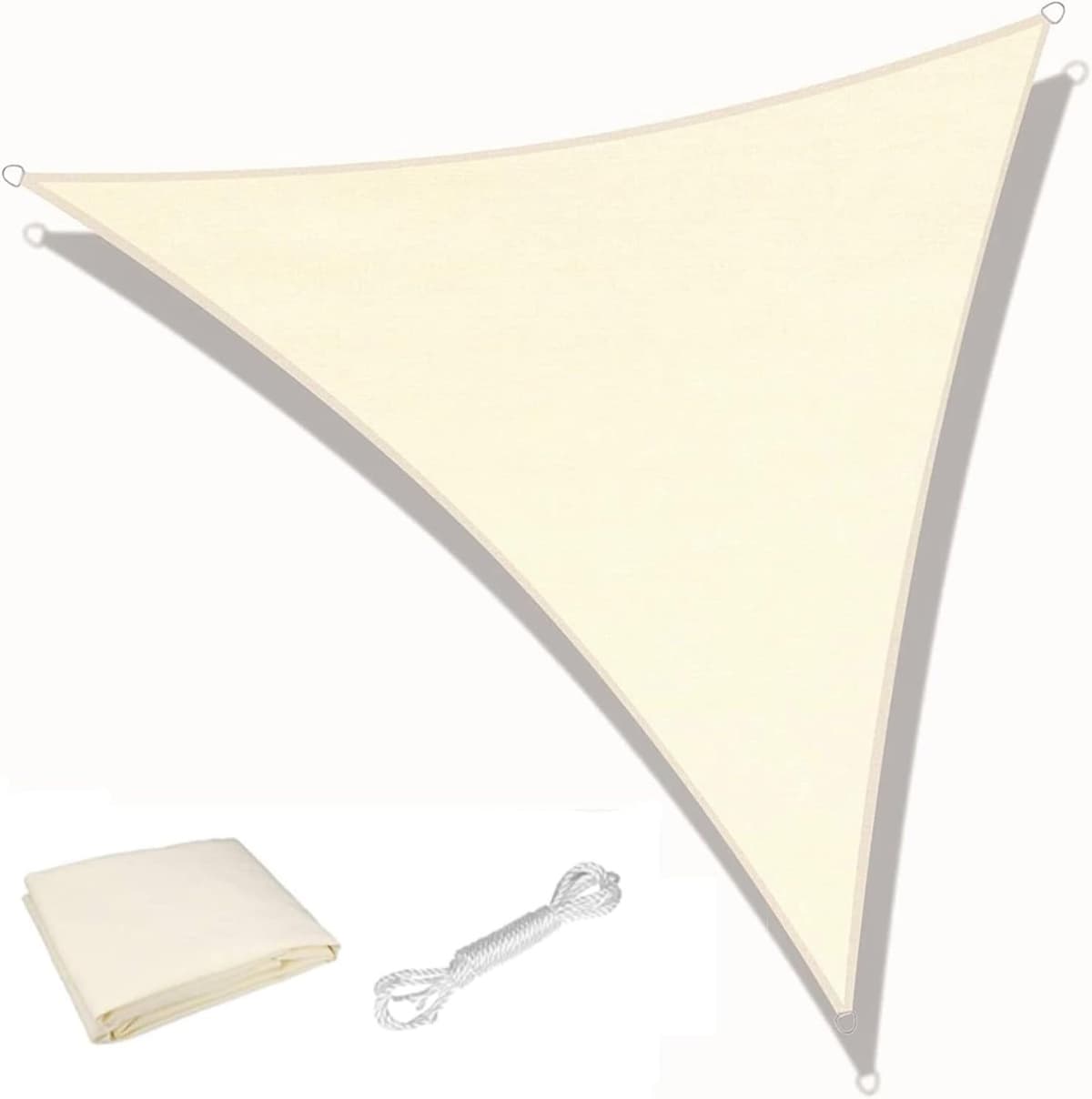
The square we recorded prints UV30. The KAHEIGN 3 x 3 x 3 m, a cream equilateral sail at about £14.99, prints a 98% UV block on one bullet and names no laboratory. This page will not merge those sentences into one rating.
In short
UPF 50+ means excellent on Cancer Research UK's clothing scale, and UPF 30 to 49 means very good. UV30 is not that sentence unless the seller says so. A figure such as 98% is a third wording. The NHS still want shade from 11am to 3pm, March to October, plus clothing and sunscreen. A parasol or a sail leaves sky at the edges. You can burn in that shade.
The words on the label
UPF is ultraviolet protection factor, the scale used for fabrics. Cancer Research UK put 30 to 49 at very good and 50 and above at excellent, and they say wear reduces it. A shirt rated 50+ when new is not automatically 50+ when it is thin. A parasol that prints UPF 50+ is asking you to treat the canopy like that clothing. The honest listing names the number and, if it was tested, the test. Many bullets print the number and stop.
UV30 is what the AKTIVE 61151 prints. The square parasol page records it as UV30 on polyester, not as UPF 50+. This article will not turn UV30 into a percentage or into UPF 30. That conversion would be ours. If a brand has a test that equates the two, it belongs on their page. It is not on the captured listing.
Percentages are a third dialect. One KAHEIGN bullet names 180 g/m² HDPE and a 98% UV block, while the material attribute says polyester. A percentage is not a UPF 50+ shirt unless a method, a wavelength, and new cloth are shown. Without those it is a slogan. The box is the sail and four 2 m ropes. Hooks are extra, and the listing asks for a 20–40 degree slope. None of that upgrades the UV line.
What UK health pages still tell you to do
The NHS ask you to use shade between 11am and 3pm, from March to October, plus clothing and sunscreen of at least SPF 30. Shade is one of three habits. The British Association of Dermatologists name the same window, and their sunscreen fact sheet says a beach umbrella may give only limited extra protection because the sky around it still reaches you. A garden square works the same way. Pale paving and water reflect. Reviews of the KAHEIGN say curved edges make the hung shade smaller than the 3 m D-ring span.
WHO's public note says shade structures are not complete protection against UV. Use that beside the NHS line, not instead of it. Children need the same shade, clothing, and sunscreen, and they do not stay in the middle of a small square. A UV bullet is not a reason to stay out longer.
Shade moves, and cloth wears
The sun moves. A centre-pole parasol covers a patch that tracks only if you tilt or shift the base. By 4pm in June the table can be in sun while the canopy still looks up. The 175 cm AKTIVE loses the chairs earlier than a 3 m square. Tilt catches more wind, and a UV claim is not a wind class. The close around 25 km/h still applies to a parasol.
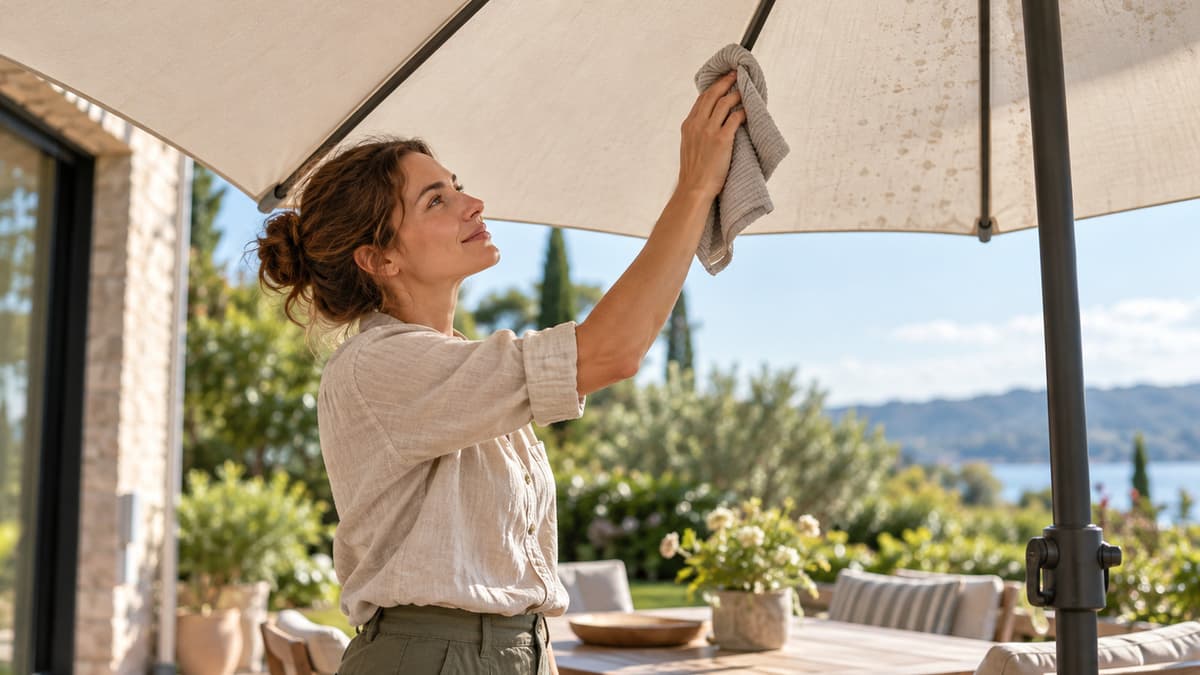
Wear is the slow version of the same gap. Cancer Research UK say clothing UPF falls as cloth thins. We will not invent a new number after a wash. Bleach is a poor way to refresh a finish, and a sail stretched between posts changes the weave, so year one's print is not year three. The parasol canopy cleaning guide is lukewarm water, mild soap, and drying the cloth open. Dust is not a coating, and a clean canopy does not print a certificate.
How to read the next product page
Read three things, and do not merge them: UPF with a number, UV with a number, or a percentage; whether a laboratory is named; and the size of the shade against the seats. If no test is named, the claim is untested on the page you can see. The AKTIVE's UV30 sits on 175 cm. The KAHEIGN's 98% line sits on a 3 x 3 x 3 m triangle, listed on the triangle shade sail comparison. Rectangles are on the sun sail page.
Then put the NHS habits back on top: shade from 11am to 3pm, clothes, and sunscreen of at least SPF 30, reapplied as the bottle says if you sit at the edge. At noon a 175 cm square can cover the plates. By half past two a forearm can be in full light while the UV30 print stays on the hem. A percentage on a sail still leaves a bright triangle at the fixings. Read UV30 as UV30, and read 98% as the bullet that printed it.
Common questions
What does UPF 50+ mean on a parasol?
Is UV30 the same as UPF 30?
Can I still burn in the shade?
Does the sun move out from under the canopy?
Do children need more than the parasol?
Does wear reduce the rating?

Peter F. is the editor for DIY & tools at productscompared.co.uk. Comparisons in this category are checked against amazon.co.uk listings, review evidence and public UK sources.
Related articles

Parasol or shade sail
The UV words differ. The NHS advice does not. Shade plus clothing plus sunscreen.
How to clean a parasol canopy
Harsh bleach can strip a finish. Cleaning does not restore a UV number the listing never proved.
What garden shade costs in Britain
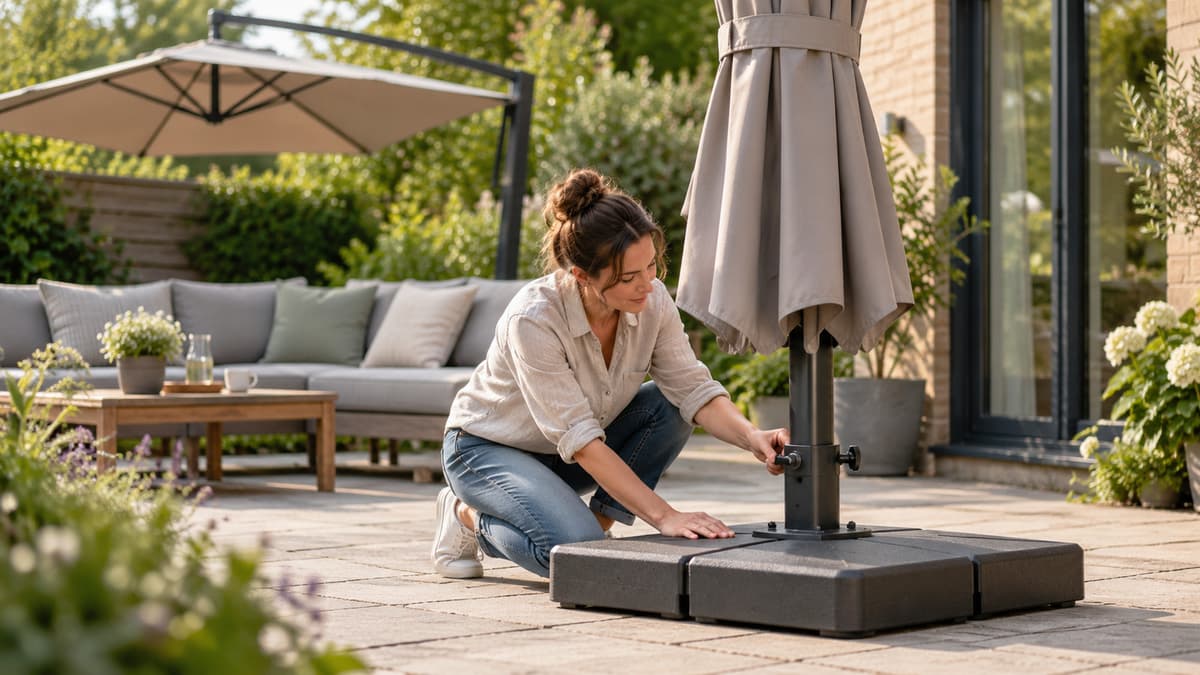
The cloth price is the first line. A base, or the sail's fixings, is the line that finishes it.