Independent comparisons. We may earn from shop links. More info

How to hang a picture with nails safely

Updated: October 2026

You have chosen a pin or small hook and want one neat hole, not a bent nail and a chipped wall. Learning how to hang a picture with nails begins before the hammer moves: identify the wall, check for hidden services, calculate the fixing position and know when to stop. These steps suit a light print on appropriate plasterboard or timber. If you still need to choose a pack, start with the [picture nail comparison](/hub/staplers-and-nail-guns/picture-nail); brick and heavy frames require a different route.

You have chosen a pin or small hook and want one neat hole, not a bent nail and a chipped wall.

Our top picks

On this page

Check the wall before you pick up the hammer

Use a detector to check the intended area for pipes and electrical cables. Wickes includes this step in its UK picture-hanging guidance because a small nail can still reach a hidden service, particularly when you do not know how the wall was built. Next, decide whether the surface is plasterboard, timber or solid masonry. Do not use the nail itself as a probe. A light unglazed print is the sensible job for a picture pin or small two-pin hook. A heavy wooden frame, glazed picture, mirror, shelf or television needs a fixing chosen for its load and the wall. If the surface is brick or concrete, open the picture nail for masonry page before swinging the hammer. If it is hollow board, the picture nail for plasterboard page explains the load boundary.

Mark the height, then the fixing

Choose the visual position of the frame before marking the nail. Wickes uses an eye-level guide of 57 to 60 inches, about 145 to 152 cm, from the floor to the centre of the picture. That is a starting point rather than a rule. Mark the top centre of the frame lightly on the wall. Then turn the frame over and pull its wire or cord upwards as it will sit under load. Measure the vertical distance from that tensioned wire to the top edge. Transfer the same distance down from your top-centre mark and make a small cross. That lower cross is the fixing point, not the original top mark. For a sawtooth hanger or D-ring, measure from the frame's top edge to the actual point that will sit on the nail. With two D-rings, use a level and mark both positions at the correct spacing; do not estimate by eye after placing the first hole.
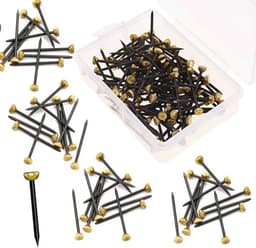
Fizzix Fizzix 60 picture nails

Testsieger

Fizzix Fizzix 60 picture nails
7.2/10about £3.79

Drive a pin or a two-pin hook

Put on eye protection, especially if the product is sold as hardened or suitable for masonry. Hardened nails can fracture, and a glancing hammer blow can send a fragment towards your face. Keep fingers away from the striking path; if the nail is too small to hold safely, use pliers to steady it for the first light blows. For a loose picture pin, place the tip on the cross and hold the shaft at the angle intended by its instructions or hanger design. Begin with a light tap to seat it, then strike the centre of the head squarely. Several amazon.co.uk reviewers across the compared packs report bent pins, and an off-centre blow is a common way to create that problem. Short, controlled strikes are better than one hard swing. For a two-pin picture hook, place the bottom or hanging point of the hook on the cross, as Wickes describes for a lightweight plasterboard print. Seat one pin lightly, check that the hook remains level, then seat the other before driving either fully. The picture nail buying guide helps distinguish a loose pin, hook, masonry nail and mixed kit. Hang the frame gently, keeping one hand beneath it while the wire settles. Check from the side that the cord sits behind the head or fully inside the hook rather than balancing on an edge.

When to put the hammer down

Stop immediately if the nail bends, springs back, refuses to advance after light controlled blows, or causes the wall face to crack or crumble. Do not straighten a partly driven nail and continue, because the metal may be weakened and the hole already enlarged. Remove it carefully, identify the wall and choose another fixing rather than making a second hole beside the first. Brick changes the method. EasyFrame states that a conventional picture hook and pin will not enter brick and recommends a drilled hole, wall plug and screw for a secure hang. Plasterboard also has a clear exit. Wickes moves from a small two-pin hook for a lightweight print to a screw into a stud or a hollow-wall anchor for a heavier frame. Call a professional for a large mirror or television, for a fixing above a bed or child, when the wall is cracked or damp, or when you cannot identify the substrate and hidden services.

Common questions

Where should the nail go for the right picture height?
Mark the desired top centre of the frame, then measure from the top edge down to the tensioned wire or actual hanger point. Transfer that distance below the top mark. Wickes suggests placing a picture's centre about 145 to 152 cm from the floor as a starting point, not a compulsory height.
How do I avoid bending a picture pin?
Seat the point with a light tap, keep the hammer face centred on the small head and use short controlled blows. Eye protection is sensible, especially for hardened nails. If the pin stops advancing or bends, stop and identify the wall rather than striking harder.
Can I use one pin for a heavy frame?
Not on the evidence in these listings. None gives a tested kilogram load that makes one pin suitable for a heavy or glazed frame. Use a stud, rated hollow-wall anchor, or suitable plug and screw according to the wall and load.
What if the plaster starts to crumble?
Stop immediately and remove the fixing carefully. Crumbling can mean weak plaster, an unsuitable fixing or masonry close behind the finish. Repeated attempts enlarge the damaged area; choose a fixing designed for the substrate or ask a professional.
Do I need safety glasses for one nail?
Yes when the nail is hardened or sold for masonry, and they are sensible for any overhead or uncertain strike. Hardened nails can shatter, while glancing blows can throw fragments. The small size of the job does not protect your eyes.
Can I hammer a picture pin into brick?
A conventional brass picture pin is the wrong tool for bare brick. UK guidance recommends drilling, plugging and screwing for a secure hang. Masonry picture nails are a separate product for limited light-frame attempts and still require eye protection and a stop rule.

Related pages

Sources

Public UK sources on plasterboard fixings, product safety, and tenancy inventories. Listing prices and star counts are from the amazon.co.uk extracts for this comparison, dated 16 October 2026. Prices move.

  1. British Gypsum site book (retrieved 16 October 2026)
  2. GOV.UK, General Product Safety Regulations 2005 (retrieved 16 October 2026)
  3. Consumer Rights Act 2015, section 20 (retrieved 16 October 2026)
  4. Tenancy Deposit Scheme inventory guide (retrieved 16 October 2026)
  5. LION heavy-duty claw picture hooks (retrieved 16 October 2026)
  6. Screwfix picture fittings (retrieved 16 October 2026)
  7. BuildWiz UK, nails (retrieved 16 October 2026)
  8. EasyFrame, hanging pictures (retrieved 16 October 2026)