Independent comparisons. We may earn from shop links. More info

Masonry nails for hanging pictures on brick

Updated: October 2026

You have found brick, concrete or hard render behind the finish and a brass picture pin will not move. Masonry nails for hanging pictures are sold as a no-drill option for light frames, but they are not a universal answer: hardened metal can shatter, hard brick can bend the nail and soft masonry can crumble around it. This guide compares the claims made by the three masonry-style packs in our [picture nail comparison](/hub/staplers-and-nail-guns/picture-nail), then sets the point at which a drilled plug and screw is the safer choice.

You have found brick, concrete or hard render behind the finish and a brass picture pin will not move.

Our top picks

On this page

Why a picture pin fails on brick

A conventional picture pin is designed for a softer surface such as plasterboard or timber. EasyFrame's UK brick-hanging guidance states that a picture hook and pin will not enter brick. The word hardened in a pin title does not make that pin a masonry fixing. If a Merriway or Fizzix pin stops at the surface, do not hit harder. Several reviewers across these listings report bent pins, and forcing one into brick can also chip the face. A bend tells you that the wall, nail or method is wrong; it does not invite a larger hammer. Remove the pin carefully and reassess the substrate. Solid walls vary considerably. Medium-density brick or block may accept an appropriate masonry nail, while engineering brick and very hard concrete may require pre-drilling, a frame fixing or a concrete screw. The picture nail for plasterboard page covers light frames on board, while the picture nail buying guide separates pins, hooks, masonry nails and kits.

What the masonry packs in this set claim

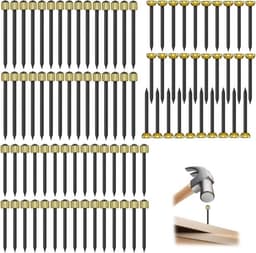
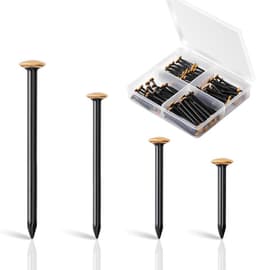
The unbranded box contains 120 nails: 30 each at 20, 25, 30 and 40 mm. At £9.49, it showed 4.7 stars from 52 reviews on 16 October 2026. Its bullets claim concrete or brick use without pre-drilling, but the specification is inconsistent. The title says stainless steel, while the bullets refer to hardened steel, iron nails, a rust-resistant coating and brass-coloured heads. Eteamcan also contains 120 nails in 20, 25, 30 and 40 mm lengths. It cost £7.98 and showed 4.5 stars from 20 reviews. The listing describes carbon steel but does not use the word hardened; a bullet claims a 2 mm hole. One UK reviewer says the large head retained picture wire on a brick wall, while another says the first nail bent. VZU lists 90 black nails at 26, 27 and 35 mm for £5.59. Its surface attribute names plasterboard, brick, concrete and wood, and a bullet mentions lightweight mirrors without giving a kilogram figure. The 5.0-star average comes from one review, which does not establish masonry performance. A listed item weight of 10 g and unit count of one also sit awkwardly beside the 90-piece title. None of these packs supplies a tested picture-hanging load.

Shatter risk, eyes and hidden services

Wear safety glasses or goggles before striking a masonry or hardened nail. BuildWiz warns that hardened masonry nails can shatter, and MyToolShed's UK guidance also calls for eye protection and attention to glancing blows. A small picture does not remove the risk: impact energy is concentrated at a tiny steel head close to your face. Gloves can protect against rough masonry, but they do not make it safe to hold a short nail directly beneath the hammer. Pliers can steady the nail for the first light blows while keeping fingers away. Once it is seated, remove the pliers and use short, square strikes rather than a wide swing. Check for hidden pipes and cables before making any hole. Solid walls can contain chased electrical cables and plumbing, especially in predictable vertical or horizontal runs from sockets, switches, taps and radiators. Use a detector and move the planned fixing when the area is uncertain. Stop if the nail bends, mushrooms, chips or produces fragments. The how to hang a picture with nails page covers controlled marking and striking for suitable walls.

When to drill, plug and screw instead

Choose a drilled plug and screw from the outset for a heavy or glazed frame, a large mirror, a valuable object or anything above a bed or child. These short nails have no tested kilogram rating in the listings, so there is no basis for deciding that two or three of them create a safe mirror fixing. A professional is appropriate when failure could cause injury. Drill instead when the wall is engineering brick, very hard concrete or a nail has already bent under controlled blows. EasyFrame's secure method uses a hammer drill and masonry bit, then a suitable plug and screw into the brick rather than old mortar. Soft or crumbling masonry can also defeat a nail. Cracked or damp walls should be assessed before hanging anything. If you cannot distinguish block, brick, mortar and plaster, ask a competent installer. Prices were checked on 16 October 2026. A qualifying purchase through an Amazon link can earn us a commission at no extra cost to you.

Common questions

Can I hang a picture on brick with a nail?
A conventional brass picture pin will not enter brick. A masonry-specific picture nail may work for a light frame in suitable medium-density masonry, but hard brick may bend it and soft masonry may crumble. Wear eye protection and stop at the first sign of failure.
Do hardened masonry nails shatter?
They can. UK guidance warns that hardened masonry nails may shatter under impact, which is why safety glasses or goggles are necessary. Use square, controlled blows and keep other people away from the striking area.
Is a no pre-drilling listing claim enough?
No. It describes the seller's intended use, not a test of your wall. Brick and concrete vary, while the unbranded set's title and bullets even disagree about the metal. Engineering brick or very hard concrete may require drilling and another fixing.
What should I do if the first nail bends?
Stop, remove it carefully and identify the wall. Do not straighten it in place or try another nail beside the same damaged hole. A bent masonry nail is a strong reason to move to a suitable drilled plug and screw.
Will a masonry picture nail hold a mirror?
None of the three compared masonry-style packs gives a tested mirror load. VZU says lightweight mirrors without a kilogram figure, which is not enough for a safety decision. Use a rated fixing or professional installation for a mirror.
Should I nail into brick or mortar?
EasyFrame recommends a drilled plug and screw into the brick rather than mortar for a secure hang because old mortar can crumble. A masonry nail should not be used to test weak joints. If the substrate is uncertain, stop and seek advice.

Related pages

Sources

Public UK sources on plasterboard fixings, product safety, and tenancy inventories. Listing prices and star counts are from the amazon.co.uk extracts for this comparison, dated 16 October 2026. Prices move.

  1. British Gypsum site book (retrieved 16 October 2026)
  2. GOV.UK, General Product Safety Regulations 2005 (retrieved 16 October 2026)
  3. Consumer Rights Act 2015, section 20 (retrieved 16 October 2026)
  4. Tenancy Deposit Scheme inventory guide (retrieved 16 October 2026)
  5. LION heavy-duty claw picture hooks (retrieved 16 October 2026)
  6. Screwfix picture fittings (retrieved 16 October 2026)
  7. BuildWiz UK, nails (retrieved 16 October 2026)
  8. EasyFrame, hanging pictures (retrieved 16 October 2026)