Independent comparisons. We may earn from shop links. More info

Picture nails for plasterboard: loads and limits

Updated: October 2026

You have a hollow plasterboard wall and a light frame, but a product title that says plasterboard does not tell you how much it can carry. Picture nails for plasterboard can suit a small unglazed print when the board is sound and the fixing is seated properly. They are not a general answer for mirrors, televisions or shelves. The [picture nail comparison](/hub/staplers-and-nail-guns/picture-nail) shows the pin and hook packs currently compared; this guide explains the boundary between a simple pin and a rated wall fixing.

You have a hollow plasterboard wall and a light frame, but a product title that says plasterboard does not tell you how much it can carry.

Our top picks

On this page

What a picture nail can do on hollow board

A small pin or steel picture hook can support a light frame by gripping the plasterboard face. Wickes recommends a two-pin picture hook for a lightweight print on plasterboard, then changes method as the frame becomes heavier. That is the useful dividing line: the pin category is for modest decorative loads, not for testing how far the board can be pushed. Frame construction matters as much as dimensions. An A2 poster in a light Perspex frame may impose less load than a smaller picture with thick glass and a solid timber surround. One BRITECO reviewer reports hanging A2 Perspex posters but warns that heavy glazed wooden frames may be too much. The board itself also varies. Dot-and-dab construction can place solid masonry a short distance behind the face. A pin that suddenly meets hard resistance may have reached adhesive, masonry or another obstruction. Stop rather than assuming a harder blow will improve the hold. The how to hang a picture with nails page covers marking and controlled hammering; it does not turn a pin into an anchor.

The 4 kg figure, and whose wall it is

British Gypsum's site book gives a steel picture hook and masonry nail in Gyproc plasterboard a typical safe working load of 4 kg. It records a typical failure load of 16 kg and applies a safety factor of four on steel. All parts of that statement matter: the board is Gyproc plasterboard, the fixing is the stated steel hook and masonry nail, and the figure belongs to that combination. The 4 kg value is not a rating for the seven amazon.co.uk products in this comparison. Merriway is a brass-plated picture pin whose UK listing gives no length or kilogram load. BRITECO is a black hook-and-nail pack with no tested load and an implausible 255 mm listing line. Fizzix gives no length or load. VZU mentions lightweight mirrors but provides no number. None inherits British Gypsum's result simply because its seller names plasterboard. The distinction is important because failure is not a sensible DIY target. A typical failure figure describes the point at which a tested arrangement gave way, not a load you should hang. Do not divide or multiply the published number to create a capacity for another product. Retailers also sell claws, barbs and hollow-wall fittings with their own ratings, and those figures stay with those exact products. The picture nail buying guide explains how to reject unclear lengths and contradictory specifications before purchase.
Fizzix Fizzix 60 picture nails

Testsieger

Fizzix Fizzix 60 picture nails
7.2/10about £3.79

Pins, hooks and the holes they leave

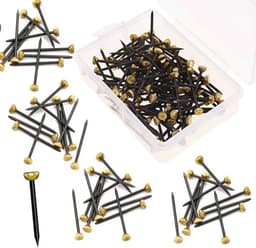
Merriway BH02287 is the straightforward pin in this group: 100 hardened-steel pins with brass-plated heads, £3.99 and 4.6 stars from 319 reviews when checked on 16 October 2026. Its large review base supports our conditional recommendation for light ordinary-plasterboard jobs, but several reviewers report bending and the listing prints no length. See best picture pins for that recommendation and its exclusions. BRITECO takes the hook route. Its 50 black hooks provide a defined seat for picture wire, and one buyer used them for Perspex-framed posters. Other reviews describe pins that are short or bend, and one buyer says the wall crumbled when the fitting would not drive in. The listing's 255 mm length conflicts with a 30 g total pack weight, so it should not be treated as a reliable dimension. A loose pin usually leaves a small hole when it is genuinely small and driven cleanly. An off-centre blow can bruise the paper face, while a hook under excessive load can tear through it. Stop if the face dimples, cracks or crumbles.

When to leave picture nails behind

Move to a stud screw or rated hollow-wall anchor when the frame is heavy or glazed. Wickes recommends a screw into timber where a stud can be found, leaving the head appropriately proud for the cord; otherwise it directs heavier plasterboard frames to a hollow-wall anchor. This transfers or spreads load more deliberately than a tiny pin in the board face. Leave the category for any large mirror, television or shelf, and for loads above a bed, cot or child. Lightweight mirror in a seller bullet does not establish a safe capacity. If the object is valuable or its failure could injure someone, use a specified fixing and consider professional installation. Also verify that the wall is actually hollow board. A solid response may indicate masonry or a dot-and-dab wall with blockwork behind it. Do not continue with a brass pin; follow the picture nail for masonry page and be prepared to drill, plug and screw where appropriate. We did not laboratory-test these products.

Common questions

Can I use picture nails on plasterboard?
Yes, for a light frame on sound plasterboard when the pin or hook is intended for that surface. The listing should not be treated as a load test. Stop for heavy glass, mirrors, shelves or any position where failure could cause injury.
Do these amazon.co.uk pins hold 4 kg?
There is no evidence that they do. British Gypsum's 4 kg typical safe working load applies to its stated steel picture hook and masonry nail in Gyproc plasterboard. It is not a rating for Merriway, BRITECO, Fizzix, VZU or the other compared packs.
Should I use a hook or a loose pin?
A hook gives picture cord a defined seat and may use two pins, while a loose pin is discreet for a compatible hanger. Both rely on the board face for light loads. Choose according to the frame hardware, not an assumed increase in capacity.
Will a picture pin hold a mirror?
None of the compared pin listings provides a tested mirror load. Even a small mirror is glazed and can cause injury if it falls. Use a fixing rated for the wall and weight, preferably into a stud or with an appropriate hollow-wall anchor.
Do picture nails leave repairable holes?
A small pin driven cleanly usually leaves a small hole, but the finish can tear or crumble if the fixing bends, is overloaded or meets masonry behind the board. Stop at the first sign of damage. Do not promise that filler will conceal a cluster of failed attempts.
When do I need a hollow-wall anchor?
Use one when the frame is beyond the lightweight-print job of a small picture hook, provided the anchor is rated for your board and load. A stud fixing may be preferable where available. Follow the manufacturer's installation and capacity instructions.

Related pages

Sources

Public UK sources on plasterboard fixings, product safety, and tenancy inventories. Listing prices and star counts are from the amazon.co.uk extracts for this comparison, dated 16 October 2026. Prices move.

  1. British Gypsum site book (retrieved 16 October 2026)
  2. GOV.UK, General Product Safety Regulations 2005 (retrieved 16 October 2026)
  3. Consumer Rights Act 2015, section 20 (retrieved 16 October 2026)
  4. Tenancy Deposit Scheme inventory guide (retrieved 16 October 2026)
  5. LION heavy-duty claw picture hooks (retrieved 16 October 2026)
  6. Screwfix picture fittings (retrieved 16 October 2026)
  7. BuildWiz UK, nails (retrieved 16 October 2026)
  8. EasyFrame, hanging pictures (retrieved 16 October 2026)