When not to use an upholstery stapler: safe guide

See when a fine-wire upholstery stapler is too light or short for timber, structure or cable, and which fastener or tool type fits the job instead.
On this page
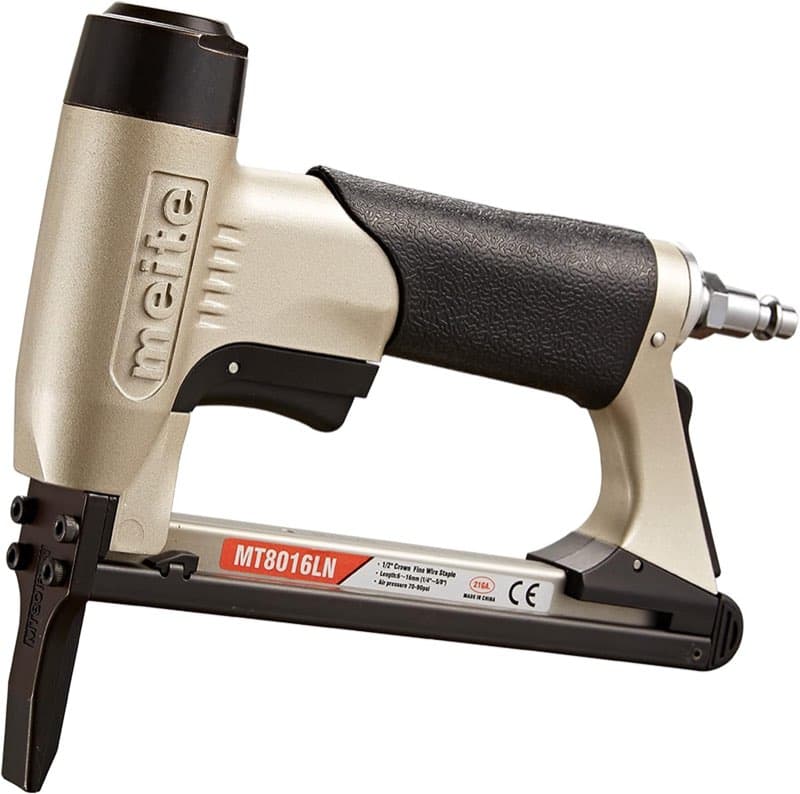
You have skirting offered up, speaker cable routed or two pieces of timber ready to join, and a fine-wire gun is already on the bench. Knowing when not to use an upholstery stapler matters more than making the tool fire: Type 71 and similar fine-wire staples are made for light material, not for every job that happens to accept a sharp metal fastener. If the fixing must carry load, resist movement, hold thick timber or pass safely around a cable, stop and choose the product type designed for that task.
In short
A fine-wire upholstery stapler is the wrong tool when its staple is too short to gain useful purchase, too light for the forces involved, likely to mark the finish, or capable of damaging hidden cable. Move to the correct Type 90 tool, brad nailer, framing nailer, screw, clip or cable tacker according to the material and the fixing specification. A more powerful upholstery gun does not turn a light fastener into a structural one.
What a fine-wire stapler is for
Fine-wire staplers fasten fabric, webbing and other thin coverings while leaving a relatively small crown. A Type 71 gun is associated with upholstery, where the staple passes through cloth and grips a timber frame without becoming the structure. The frame carries the load; the staple keeps the covering tensioned.
If failure would only let fabric lift at an edge, you may be within fine-wire territory. If failure could release timber, open a joint, create a trip hazard or expose a cable, stop. The air stapler buying guide lists compatible staple series and the jobs these tools are meant for.
Length sets a hard boundary: fine-wire ranges commonly stop around 16 mm, while Type 90 extends into longer sizes. That describes available fasteners, not guaranteed depth in your stack. Do not solve a poor hold by turning pressure up; excess force can cut through cloth. Use the exact series and length the manufacturer permits.
Timber needs a different fastener
Skirting confuses buyers because upholstery staples and second-fix fasteners look equally small. Skirting is thicker than fabric, may bridge an uneven wall, and can be pulled by movement or decorating work. A short Type 71 staple can feel secure while leaving little leg in sound material behind the board.
For decorative timber, a brad often suits skirting and architrave because it leaves a small entry point and can be sized to reach the substrate. First-fix framing and fencing belong to a different nailer class from second-fix trim; neither replaces checking what sits behind the board.
Type 90 staples sit in a heavier middle ground for some board and cabinet work, but series are not interchangeable with Type 71 because crown, wire and magazine geometry differ. A two-in-one Type 90 and brad tool helps non-structural finishing; it is still not a framing nailer when load, racking or outdoor exposure matter.
Structural work needs a specified fixing
Do not use an upholstery staple for a stair tread, stud, joist, structural panel or fence joint. Loads and movement here cannot be judged from one stiff pull test. A safe schedule may require specified nails, screws, bolts, adhesive or a combination.
A powered framing nailer drives construction nails for first-fix work, but nail type and size must match the nailer and the specification. A Type 90 staple from a two-in-one tool remains a staple; more power does not make it a tested structural nail. HSE nail-gun guidance treats large construction nailers as machinery with serious firing hazards, so training, correct nails and working safeties matter.
For safety-critical work, use the drawing, schedule or competent trade advice that names the fixing. If none exists and failure could injure someone, do not improvise with whatever fits the magazine.
Cable needs a cable tacker
Loose speaker, alarm or data cable can look like a quick stapling job. Fine-wire crowns and driving force are not controlled around cable diameter, so insulation can be crushed or a conductor pierced with damage hidden after install.
Use clips or a cable tacker sized for the exact cable and follow its voltage and diameter limits. Speaker cable is not mains, but still needs a route free of crushing and fixings that retain without compression. Never use an upholstery stapler on mains cable; if the permitted method is unclear, ask a competent electrician.
Warning signs before you fire
Pause when the staple must do more than hold a thin covering. Watch for insufficient penetration after you subtract face thickness, for load or movement that fabric demos never reproduce, for crown damage to cloth, finish or cable, and for staples that almost fit the magazine but jam or drive crooked.
Stop when you cannot identify the substrate or hidden services behind skirting or cable routes. A shorter fastener does not reliably miss pipes or wiring, and a powered tool fires before you can react. Test on scrap with the full material stack when the application is correct, keeping hands clear of the line of fire.
Which tool page to open
If the job is fabric, webbing or another light covering fixed to a suitable frame, compare air staplers. Check the supported staple series first, then consider nose shape, trigger control and compressor requirements. The application decides between Type 71, Type 80 and other series; they are not generic names for increasing power.
For a hand-powered option on light fastening tasks, open the manual stapler comparison. That category is also where you are more likely to find a purpose-designed manual cable tacker, although you must still check its voltage, cable-diameter and fastener limits. Manual operation does not make an ordinary flat staple safe for cable.
For joists, framing or suitable fencing, verify the fixing specification, then compare framing nailers on this hub. For skirting and architrave, choose second-fix or brad methods rather than a first-fix gun. Match material, substrate, load and finish before you buy.
Common questions
Can a Type 71 staple gun fix skirting boards?
Can I build a fence with an upholstery stapler?
Can a fine-wire staple hold a stair tread?
Can I staple speaker cable with an upholstery gun?
Is Type 90 still an upholstery staple?
When is a brad better than a staple?
Which comparison should I open instead?

Peter F. is the editor for DIY & tools at productscompared.co.uk. Comparisons in this category are checked against amazon.co.uk listings, review evidence and public UK sources.
Related articles

Type 71 or Type 80 staples
See why these two upholstery staple series are not interchangeable, even when their dimensions look similar.

Pneumatic or electric stapler
Compare air, corded and cordless power when you are choosing a stapler for repeated work.

Framing nailer or finish nailer
Choose between first-fix and second-fix nailers before buying one tool for very different timber jobs.