Oil a pneumatic stapler and drain the air tank

Learn how to oil a pneumatic stapler, drain the compressor tank and spot water in the airline before sticking, corrosion or seal damage starts.
On this page
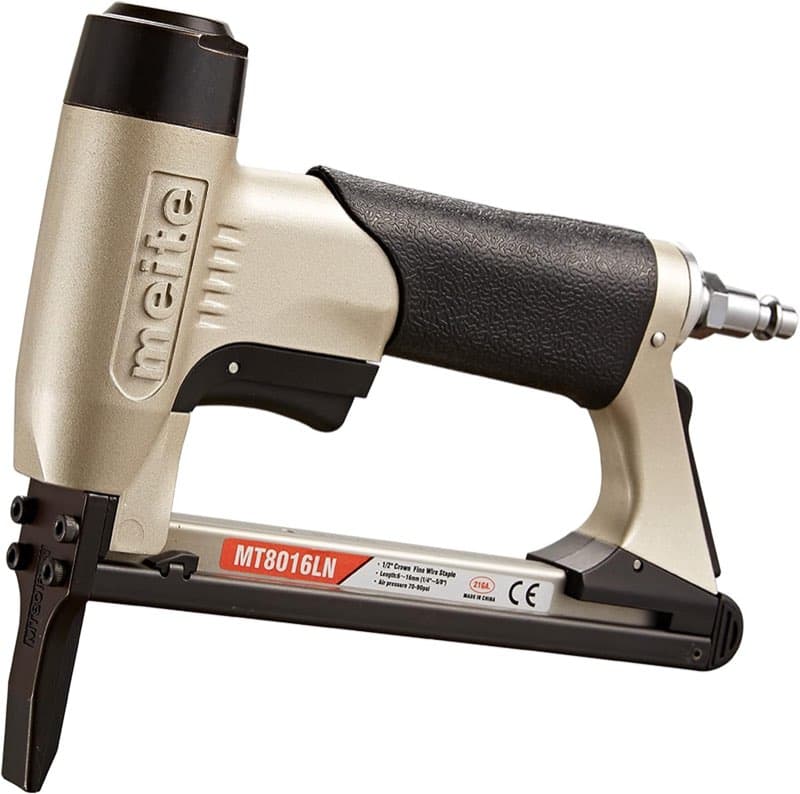
A pneumatic stapler can run cleanly for weeks, then hesitate, leak at the exhaust or leave the driver down. Learning how to oil a pneumatic stapler and drain the compressor tank tackles two frequent causes: dry moving parts and water carried in compressed air. The useful routine is small and regular—a few drops of the correct oil plus deliberate moisture removal—not a large dose after the tool has already started sticking.
In short
Use only pneumatic air-tool oil and follow the quantity in your stapler's manual; where the maker says a few drops, that means drops, not a capful. Drain condensate from the compressor receiver at the end of the working day and maintain any filter or moisture separator as an extra defence, because a filter does not replace tank drainage. Disconnect the air before maintaining the stapler, and follow the compressor manual before touching its drain.
Oil a pneumatic stapler without overdoing it
Disconnect the hose, remove the fasteners and point the empty tool away from yourself and other people. Put the manual's stated amount of pneumatic-tool oil into the air inlet—the fitting where the hose normally connects—then reconnect the air and cycle the tool as the manufacturer directs. Clarke guidance calls for a few drops in the inlet, while Everwin guidance for some staplers describes a few drops once or twice a day. Those figures are context only; your model's manual decides.
Two or three drops is a practical reading of a few; it is not permission to fill the inlet. More oil can blow out through the exhaust, mark fabric or timber, attract dirt and contribute to skips. If you work on upholstery or another finish that oil could stain, cycle the tool on scrap first and keep the exhaust away from the work. An automatic inline lubricator meters oil into the airflow, so do not add repeated inlet doses on top of a correctly adjusted lubricator unless the manufacturer tells you to. If you are still choosing equipment, the air stapler comparison puts maintenance alongside fastener compatibility and air requirements.
Match the interval to use
Daily means a working day, not a demand to oil an unused tool every morning. A stapler firing hundreds of fasteners may need its specified drops during the day, whereas an occasional DIY tool may only need attention before a job. Cold or demanding use can justify more frequent checks, but the limit remains the maker's quantity.
Drain the compressor tank
Compressing air concentrates moisture. As hot compressed air cools inside the receiver, water condenses and collects at the bottom of the tank. Leaving it there increases internal corrosion and gives water more chance to travel into the hose, mix with oil and reach the stapler. A tool can be freshly oiled and still behave poorly because the supply air is wet.
Drain the receiver at the end of the working day, or more often when conditions produce a lot of condensate. Procedures vary: some compressors use a petcock, some a screw valve and others a pull ring or remote drain. Switch off, isolate and reduce pressure only as the compressor manual specifies. Wear eye protection, direct the outlet away from people and finished surfaces, and expect water to leave with air pressure. Do not force a seized drain while the receiver is pressurised. If the drain will not open, the vessel shows serious rust, or the instructions are missing, stop and have the compressor assessed by a competent repairer. The guide to using an air stapler covers the wider start-up and shut-down sequence.
Keep water out of the airline
A moisture separator or filter helps catch liquid travelling down the line, but it does not empty the receiver. You need both jobs: drain the compressor tank and inspect or empty the filter bowl according to its instructions. Mounting and airflow direction matter, so follow the component manufacturer's markings rather than treating any fitting as interchangeable.
Hose layout also affects what reaches the tool. Low points can collect condensate, particularly on a long workshop airline, and connecting the tool straight after a wet hose has been left in a cold space may send that liquid towards the inlet. Inspect couplings for contamination, keep open hose ends off the floor and release collected moisture using equipment designed for the system. Never use oxygen or another bottled gas as a substitute air supply. A small filter at the tool end can help, but it adds weight and may reduce flow if undersized or clogged; that pressure loss can look like a stapler fault. Check required operating pressure and air consumption against the compressor, hose, regulator and fittings. Raising the regulator above the tool's maximum pressure is not a cure for restricted flow or water.
Use the right air-tool oil
Pneumatic-tool oil is formulated to move through small air passages and lubricate seals and sliding components. Engine oil is designed for a different environment and commonly contains detergent additives; general household oil is not automatically suitable either. Everwin specifically warns against detergent oil because it can damage O-rings. WD-40 may displace moisture in some contexts, but it is not a replacement for the lubricant specified for the stapler.
The label should say the product is intended for pneumatic or air tools, and the viscosity should match any requirement in the manual. Compressor crankcase oil lubricates the compressor mechanism; air-tool oil goes into the tool or inline lubricator. Mixing the two can turn a small maintenance task into a seal or valve problem. Store the bottle closed and clean. Wiping grit from the nozzle before adding drops matters because the inlet feeds narrow passages where contamination can cause sticking. If somebody has already poured in an unknown oil, do not try to cancel it out with a larger amount of the correct one. Disconnect the tool and ask the manufacturer or a repair centre for the appropriate cleaning procedure.
Recognise a dry or wet tool
A dry pneumatic stapler may sound harsher, cycle more slowly or leave the driver down instead of returning cleanly. Air leakage can increase as seals stop moving or sealing as intended. These signs are not proof of low oil: low supply pressure, a restrictive coupling, a jammed fastener or worn seals can produce similar behaviour. Check straightforward external causes before repeatedly adding lubricant.
A wet air supply may show droplets at the exhaust, cloudy oil residue, corrosion on fittings or inconsistent firing after the compressor has run for a while. Water appearing downstream should trigger a check of the receiver drain and filter, not merely a wipe of the stapler. Excess lubrication has its own pattern: oil mist or visible spray immediately after a generous inlet dose points to over-oiling, especially when the tool worked normally beforehand. Return to the specified dose and keep the exhaust away from the work. Fastener problems remain separate. Incorrect staple series, damaged strips and debris in the magazine can cause jams even when the air system is dry and correctly lubricated. The related guide on why a pneumatic stapler keeps jamming helps distinguish supply maintenance from staple-fit faults.
Know when maintenance is not enough
Routine oiling cannot restore a torn O-ring, bent driver blade, damaged cylinder or badly corroded component. If the driver repeatedly stays down after correct lubrication, the tool leaks continuously, or a safety mechanism does not move freely, disconnect it and stop using it. Defeating the nose safety or holding it back for diagnosis removes a key safeguard and is not a maintenance shortcut.
Drainage does not make a visibly corroded or damaged receiver safe. A compressor tank is a pressure vessel, so bulging, severe rust, cracking, damaged welds or a suspect safety valve require competent assessment. Do not drill, weld or apply a patch to the receiver. For a sticking tool, use a controlled sequence: verify the staple specification, confirm the regulator is within the tool's permitted range, check that the hose and coupling can supply adequate flow, drain the tank, service the filter and apply only the specified oil. Test on scrap. If the fault remains, the evidence points beyond routine maintenance and towards internal inspection by an authorised repairer. Model-specific instructions override general rules because seal materials, lubrication systems and drain arrangements differ.
Common questions
How many drops of oil does a pneumatic stapler need?
Should I oil an air stapler before every job?
Can I use engine oil or 3-in-1 oil in a pneumatic stapler?
How often should I drain a compressor tank?
Does an airline filter mean I can stop draining the tank?
Why is oil coming out of my air stapler's exhaust?
Why does my pneumatic stapler stick after a month?

Peter F. is the editor for DIY & tools at productscompared.co.uk. Comparisons in this category are checked against amazon.co.uk listings, review evidence and public UK sources.
Related articles

How often to oil a pneumatic stapler
Set a sensible oiling and tank-draining routine for light DIY use or a busy working day.

Why a pneumatic stapler keeps jamming
Trace sticking and bent staples to the fastener, air supply, lubrication or driver.
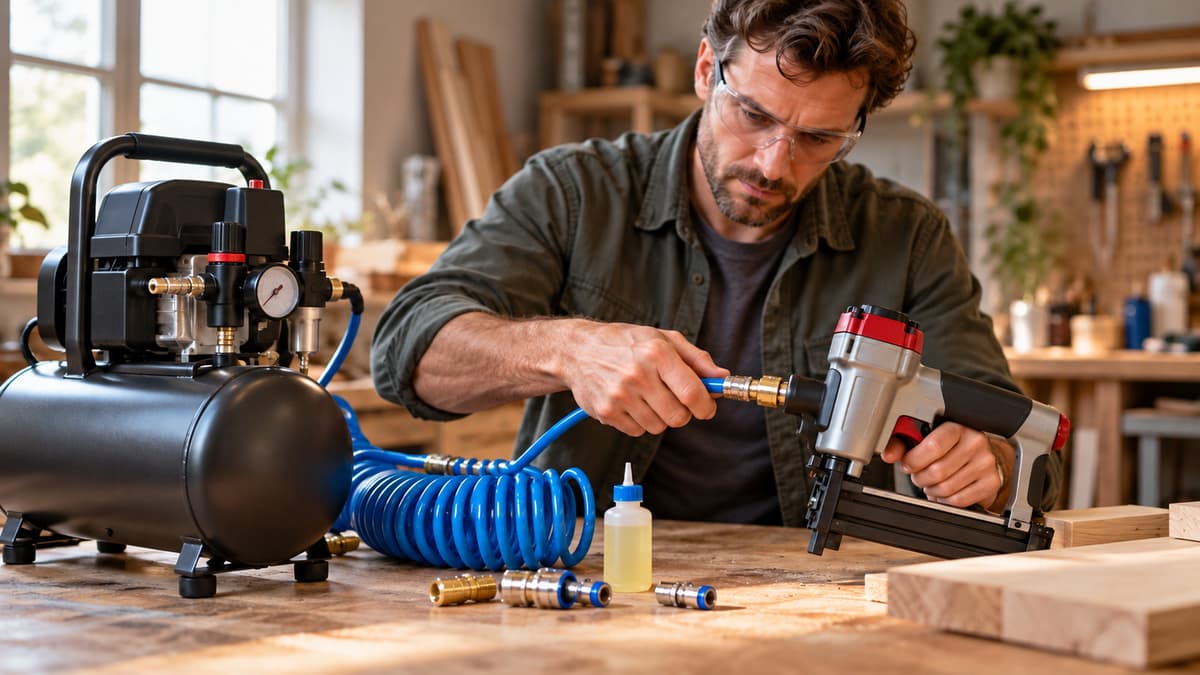
What a compressor adds to the price of an air stapler
Budget for the tank, hose, fittings and moisture control as well as the stapler itself.