Independent comparisons. We may earn from shop links. More info

How to use welding goggles

Updated: October 2026

You already have the goggles on the bench and want to know what to check before lighting a torch or striking an arc. The sequence is to confirm the marked shade, inspect and seat the filter, test any automatic darkening, then stop if the view, seal or switching is uncertain. This guide explains how to use welding goggles without turning a missing specification into a guess. If you have not chosen a pair yet, begin with our [welding goggles comparison](/hub/soldering-and-welding/welding-goggles). The steps below assume the product is identifiable and intended for your process. A qualifying purchase through our links can earn a commission at no extra cost to you.

You already have the goggles on the bench and want to know what to check before lighting a torch or striking an arc.

Our top picks

Laser Laser 6724

Best overall

Laser Laser 6724
9.2/10about £16.75
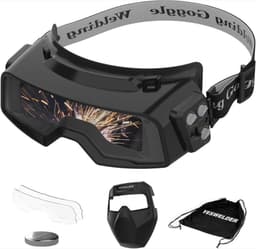
YESWELDER YESWELDER LYG-R100A

Alternative

YESWELDER YESWELDER LYG-R100A
9.0/10about £37.99
Portwest Portwest PW60BGR

Best value

Portwest Portwest PW60BGR
8.8/10about £7.28
On this page

Check the shade before you light anything

Read the filter marking and the manufacturer's instructions before putting the goggles into service. A green lens is not automatically shade 5, and a title that names welding does not establish suitability for gas, MIG, TIG or MMA. If there is no shade number or dark-state range, pause and use the welding goggles buying guide to identify what evidence is missing. Inspect the filter in good light. Look for cracks, deep scratches, clouding, loose edges and contamination that could block an auto-darkening sensor. Check the frame and strap as well: a sound lens in a split housing cannot maintain a reliable seal. One Laser 6724 reviewer reports that the lens can leave its rubber housing, so lens retention is a pre-use check. Match the filter to the job each time. Passive gas filters and automatic arc filters are not interchangeable simply because both look dark. If you use an oxy-fuel torch, the gas welding goggles guide explains the common shade 5 starting point and its limits.

Seat passive and flip-up goggles correctly

Place the bridge on your nose, pull the strap around the back of your head and tighten it until the rim meets the face all the way round. The pressure should hold the seal without causing pain or distorting the frame. Run a finger around the edge and check the nose area in a mirror. A reviewer found that the Laser 6724 left a gap there despite its adjustable design. With flip-up gas goggles, use the clear cover to locate and inspect the work only while there is no hazardous flame exposure. Lower the correctly marked dark filter before lighting or working with the flame, following the torch and goggle makers' instructions. Do not raise the filter to improve visibility while the active process continues. Prescription spectacles must sit without lifting the goggle rim. If the arms or bridge create a gap, use a compatible alternative rather than tightening until the goggles hurt. Workplace users should follow the employer's PPE assessment and should not substitute a personally bought pair for issued protection.
Laser Laser 6724

Testsieger

Laser Laser 6724
9.2/10about £16.75

Test an auto-darkening pair before an arc

Start with the exact test in the maker's instructions. In its UK instructions for the SSP102, Sealey tells users to face a bright light and cover and uncover the sensor before welding, then to stop if the filter fails to darken during the specified check. That is a useful example of a manufacturer procedure, not a universal test for every model. Make sure the unit is switched on where a switch is fitted, the battery is serviceable and the sensors are clean. Set the dark state for the process and current using the product instructions. Repeat the check after storage, a battery change, a hard knock or any unexplained flicker. Never use your unprotected eyes or a live welding arc as an improvised first test. If the lens stays clear, reacts intermittently or appears damaged, stop. YESWELDER reviews include a unit that ceased darkening after roughly a week, and UNISOPH reviews include several claims that the lens never darkened. Do not continue because yesterday's session was uneventful.

Deal with fog, fit and exposed skin

Goggles trap warm, moist air and can fog during physical work. Clean them only by the method allowed in the instructions, allow them to dry and check whether the product carries an N marking for resistance to fogging under EN 166. Ventilation can reduce moisture, but it may allow other hazards to enter. Do not drill holes or modify the frame. If the view clouds during welding, stop the process safely before lifting or removing the filter. Repositioning a live lens to see the joint defeats the protection at the moment it is needed. Fit deserves the same stop rule. XLTXWD feedback includes glasses sliding off when the wearer looked down, while hard-shell YESWELDER reviews describe pressure where the face shape did not suit the frame. Cover the skin the process requires. Goggles can filter the eyes while leaving cheeks, ears and neck exposed to ultraviolet radiation and spatter. A YESWELDER reviewer describes a red face after leaving off the supplied shield, and an XLTXWD buyer also reports facial redness after longer welds.

After welding, change protection for the next task

Let the work and equipment reach a safe state before raising the filter. Inspect the goggles for fresh spatter, loosening or heat damage, then clean and store them dry in a case where the lens cannot be scratched. Replace damaged filters and housings with approved parts rather than taping a cracked frame or polishing a deeply marked lens. Chipping slag, wire brushing and grinding are different tasks. HSE guidance calls for suitable impact eye protection when chipping. A dark welding filter is not automatically the correct impact lens and can make debris harder to see. Change to the protection assessed for that job. Arc-eye pain may not start immediately. NHS 111 Wales says the gritty, painful symptoms can appear six to twelve hours after exposure. If pain or vision worsens after welding, seek urgent NHS eye-care advice. This page does not provide treatment instructions.

Common questions

How do I put gas welding goggles on?
Check the marked shade, inspect the lens and seat the bridge on your nose. Tighten the strap until the rim closes around the face without painful pressure. With a flip-up pair, lower the dark filter before hazardous flame exposure and raise it only after the exposure has stopped.
How do I test auto-darkening goggles?
Use the procedure in that model's instructions. A UK Sealey leaflet, for example, specifies a bright-light sensor check before welding. Confirm power, settings and clean sensors, and do not strike an arc if the filter stays clear, flickers or reacts unpredictably.
What if the goggles fog?
Stop the process safely before lifting the lens. Clean and dry the goggles as instructed, check the fit and look for an appropriate anti-fog marking. Do not modify vents, because airflow that reduces mist may also allow another workplace hazard to enter.
Can I chip slag through the dark lens?
Do not assume so. Chipping needs eye protection assessed for impact, and a dark welding lens may be unsuitable and restrict your view. Change protection for the follow-on task while maintaining any required face coverage.
What if the listing never gave a shade?
Do not invent one from the lens colour, product title or review score. Check the physical markings and traceable manufacturer documentation. If you still cannot identify the filter, replace it with a product whose shade and intended process are clear.
When should I seek medical help after welding?
Seek urgent NHS advice if eye pain, light sensitivity or vision problems develop or worsen after exposure. Symptoms can be delayed by several hours. This page does not provide treatment instructions. An eye-care professional should assess the injury.

Related pages

Sources

Public UK sources named in the research digest, plus the amazon.co.uk listings in this set. BOC UK goggle prices were noted on 16 October 2026. No laboratory test was run.

  1. HSE, Controlling the risks from welding (retrieved 16 October 2026)
  2. HSE, Health risks from welding (retrieved 16 October 2026)
  3. NHS 111 Wales, arc eye (retrieved 16 October 2026)
  4. PPE at Work Regulations 1992 (retrieved 16 October 2026)
  5. BSI, EN ISO 16321 eye protection (retrieved 16 October 2026)
  6. BOC UK, safety specs and goggles (retrieved 16 October 2026)
  7. JSP Safety UK, MIG shade on steel (retrieved 16 October 2026)
  8. 3M UK, welding eye and face protection (retrieved 16 October 2026)