Independent comparisons. We may earn from shop links. More info

Pyrography pen safety in the UK: smoke and burn risks

Updated: 21 October 2026

A pyrography pen is a mains-powered heater that smokes wood at hundreds of degrees Celsius. Treating it like a paint pen is how burns, scorch marks on furniture and smoky flats happen, especially when a kit arrives as a gift without a desk plan. This page covers burns, smoke, materials and UK electrical habits for home crafters. Stroke technique after setup sits in [how to use a pyrography pen](/hub/soldering-and-welding/pyrography-pen/sub/pyrography-pen-how-to-use). Product specs stay on the [pyrography pen comparison](/hub/soldering-and-welding/pyrography-pen). This is not emergency training and not medical advice.

A pyrography pen is a mains-powered heater that smokes wood at hundreds of degrees Celsius.

Our top picks

On this page

Burns and fire

The tip and the barrel stay hot long after you stop drawing. Use the supplied stand every time you pause. Never lay the pen on wood, fabric or the cable. Keep paper patterns, shavings and alcohol-based finishes away from the desk. Unplug when the session ends, and wait until the tip no longer radiates heat before you pack it away. Listing copy on several kits tells you to wear gloves on thick handles, which is a sign the grip still warms during long use. Children and pets need a clear boundary. A supervised teenager still needs an adult to own unplugging and tip changes. Stand, unplug, and confirm nothing is smouldering. If material ignites, stop, move the heat only if you can do it without a burn, and follow ordinary UK fire guidance. Serious fire or injury means the emergency services. Heat travels through a thin plywood back, so use a fire-retardant mat on a dining table.

Smoke and ventilation

Pyrography produces smoke and fine particles when wood fibres char. Work with ventilation: a window with air moving across the desk, or a fan exhausting away from you, especially in a flat with a closed hallway. Budget-kit reviews on amazon.co.uk often mention odour within minutes indoors. That is what you should expect. It is not, on its own, a sign of a defective pen. Avoid unknown coatings, laminates, pressure-treated timber and driftwood with a chemical history. If you cannot name the wood and its treatment, do not burn it. A mask for a long session is workshop hygiene, not medical advice. If fumes trigger symptoms, stop and use NHS or GP routes. In a shared flat, keep a window open while you burn.

Wood and coatings

Stick to plain, unfinished hardwood or softwood blanks sold for pyrography, or to timber you cut and dried yourself with a known history. Plywood and MDF in practice kits burn quickly and release binders. They suit a short technique scrap, and they are a poor choice for a long indoor session. Painted or stained surfaces can release solvents, so strip them or choose another board. Vegetable-tanned leather is the usual craft recommendation. Synthetic leather may melt or smell harshly, so test an offcut. If you sell pieces, you own the material risk of the wood you chose.

Electrical setup in a UK home

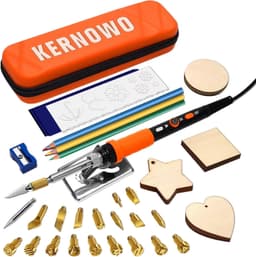
UK mains are 230 V with BS 1363 plugs. Prefer a listing that states a UK plug. In this set the YIHUA 939-III and the FIRElood LH20 state one. The KERNOWO extract does not. Route the lead so you cannot trip while you hold a hot pen. A coiled extension can overheat if it stays bundled under load. Health and Safety Executive guidance on electrical equipment is written for work. The same habits belong on a home bench: inspect the cable, avoid damage, and do not load a doubtful adapter. Many consumer units include RCD protection. If a tool trips the breaker repeatedly, stop and treat it as a fault. Do not keep resetting and trying again. That is also a reason to use the amazon.co.uk returns route when reviews report a unit dead on arrival. Do not modify the pen, fit non-factory tips of unknown wattage, or run the tool in a damp shed without thinking about moisture and insulation. The checks that belong before you order are on the pyrography pen buying guide.

When to get professional help

Call the emergency services for a fire you cannot isolate safely, for a serious burn, or for electric shock. Contact a qualified electrician for an installation fault, a persistent RCD trip, or a smell of wiring. That is not a question for the pyrography seller. After heavy smoke, chest tightness or a cough that continues belongs with NHS routes or your GP, not with craft advice. Listings may show a CE or UKCA mark. This comparison does not verify compliance beyond the seller's print. An adult owns the mains switch, the tip changes and the ventilation. Store the pen where the cable cannot be stepped on while the tip is still warm. An unplugged tool still looks like a pen until someone explains the stand.

Common questions

Can I do pyrography indoors in the UK?
Yes, with ventilation and plain unfinished wood. Do not burn treated stock, and do not shut the door on a smoky room with no airflow. Odour within minutes is normal on a budget kit. It is still a reason to open a window.
Which woods should I avoid?
Pressure-treated timber, painted or sealed boards, unknown reclaimed wood, and anything you suspect contains plastic fillers. If you cannot name the treatment, do not burn it indoors.
How do I prevent burns?
Stand the pen whenever you pause, route the cable clear of your feet, use gloves if the handle warms, and unplug before you change a tip. The barrel stays hot after the line is finished.
Is the smoke harmful?
Treat it as harmful enough to ventilate. Do not describe indoor burning as zero risk. If you get chest tightness or a cough that lingers, stop and use NHS or GP advice.
Can children use a pyrography pen if supervised?
Only with an adult controlling the power, the tips and the ventilation. Age and maturity still matter. An unplugged pen looks harmless until the stand routine is explained.
What about UK plugs and extension leads?
Use a listing that states a UK plug where you can. Avoid a tangled extension and a damaged lead. If the breaker trips more than once, stop and treat the tool as faulty.

Related pages

Sources

Sources taken from the research digest. Listings were read from the stored amazon.co.uk display.

  1. Makers Nook: woodburning kits (retrieved 21.10.2026)
  2. Burn Savvy: wire-nib pyrography pen (retrieved 21.10.2026)
  3. Peter Child: technique and heat (retrieved 21.10.2026)
  4. Prima: pyrography starter tips (retrieved 21.10.2026)
  5. YIHUA 939-II on amazon.co.uk (retrieved 21.10.2026)
  6. HSE: electrical equipment (retrieved 21.10.2026)