Gasless MIG or gas MIG: wind, smoke and the bead
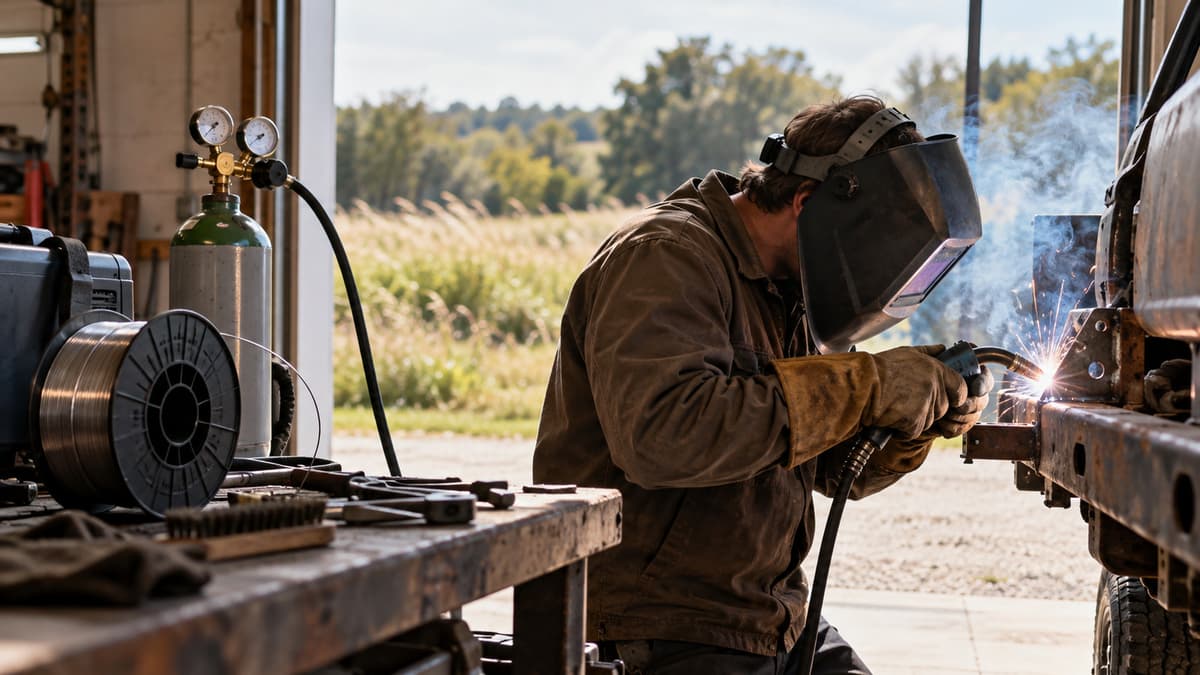
Gasless MIG or gas MIG is a wind, smoke and bead choice. Flux inside the wire holds outdoors. A gas bottle looks cleaner indoors and still makes fume.
On this page

The gate is open, the bracket is still on the car, and the breeze is moving the grass. A gasless MIG or gas MIG choice sits in that gap. One setup puts the shield inside the wire. The other pipes shielding gas from a bottle to the torch. Wind strips a gas shield on the drive. Indoors, flux-cored wire fills a garage with smoke. Both make welding fume. A bottle does not extract it.
A qualifying purchase from the amazon.co.uk links on the argon gas cylinder comparison can earn a commission at no extra cost to you. There is no lab weld trial here. Prices and review lines come from the amazon.co.uk comparison files. The cheapest bottle in that set is the SWP WG/1368 at £17.99, and that sticker includes neither a welder nor a regulator.
In short
Gasless means the shielding is flux packed in the wire, so there is a shield and there is smoke. A gas bottle is the cleaner-looking indoor route on mild steel, and wind can still ruin the bead. The £17.99 SWP cartridge is a short session with an unstated mix. Reviewers who moved onto it from gasless wire reported cleaner welds, and they also reported running out of gas.
What gasless MIG shielding is
Gasless is the shop label for flux-cored wire that carries its own shield. Flux in the core melts, vapour and slag cover the puddle, and you do not connect a cylinder for that pass. The arc is still shielded. "No gas" names the missing bottle. The flux does the covering work a cylinder would have done in still air.
Self-shielded E71T-GS wire on the flux-cored wire comparison is sold for gasless mild steel. The HITBOX 0.8 mm spool is the top pick there: £14.99 for a stated 1 kg, with 4.6 from 2,580 amazon.co.uk ratings that are not copied from a twin listing. The seller states DCEN and a single pass on carbon and mild steel from about 0.8 mm to 4.8 mm. A UK buyer used it on car bodywork. The same file records brown smoke, spatter, and one review that talks as if the wire needed gas. The listing says it does not.
Polarity is machine-specific. This class of flux-cored wire is commonly electrode-negative, and solid wire with gas is commonly electrode-positive. The Weld Space tells UK hobby welders that a gas MIG may run flux-cored wire when the polarity and the liner allow it, and that a gasless-only machine may have no gas inlet. Use the manual. If it is silent, ask the maker. In that wire set 0.8 mm is the common hobby size, and UK reviews asked for 0.6 mm on exhaust and thin sheet because 0.8 mm ran too hot. This set has no 0.6 mm spool.
Wind and outdoor welding
Wind is why gasless is a driveway process. Shielding gas leaves the nozzle as a soft stream. A breeze across a gate moves that stream off the puddle and the bead goes porous. Flux inside the wire arrives with the metal. The Weld Space puts the trade-off in one place: gasless behaves better in wind, and it makes more smoke.
A bottle still works outdoors when the air at the joint is still. The leeward side of a van, or a screen, can hold an argon mix for a short bead. If you feel the draught on your wrist at the joint, the shield is already thin. Opening the regulator against the wind empties a small cartridge faster, and a gust still wins. Reviewers who moved onto the SWP bottle reported cleaner welds and also ran out of gas.
Fume remains after you pick the shield. The Health and Safety Executive's mild-steel welding fume bulletin treats that fume as a hazard from the welding itself. Flux-cored wire and gas MIG both make it. Wind that holds a flux shield also blows the plume across your face. Still indoor air that helps a gas bead holds the plume in the garage.
Smoke, spatter and the bead
Indoors, cleanup often matters more than the word gasless on the reel. Flux-cored wire leaves slag you chip and then brush. Brown smoke and spatter balls on the HITBOX file land on the lens, the bench, and paint you hoped to keep. A windy gas weld leaves a different job: porosity you grind out, and slag you would have lifted with a chipping hammer.
MIG gas spatter on a calm bench is usually scale, stick-out, or voltage. Mill scale or a long stick-out will throw balls with a correct bottle connected. SWP reviewers who had been on gasless called the argon/CO2 bead cleaner. The title says argon/CO2 and the percentages are absent, so the bottle is not a documented 80/20. That cleaner bead is an owner report on an unnamed blend.
Gasless still belongs indoors when the alternative is leaving the bracket seized: door open, head out of the plume, slag accepted. An open door is a weak plan for a garage that also holds a tumble dryer. The HITBOX seller states a single pass in that thickness band. A multi-pass fillet sits outside that claim.
What a first bottle costs
A flux-cored reel can look cheaper because the spool is the only line that afternoon. The lowest shelf price in the argon set is £17.99 for the SWP WG/1368, stated as 60 litres and 1.28 kg, with 4.6 from 160 reviews. The file lists no regulator, and the outlet thread is unstated. One UK review said the fitting was smaller than a normal regulator and mentioned a 4 mm hose against an 8 mm hose on the welder.
Reviewers describe about 5 to 10, 10 to 15, and about 20 minutes of welding, so a Saturday of seams will finish the cartridge. Adams Gas frames disposables as the option when you want to avoid a cylinder contract: no deposit, fit for occasional work, and the point you leave once welding is regular. That fits one SWP session, and it fits poorly once the same panel needs a third cartridge.
Leave the £14.99 reel and the £17.99 bottle in different columns. Neither price includes the welder. On the flux-core wire welder page the HITBOX HBM200 is £99.99 and the listing does not claim gas MIG. It prints an effective 140 A beside a 200 A title, 4.4 from 573 reviews, 60% at 140 A at 40 °C, a 0.5 kg spool of 0.8 mm wire, and a weight of 3.56 kg. A bottle does not convert it. If you already own a gasless-only inverter, a bottle starts with another machine. Price the session you will burn.
Gasless MIG or gas MIG on one machine
Some dual-process MIG welders have a gas inlet and a polarity lead you can move, so solid wire and flux-cored wire can share the feeder when the liner, the drive roll and the polarity suit the wire. This page will not draw a diagram the maker omitted. A gasless-only set often has nowhere for the bottle. The HBM200 is in that group. Solid wire without the external shield leaves the puddle bare.
Three checks decide the order: a stated gas connection, polarity named for each wire, and a tip that matches the reel, often 0.8 mm. A dual machine still needs a changeover between a gusty driveway repair and a paint-ready bench bead. Plan bead length around the minutes reviewers got from a 60 litre disposable.
Where to compare wire and bottles
The flux-cored wire comparison covers diameter, mass and smoke. The flux-core wire welder page covers machines that may have no gas inlet. The argon gas cylinder page is the bottle, from the £17.99 SWP upward. A wire page will not name this outlet thread.
On a gas MIG you already own, in still air, the SWP WG/1368 is the top pick for one short mild-steel session with an unstated mix. Leave it for a known 80/20, a named thread, or more than a few minutes. For a windy patch from about 0.8 mm up, the HITBOX reel is the top pick, and it still leaves slag. Leave it where reviewers wanted 0.6 mm. The HBM200 is the top pick for a gasless-only short job, and the wrong machine for gas MIG. A 4.6 on 2,580 wire ratings and a 4.6 on 160 bottle reviews score different objects.
Common questions
Does gasless mean no shielding at all?
Can I weld outside with a gas bottle?
Which setup is cleaner indoors?
Can one machine run gasless wire and a gas bottle?
Is gasless wire free of welding fume?
What does a first MIG gas bottle cost?
Which pages compare the wire and the bottles?

Peter F. is the editor for DIY & tools at productscompared.co.uk. Comparisons in this category are checked against amazon.co.uk listings, review evidence and public UK sources.
Related articles

When a disposable MIG bottle is the wrong buy
A 60 litre cartridge can finish mid-bead. The limit is the gas volume, not a faulty welder.
Welding fume in a home garage
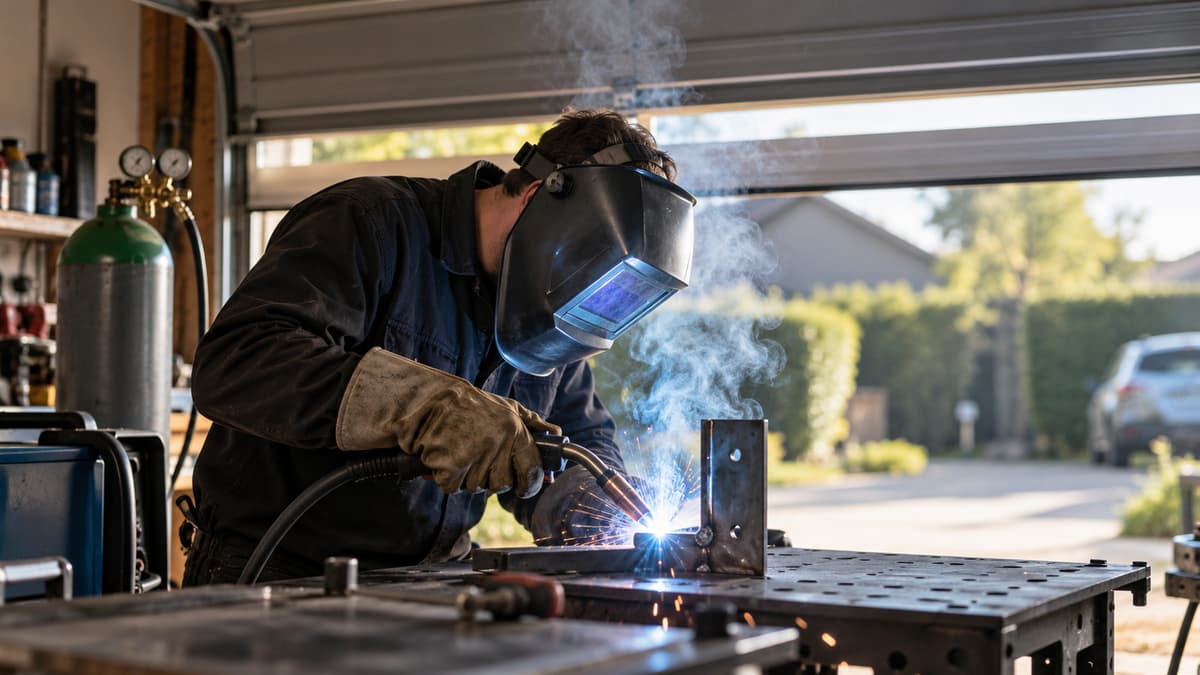
Mild-steel fume is its own hazard in a garage, with a bottle connected or with flux-cored wire.
What shielding gas costs in Britain
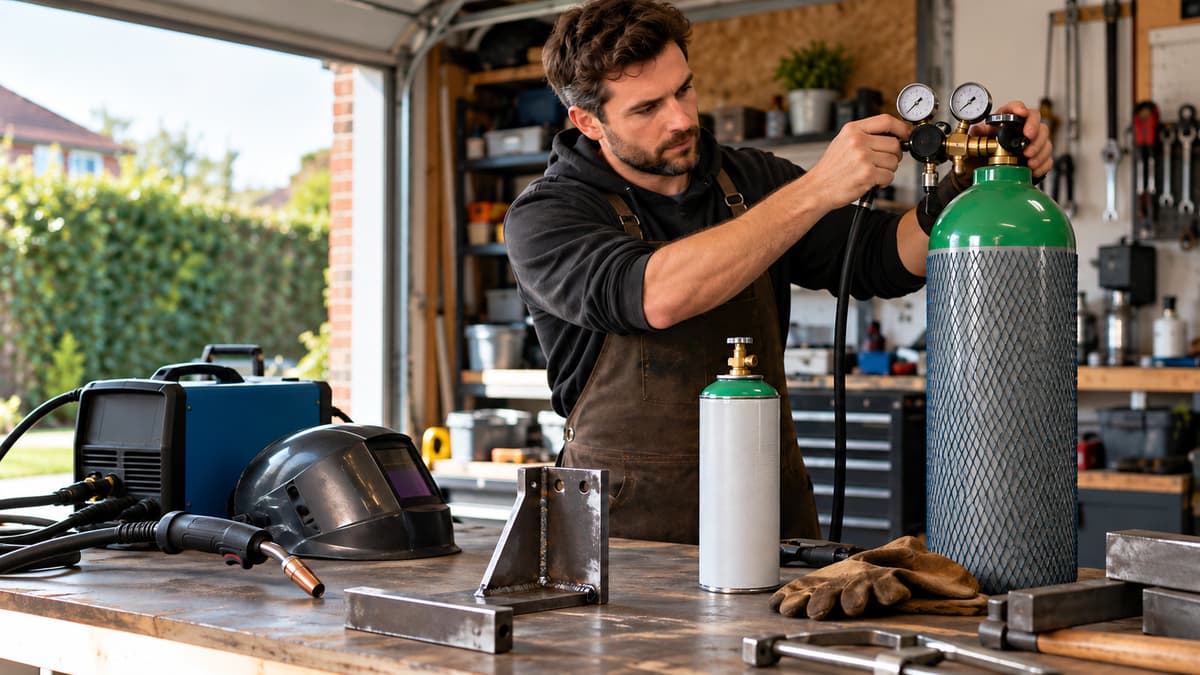
A £17.99 cartridge, a cylinder deposit and an empty shell are three different gas bills.