Independent comparisons. We may earn from shop links. More info

Chemical anchor for hollow brick needs a mesh sleeve

Updated: 22 October 2026

You have drilled a perforated brick or a hollow block and watched the resin drop away. That is the usual chemical anchor hollow brick failure: the face shell opens into voids, so a solid-wall injection has nowhere to stay. The fix is a sleeve that holds the mixed mortar until the rod pushes it through the mesh. The [chemical anchor comparison](/hub/screws-and-accessories/chemical-anchor) is the grid for the seven amazon.co.uk listings, and none of them is a sleeve. Peter F. checked those listings against sleeve notes from Ceresit UK, fischer UK, Chemfix, and Delmark. There is no pull-out test. A qualifying purchase can earn a commission at no extra cost to you.

You have drilled a perforated brick or a hollow block and watched the resin drop away.

Our top picks

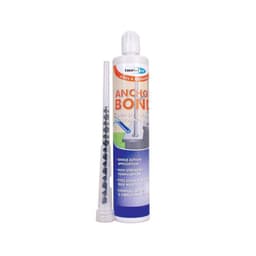
Bond It Bond It Anchor Bond

Alternative

Bond It Bond It Anchor Bond
7.0/10about £13.19
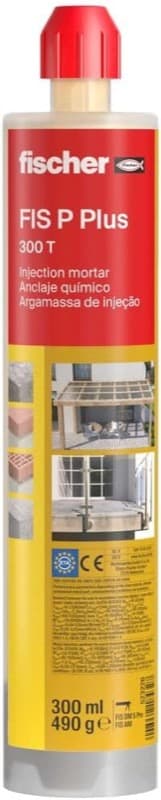
fischer fischer FIS P Plus 380 C

Alternative

fischer fischer FIS P Plus 380 C
6.0/10about £13.29
On this page

Why solid-wall injection fails here

Perforated brick and hollow block are not a thinner version of solid concrete. Behind a face shell a few centimetres thick, the unit is a run of cells. Inject as you would in solid masonry and the mortar follows those cells. Ceresit’s hollow-masonry guidance puts the sleeve in first, full length and flush. Dot-and-dab is not this job. A sleeve in the board will not reach a solid base behind the dabs. Resin can show at the mouth of a perforated brick and then fall as the next cell fills.

What the sleeve does

A chemical anchor sleeve, also called an injection sleeve or mesh sleeve, is part of the anchor in perforated brick. fischer UK describes the FIS H K sleeve for perforated brick with mortars that include FIS P Plus and FIS VL. You set it in the hole, fill it, and turn the rod in. The mortar is pushed through the grating so it keys behind the face shell. Chemfix describes the same idea with nylon sleeves. The sleeve does not turn a non-cracked polyester into a cracked-concrete system. fischer also sells FIS H L by the metre and marks that version without approval. A cut length of FIS H L is not FIS H K. Buy the sleeve diameter the mortar data pairs with the rod. The Tubo 290 and the 380 C name anchor sleeves in the system bullets. Bond It says solid and hollow bases and gives no sleeve part number. The capsule pack does not name sleeves.

What changes in the steps

The solid-wall order still applies. The how to install a chemical anchor page keeps it for a solid base: clean, waste the first triggers, inject, insert, and wait. On hollow brick you still clean the hole, because dust on the face shell weakens the bond. Then push a full-length sleeve in until it sits flush. Ceresit tells you not to cut sleeves, except the one size that page names. Inject from the base of the sleeve, not from the mouth of the brick. Delmark’s note is the order: waste the first triggers until the colour is even, fill the sleeve, and twist the rod in within the gel time. Do not torque until that cartridge’s cure has passed. If the drawing is structural, or you cannot tell whether the unit is perforated, a competent person should confirm the base and the sleeve before you drill a row.

What to buy with the cartridge

Every ASIN on the comparison is resin or, in one case, capsules. Budget for the sleeve as its own line. Cartridge shape, gun, and chemistry sit on the chemical anchor buying guide. The FIS P Plus listings name anchor sleeves, and fischer UK names FIS P Plus as a mortar for the FIS H K sleeve. The parcel still does not contain the sleeve. The 380 C reviews say it needs a specialist gun, so a sleeve does not replace a gun you do not own. The Tubo 290 includes one mixer and does not state a standard silicone gun. Bond It names hollow bases and still does not name a sleeve. The RM II capsules are listed for cracked concrete. The vinyl ester title names hollow masonry, but the brand field says sarcia.eu and there is no review line.

Common questions

Do I still clean the hole?
Yes. Dust on the face shell weakens the bond even when a sleeve is going in, because that lip is the brick the resin can grip near the surface. Blow and brush as the cartridge instructions say. Some dust will fall into a cell you cannot reach. That does not make the brush optional. Clean first, then set the sleeve flush, then inject from the base of the sleeve.
Which cartridges in this set mention sleeves?
The fischer FIS P Plus Tubo 290 and the FIS P Plus 380 C name anchor sleeves in the system bullets, alongside rods and internal threads. Bond It’s listing says solid and hollow bases and does not give a sleeve part number. The RM II capsule listing does not name sleeves. None of the seven ASINs is a sleeve you can fit on its own. You still buy the mesh separately, matched to the rod.
Can I use the RM II capsules in perforated brick?
The listing describes fixings in cracked concrete, not a sleeve and not perforated brick. The pack is ten capsules, not an injection cartridge, and the rods are not included. A capsule needs a solid hole that holds the glass until the rod breaks it. A void in hollow brick does not do that. Use a sleeve and an injection mortar the sleeve maker names, not this capsule pack.
Can I cut a sleeve to length?
Follow the maker whose sleeve you bought. Ceresit tells you not to cut sleeves, except the one size that page names. fischer’s FIS H K is the approved injection sleeve in their perforated-brick system. FIS H L, sold by the metre, is marked without approval, so a cut length of that product is not FIS H K. Shortening a sleeve so it sinks into the hole leaves part of the rod without resin.
Is aircrete or dot-and-dab the same job?
No. Aircrete needs the fixing specified for aerated block, and dot-and-dab is a plasterboard skin on adhesive dabs, not a perforated brick you can sleeve. A mesh sleeve in the board will not find a solid base behind the dab. If you are unsure which leaf you have drilled, identify the wall before you inject. This method is only for a known perforated brick or hollow block.

Related pages

Sources

Public UK and manufacturer sources from the research digest, used for this page in October 2026. Prices, stars and review counts are from the seven amazon.co.uk listings captured on 20 October 2026. BS 8539 applies particularly where a failed fixing could hurt someone. There is no laboratory pull-out test.

  1. BSI, BS 8539:2012+A1:2021 (retrieved 20 October 2026)
  2. fischer UK, FIS P Plus (retrieved 20 October 2026)
  3. ETA-11/0419, FIS P Plus masonry (retrieved 20 October 2026)
  4. Rawlplug R-KEM II concrete datasheet (retrieved 20 October 2026)
  5. RAIB, Balcombe tunnel (retrieved 20 October 2026)
  6. Ceresit UK, chemical anchor in concrete (retrieved 20 October 2026)
  7. fischer UK, FIS VL 300 T article 539461 (retrieved 20 October 2026)
  8. Bond It BDAB310 Anchor Bond sheet (retrieved 20 October 2026)