TCT or HSS saw blade for wood: which edge, which tool

TCT or HSS for wood? What the letters mean on a UK listing, why carbide grit is a third thing, and why neither tooth metal makes a toothed blade grinder-safe.
On this page
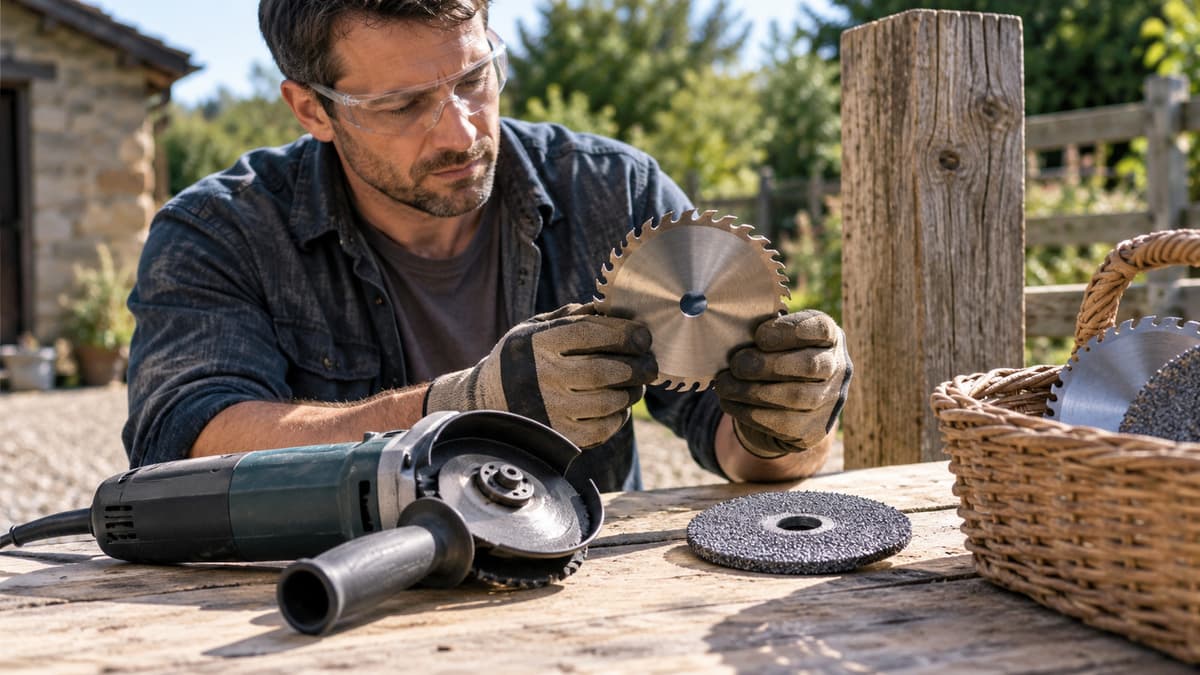
You have plywood on the trestles, a circular saw that needs a fresh blade, and two sets of letters on the shelf: TCT and HSS. One sounds harder, the other sounds faster, and some forums say either will also go on an angle grinder. This guide sorts a TCT or HSS saw blade for wood from what UK listings and UK sources say. Neither tooth metal turns a toothed blade into a safe grinder accessory.
In short
For a circular saw cutting wood, plywood, MDF or chipboard, the wood blades we kept from amazon.co.uk are TCT (tungsten carbide tipped). The only HSS item in our research was a bi-metal hole saw, a different tool. A carbide grit disc is a third thing, made for an angle grinder, and aluminium sheet belongs on a dedicated aluminium blade for a saw. A toothed blade does not belong on an angle grinder, whatever the teeth are made of.
We read the amazon.co.uk listings in our saw-accessories comparisons, the BSI scope page for BS EN 847-1:2017 and the UK Office for Product Safety and Standards alert PSA5. We did not run a lab test and we do not quote hardness figures. Prices are as shown on amazon.co.uk in October 2026. If you buy through our links, we may earn a commission on a qualifying purchase at no extra cost to you.
TCT in this comparison
TCT stands for tungsten carbide tipped. The body is steel, and each tooth carries a small carbide tip that does the cutting. Search amazon.co.uk for a circular saw blade for wood and this is the construction you meet, including every wood blade we kept for this hub. The letters name the cutting edge. They do not say whether the blade fits your saw.
The clearest example is the HAWCUT listing. It names YG6 carbide tips on a carbon-steel body, an ATB tooth grind, and wood, plywood, MDF and chipboard. It is the only listing we kept that names the carbide grade. It does not give a hardness number, and we have not found a source that does. Pages that quote one without a source are guessing.
A mark such as 40T is the tooth count, a separate question from tooth material. Buying on those two lines alone is how you find at the bench that the bore or diameter is wrong. Our guide to matching saw blade bore and diameter covers that check. The 165 x 20 mm and 250 x 30 mm comparisons group blades by those two numbers. Carbide tips describe the edge. They are not a licence to fit the blade on any spindle with a matching hole.
HSS is a different edge, and here it was a hole saw
HSS stands for high-speed steel. On hole saws the label is often HSS bi-metal, and that is how HSS turned up in this research: one raw listing was an HSS bi-metal hole saw. We removed it from the comparisons because a hole saw is a different tool from a circular saw blade or a grinder disc.
Many TCT-versus-HSS pages treat the pair as identical circular saw blades and settle it with a hardness argument. In the amazon.co.uk listings we kept for wood cutting in this hub, there was no HSS circular saw blade to set beside a TCT one. The shop choice is between TCT blades of different sizes, tooth counts and grades.
None of those kept listings is an HSS circular blade for MDF. The listing that names MDF, HAWCUT, is TCT, and it also names plywood and chipboard. Pick a blade whose own listing names your board. If a seller does offer an HSS blade for wood, check that it names your material and your saw. HSS still has a place in a workshop. In this hub it showed up as a hole-saw edge, not the blade for a sheet of plywood.
Grit rims are a third thing
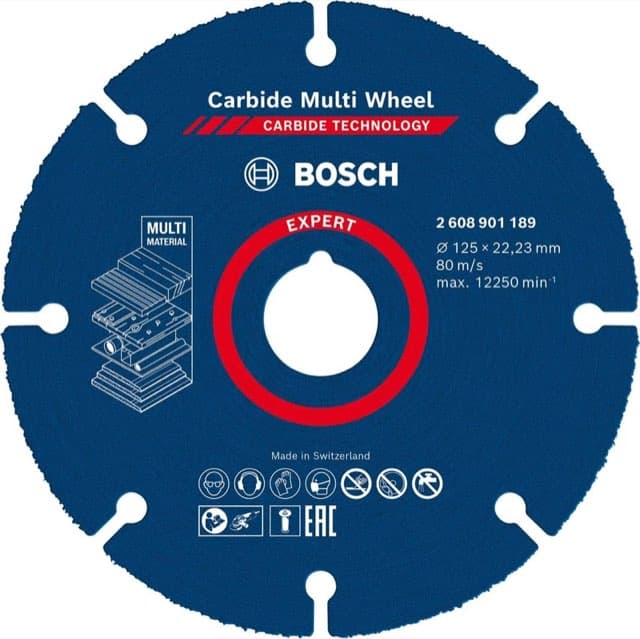
Carbide also appears on discs with no teeth. The Bosch Expert Carbide Multi Wheel 125 mm, the top pick in our 125 mm wood cutting disc comparison, has a toothless rim coated with carbide grit. The amazon.co.uk listing states grit 80, a 22.23 mm bore and 1 mm in the included-components line. The bullets say it cuts wood with embedded screws and nails, plus plastic pipes, laminates and drywall. It sells for about £15.96, with 4.7 out of 5 from 1,407 reviews.
That is carbide, and it is not TCT. A TCT blade has separate teeth. A grit disc has an abrasive edge. Mix them up and you buy the wrong thing: a toothed blade that shares the bore, when you wanted a toothless disc for a 125 mm grinder, or a grinder disc when you needed a saw blade.
The Bosch listing is uneven. Its material cell says Plastic while the bullets describe carbide technology, and it states no maximum speed. Read the full listing and your grinder's speed rating. A grit disc is an angle grinder accessory, not a stand-in for a TCT blade.
Aluminium belongs on the aluminium-blade page
Shoppers asking about TCT or HSS for wood often also have a length of aluminium trim. The circular saw blade for aluminium comparison covers blades sold for non-ferrous sheet on a saw. It is not a page about grinder discs.
The Bosch bullets list wood with nails, plastic pipe, laminate and drywall. They do not claim aluminium bar. One review from outside the UK advised against that disc on aluminium. It is a single non-UK opinion, not a test. If aluminium is the job, buy a blade sold for it and fit it to the saw it is sold for. Tooth metal does not change that.
The grinder limit applies to both tooth metals
Some pages say either blade can also go on an angle grinder. This article does not. Alert PSA5 from the UK Office for Product Safety and Standards is about toothed blades on angle grinders. The tooth metal does not make that combination safe. A carbide tip and a high-speed steel tooth are both still teeth.
The bore can look compatible. The Bosch disc states 22.23 mm, and a toothed blade with a similar hole can look as if it will fit. Fit is not suitability. Our article on a toothed saw blade on an angle grinder sets out the alert. For wood on a 125 mm grinder, compare the toothless discs. For toothed cutting, use a saw and choose by bore, diameter and the material named on the listing.
BS EN 847-1:2017, which the BSI describes as safety requirements for woodworking milling tools and circular saw blades, is useful context when a listing quotes it. The number does not say which material a blade cuts best, or whether it fits your saw.
How to choose in practice
You can settle most purchases in five checks, in this order.
- Name the tool first. A toothed blade, TCT or otherwise, goes on a saw. A toothless grit disc goes on a grinder.
- Match the size. Check diameter and bore against the saw manual, or the disc diameter, a 22.23 mm bore if the grinder uses it, and the grinder's speed rating.
- Read the material line. HAWCUT names wood, plywood, MDF and chipboard. If the job is aluminium, use the aluminium blade comparison.
- Then look at the tooth metal. In this hub the wood blades are TCT. YG6 on the HAWCUT listing is the carbide grade, not a hardness figure.
- Watch the edge in use. Scorch, extra push and chipped teeth mean the blade is done. Our guide to blunt circular saw blade signs covers what to look for.
The checklist relies on what sellers write. When two lines disagree, as the Bosch material cell does with its bullets, check the maker's documentation or ask the seller before you cut.
Common questions
Is a TCT or HSS saw blade better for wood?
What does TCT mean on a 40T blade?
Is HSS the right edge for MDF?
Are carbide grit and TCT the same thing?
Which page should I use for cutting aluminium?
Can I put a TCT or HSS blade on an angle grinder?
What standard covers woodworking circular saw blades?
Does the HAWCUT listing really say YG6?

Peter F. is the editor for DIY & tools at productscompared.co.uk. Comparisons in this category are checked against amazon.co.uk listings, review evidence and public UK sources.
Related articles
Toothed saw blade on an angle grinder: what the UK alert says
Why the UK safety alert on toothed blades for grinders applies whatever the teeth are made of, and what to fit instead.

Saw blade bore size UK: match the hole and the diameter
Before tooth metal matters, the blade has to fit: how to read bore and diameter on a UK listing and check them against your saw.

Blunt circular saw blade signs: scorch, push and chips
Scorch marks, extra push and chipped teeth tell you a wood blade is done, whether it is carbide tipped or not.