Independent comparisons. We may earn from shop links. More info

Wet stone grinder wheel wobble

Updated: October 2026

A wet wheel that pulses against a chisel, or appears to move sideways, can spoil a bevel. The visible symptom does not identify the cause. Wet stone grinder wheel wobble may mean radial runout in the abrasive, poor seating on the shaft, damaged mounting parts, bearing play or a machine fault. Stop, isolate the grinder and consult its manual before you adjust anything. This page gives a safe diagnostic order and explains when truing is appropriate. Current models are in the [wet stone grinder comparison](/hub/sanders/wet-stone-grinder). A qualifying purchase through our links can earn a commission at no extra cost to you.

A wet wheel that pulses against a chisel, or appears to move sideways, can spoil a bevel. The visible symptom does not identify the cause.

Our top picks

Bucktool Bucktool SCM-8101GB

Best overall

Bucktool Bucktool SCM-8101GB
8.6/10about £138.99
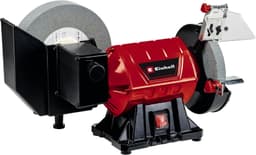
Einhell Einhell TC-WD 200/150

Best value

Einhell Einhell TC-WD 200/150
8.2/10about £71.06
On this page

Stop and identify the movement

Switch off, wait until the wheel has stopped and disconnect the plug. Do not touch a moving wheel or run the machine without guards. A grinder rocking on an uneven bench can feel like wheel vibration. A cracked or badly chipped wheel must not be tested further. Bearing noise, shaft movement or an electrical fault is a return or repair, not a truing job. Radial runout means the gap from the grinding surface to the support changes as the stone turns, so the tool contacts once per revolution. Axial wobble means the face moves side to side along the shaft. Turn the wheel by hand only where the manual permits. Do not borrow a tolerance from another brand.

Check mounting before truing

If nothing is cracked, inspect the mounting as the manual describes. Dirt or corrosion on the seating faces can stop the wheel sitting square. Remove parts only when the machine is isolated, and only if owner maintenance allows it. Washers, bushes and flanges must be present, the right way round and undamaged. Do not add cardboard, tape or another shim. Some makers allow you to reseat a wheel for axial movement. That is model-specific. Truing the face cannot straighten a bent shaft. If the support and trough are unclear, review how to use a wet stone grinder first.
Bucktool Bucktool SCM-8101GB

Testsieger

Bucktool Bucktool SCM-8101GB
8.6/10about £138.99

True an out-of-round compatible stone

Truing suits a sound, correctly mounted wheel whose face has high spots, has gone oval or is no longer flat. A compatible diamond tool removes those high points. It does not balance the whole assembly, repair a crack or fix a bearing. Fit the approved device with the machine disconnected. The support must be rigid, because the tool only follows a stable path. Take light passes across the face. Grading afterwards changes the cut. It is not another name for truing. If the pulse remains, stop. The wet stone grinder buying guide treats a truing tool and spare parts as things to price before you buy.

Signs of a machine fault

A bent shaft moves the wheel and the hardware together. Do not straighten it in the workshop. A new machine with that symptom is normally a return. Bearing play can show while the wheel is stopped, then as knocking when it turns. Do not open a sealed assembly on a guess. A bent universal bar can mimic wheel error because the jig moves even when the stone is true. A damaged switch, cable, plug or motor needs a competent repairer. Do not run a powered test on a wet bench.

Adjust, return or call a repairer

Adjust only when the wheel is sound, there is no shaft or bearing symptom, and the manual calls seating or truing an owner job. Change one thing at a time. Return a new grinder when correct assembly still leaves significant movement, or a mounting part is defective. Do not grind away a new stone to hide a fault. Call a repairer for bearing noise, a bent-looking shaft, loose internal drive parts or any electrical fault. At work, that also sits inside PUWER arrangements. Test a true wheel on an expendable tool before a plane iron. Heavy reshaping belongs in wet stone grinder vs bench grinder.

Common questions

Is side-to-side wobble the same as an out-of-round wheel?
No. Side-to-side or axial movement shifts the wheel face along the shaft direction. Radial runout changes the distance from the outer grinding surface to a fixed reference. The causes and remedies differ, so identify the direction before removing abrasive. Truing the face does not correct axial movement.
Can a new wet stone need truing?
Yes. A sound, correctly mounted stone can have high spots from transport and may need model-approved truing. First rule out cracks, poor seating and machine faults. A new grinder with persistent shaft or bearing movement should be returned rather than repeatedly trued.
What does a diamond truing tool correct?
It removes high points from a compatible abrasive wheel to restore a round circumference and a flat working face. It cannot straighten a bent shaft, repair a damaged flange, remove bearing play or make a cracked wheel safe. Use the approved tool and support setup.
Can I reseat the wheel to fix axial movement?
Possibly, if the manufacturer’s instructions allow removal, cleaning and reseating for your model. Check the correct washers, bushes and tightening method. If axial movement persists, or mounting parts move with the shaft, stop and seek manufacturer or repair support. Reseating is model-specific, not a universal cure.
Can I use a cardboard shim behind the wheel?
No. Do not improvise shims, washers or clamping surfaces on an abrasive-wheel mount. Use only the specified hardware in the stated orientation. Cardboard and tape are not a mounting method. An incorrect arrangement can damage the stone or let it move unpredictably.
When should I stop using the grinder?
Stop immediately for cracks, significant chips, loose mounting parts, bearing play, persistent mechanical noise, a bent-looking shaft, unresolved vibration or any electrical defect. Isolate the machine and arrange a return or competent repair. A truing tool will not make a cracked wheel safe.

Related pages

Sources

Public UK sources on abrasive wheels, workplace equipment duties and bench-grinder safety, plus manufacturer notes on honing direction and wheel size. Listing prices and star counts are from the amazon.co.uk extracts used for this comparison. Prices move.

  1. HSE, Safety in the use of abrasive wheels (retrieved 17 October 2026)
  2. HSE, PUWER overview (retrieved 17 October 2026)
  3. HSE, Dust from abrasive (retrieved 17 October 2026)
  4. BSI, BS EN 62841-3-4:2016+A12:2020 (retrieved 17 October 2026)
  5. Tormek, Edge trailing vs edge leading (retrieved 17 October 2026)
  6. Axminster Tools, Tormek T-4 (retrieved 17 October 2026)
  7. Scheppach UK, Tiger 2500 (retrieved 17 October 2026)
  8. Amazon UK, Bucktool SCM-8101GB (retrieved 17 October 2026)