Independent comparisons. We may earn from shop links. More info

How to use a sanding drum

Updated: October 2026

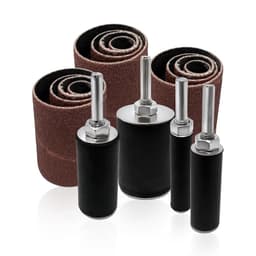
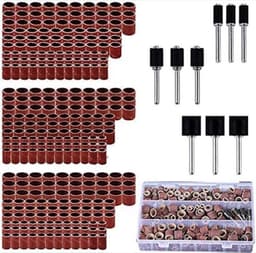
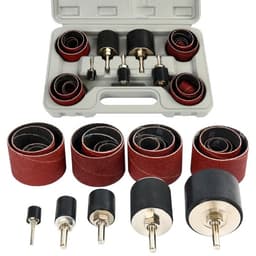
The kit has arrived and the sleeve slides on the rubber. If it turns in your fingers, it is not fitted, and you should not start the drill. This page is how to fit a sleeve, run a first pass on scrap, and stop. It does not choose a kit. For that, use the [sanding roller buying guide](/hub/sanders/sanding-roller/sub/sanding-roller-buying-guide), and for prices see the [sanding roller comparison](/hub/sanders/sanding-roller). A qualifying purchase through our links can earn a commission at no extra cost to you.

The kit has arrived and the sleeve slides on the rubber. If it turns in your fingers, it is not fitted, and you should not start the drill. This page is how to fit a sleeve, run a first pass on scrap, and stop.

Our top picks

On this page

Why the sleeve will not grip

A rubber drum holds its sleeve by swelling. A screw or nut squeezes the rubber, and the rubber bulges against the sleeve. If the rubber is not squeezed enough, the sleeve rotates freely. The wrong diameter, or rubber that has gone soft, will not grip either. Hilka reviewers say the kit works once the bolt grips, while others report sleeves that slip even when the size matches. FreeTec reviewers describe loose sleeves and rubber that melts from drill heat, after which a band rolled onto the chuck. Some beststar bands fit too loosely or too tightly. Work out which cause it is before you reach for tape.

Fit it, then test it by hand

Do this with the drill unplugged or the battery out, or with the pillar drill switched off at the wall. Loosen the screw or nut so the rubber relaxes. Slide the sleeve on square, with no overhang. Tighten until the rubber swells and the sleeve stops moving, and no further. Dremel's UK guide for its own mandrels says the same: loosen, fit, tighten, and do not overtighten. Twist the sleeve with your fingers and try to slide it along the drum. If it moves, undo the screw and check the size. Overtightening risks the thread. Some beststar reviewers report screws that lost their thread. O'SKOOL clamps cut sheet instead of a sleeve. A reviewer found 40 grit too thick and 180 grit too thin, so start from the included 120 grit and test it.
LINE10 LINE10 16-piece drums

Testsieger

LINE10 LINE10 16-piece drums
8.6/10about £17.96

A short pass on scrap

Clamp scrap that matches the project, run the drill at moderate speed, and touch the work lightly. Make a short pass, then stop and look. No listing in this set publishes a recommended speed for a chuck drum, so do not copy a figure meant for a much larger drum. The Draper 90469 range of 1600 to 3000 rpm no-load applies to that machine only. Burn marks mean the drum is too fast or you are pressing too hard. A sleeve that creeps is not gripping. Soft or sticky rubber means the drum is cooked. Stop, let it cool, and refit or replace the part. FreeTec reviewers say the rubber can soften in drill heat, so short passes are safer than a long run.

Dust and eyes

Wear eye protection every time. One beststar reviewer reported a band snapping off and hitting their lip, so treat a loose sleeve as a flying part. Drill drums in our set do not state a dust port. Wear a dust mask and work outdoors or with a window open. At work the rules are stricter. HSE sets wood-dust limits of 3 mg/m³ for hardwood and 5 mg/m³ for softwood over eight hours. WD7 calls for on-tool extraction with a Class M or Class H unit, and respiratory protection for dusty work. Those duties sit on employers and the self-employed. A household vacuum taped to a drill is not a Class M extractor.

When to stop

Stop when a sleeve will not stay put after a refit, when the rubber is soft or has changed shape, or when the drum wobbles in the chuck. Replace the part rather than forcing it. Do not cure a wrong diameter with tape. With the Draper 90469, a damaged mains plug or a cracked housing is a job for a competent person. Staff sanding at work should follow their employer's COSHH assessment. If you are working on a curve, move on to sanding inside curves.

Common questions

Which way does the screw tighten the sleeve?
Follow the instructions for your drum, because mandrels differ. In general, you loosen the screw or nut so the rubber relaxes, slide the sleeve on, then tighten until the rubber swells and the sleeve stops moving. Do not overtighten, since that can strip the thread.
What if the sleeve still spins by hand?
Do not start the drill. Check that the sleeve diameter matches the drum, and tighten a little further. If it still moves, the sleeve is the wrong size or the rubber is worn, so replace it. Several Hilka and beststar reviewers hit this problem.
Can I use thicker paper?
Only if the drum is designed for cut sheet. The O'SKOOL drum clamps paper, and one reviewer found 40 grit too thick and 180 grit too thin to stay on, while the included 120 grit worked. Sleeve kits take their own sleeves.
What speed do I use on a pillar drill?
No listing in our set publishes a recommended speed for a chuck drum, so we cannot give one. Start slow, make a short pass on scrap and increase gradually. The Draper's 1600 to 3000 rpm range is for that machine only.
Why does the wood burn?
Usually the drum is too fast, you are pressing too hard, or the sleeve is clogged or worn. Burning is more likely on pale or heat-sensitive wood. Slow the drill, use a lighter touch and replace a glazed sleeve with a fresh one.
Do I need a mask for a short job?
Wear eye protection always. A dust mask is sensible for any sanding, as wood dust is a health hazard. At work, employers have legal duties, and HSE guidance asks for on-tool extraction and respiratory protection for powered sanding. A household vacuum is not a Class M extractor.

Related pages

Sources

Public UK sources on wood dust, fixed drum sanders and the plug on a mains lead. Listing prices and star counts are from the amazon.co.uk extracts kept for this comparison on 15 October 2026. Prices move.

  1. HSE, Wood dust (retrieved 16 October 2026)
  2. HSE, WD7 Hand-held sanders (retrieved 16 October 2026)
  3. HSE, WD14 Drum and bobbin sanders (retrieved 16 October 2026)
  4. HSE, Sanders (retrieved 16 October 2026)
  5. GOV.UK, Electrical Equipment (Safety) Regulations 2016 (retrieved 16 October 2026)
  6. Electrical Equipment (Safety) Regulations 2016, regulation 35 (retrieved 16 October 2026)
  7. Draper, 90469 sanding roller 310 W (retrieved 16 October 2026)
  8. UK Workshop, spindle sander vs drill-press drums (retrieved 16 October 2026)