Independent comparisons. We may earn from shop links. More info

How to use a flap disc

Updated: 21 October 2026

You have a new flap disc on the bench and a 115 mm angle grinder that still has yesterday’s cut-off wheel on the spindle. The next ten minutes are fitting, a trial run, and an angle that matches the shape, not a hunt for which box was cheapest. This is how to use a flap disc on a UK grinder without treating the guard as optional. The Products Compared editorial team used FEPA’s flap-disc leaflet and the HSE’s abrasive-wheel guidance, plus the listings in our [flap disc comparison](/hub/sanders/flap-discs). We did not film a shop test. If you buy through our links, we may earn a commission at no extra cost to you.

You have a new flap disc on the bench and a 115 mm angle grinder that still has yesterday’s cut-off wheel on the spindle.

Our top picks

PRETEC PRETEC flap discs

Rank 2

PRETEC PRETEC flap discs
8.4/10about £11.99
Awutzut Awutzut flap discs

Rank 3

Awutzut Awutzut flap discs
7.5/10about £14.99
On this page

Before the disc goes on the spindle

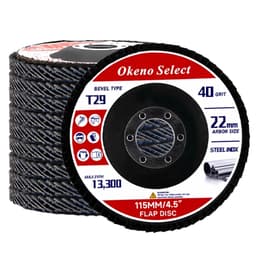
Unplug the grinder, or take the battery off, before you touch the flange. Take the old wheel off and check the flanges for burrs and embedded grit. A dirty flange is how a new disc runs out of true. Diameter has to match the guard. Eleven packs are 115 mm and one is 125 mm. The 22.23 mm bore only gets the disc onto the spindle. The maximum rpm on the disc has to be at least the grinder’s speed. Most 115 mm listings print 13,300 rpm. One spec line prints 13.3 rpm, a listing error, so trust the disc in your hand. If the number is missing, or below the grinder, put the disc back. A crease, a loose flap or a hub already showing is a return under the Consumer Rights Act 2015, not a disc you run in. Seat it flat and tighten the nut as the manual shows, without a cheater bar. Diameter, grit and type are on the flap disc buying guide.

Guard on, then a one-minute trial

Put the guard back between you and the disc. FEPA’s leaflet treats grinding without it as outside the design of the tool. Safety glasses and hearing protection still apply at home. Close-fitting gloves, or none, beat a loose cuff. Clamp the workpiece. Let the disc run at operating speed for one minute before you touch metal. That trial run is the FEPA recommendation. A tick, a growing wobble or a burning smell means you stop and unplug. ZJNGVF and Merryland reviews mention vibration. Find that before the disc is on a weld. If you are an employee, PUWER training is your employer’s duty, and this page is not that course. Structural steel and overhead work you cannot brace belong with someone who does this for a living.

Angle, pressure, and the edge you should leave alone

Bring the disc to the work at the angle the shape was built for. Type 29 is normally about 15–25°. Type 27 is normally about 0–15°. Engweld’s UK guide uses those bands. The longer version is the type 27 vs type 29 flap disc page. A steep Type 27 tears a corner of the flap. A very flat Type 29 wears only the rim. Let the speed do the cutting. Life changes with pressure. Leaning until the motor bogs down glazes the grit and can turn mild steel blue. Walk the contact patch along a weld. The edge is not a cutting wheel. That boundary is on the flap disc vs grinding disc page. Wood loads the flaps. None of these listings printed a stainless contamination specification.

When the disc comes off

Stop when the flaps are short, torn or glazed, or when the hub starts to meet the work. A new vibration, or flaps that have lifted at one side, is a stop, not a reason to add pressure. Unplug before you swap. Store what is left dry, away from damp and heat, which is FEPA’s storage note. A disc that has lived on a wet floor can shed flaps on the next start. There is no hour-life in these reviews. EZARC and MIDO notes say discs wear quickly on hard metal, which can be pressure as much as grain. In a mixed box the coarse disc tires first. Worn discs go in general waste unless your council says otherwise.

Common questions

What angle should I use on a Type 29 flap disc?
About 15–25° to the surface, the band Engweld gives for a conical Type 29 disc. Steeper, and the outer corner grabs. Flatter, and you only wear the rim. Type 27 stays at about 0–15°. The T29 label does not change the rpm limit, and it only counts if the disc matches the title.
Can I grind on the edge of a flap disc?
Use the face of the flaps at the angle for that type. The rim is not a slitting tool. To cut a bolt, fit a cut-off wheel marked for that guard and keep the guard on. Heavy stock on a thick weld is a depressed-centre grinding disc. Forcing the rim into a corner tears flaps and throws the grinder.
Do I need the guard?
Yes. Fit the guard between you and the disc before the trial run and before any grinding. FEPA’s leaflet and HSE abrasive-wheel guidance both treat the guard as part of the setup. A 125 mm disc under a 115 mm guard is not solved by removing the guard. If the guard is cracked or will not clamp, the grinder is out of service until it is replaced.
How long should the trial run be?
FEPA recommends one minute at operating speed before the disc touches the work, with the guard on and your body out of line with the disc. A tick, a growing wobble or a burning smell means you stop and unplug. A disc that arrives with bent flaps goes back. The minute is not a way to break in a damaged disc.
When should I replace the disc?
Replace it when flaps are torn, glazed or worn short, when the hub meets the metal, or when a new vibration appears. There is no reliable hour figure in these notes. Unplug, look, and fit the next disc. Continuing until the backing plate digs in marks the workpiece. A mixed-grit box uses the coarse discs up first.
Can I use a flap disc on wood?
Only with the limits on the listing and on the disc. Wood fibres load the cloth, and a clogged flap burns rather than cuts. Keep the speed inside the disc mark, use light pressure, and stop when the flaps fill. If the materials field does not name wood, do not invent that permission.
What protection should I wear for metal?
Safety glasses, and a face shield when the sparks are heavy. Hearing protection. Nothing dangling into the disc. A dust mask indoors or on coated metal. HSE abrasive-wheel guidance is the workplace version of that list, including training. Gloves, if you wear them, must not be loose enough to catch.

Related pages

Sources

Sources taken from the research digest. Prices, stars and review counts are the stored amazon.co.uk listing figures from 19 October 2026.

  1. FEPA safety leaflet — flap discs (retrieved 19.10.2026)
  2. Engweld UK — flap disc guide (retrieved 19.10.2026)
  3. Norton Abrasives UK — flap disc guide (retrieved 19.10.2026)
  4. HSE HSG17 — safety in the use of abrasive wheels (retrieved 19.10.2026)
  5. HSE — PUWER overview (retrieved 19.10.2026)
  6. Cutwel UK — grinding discs explained (retrieved 19.10.2026)