Blunt router bit: when the boxed cutter is finished

A blunt router bit scorches the timber edge or snaps in the cut. Tell a dull flute from a loose collet, and when a boxed set of bits should be replaced.
On this page

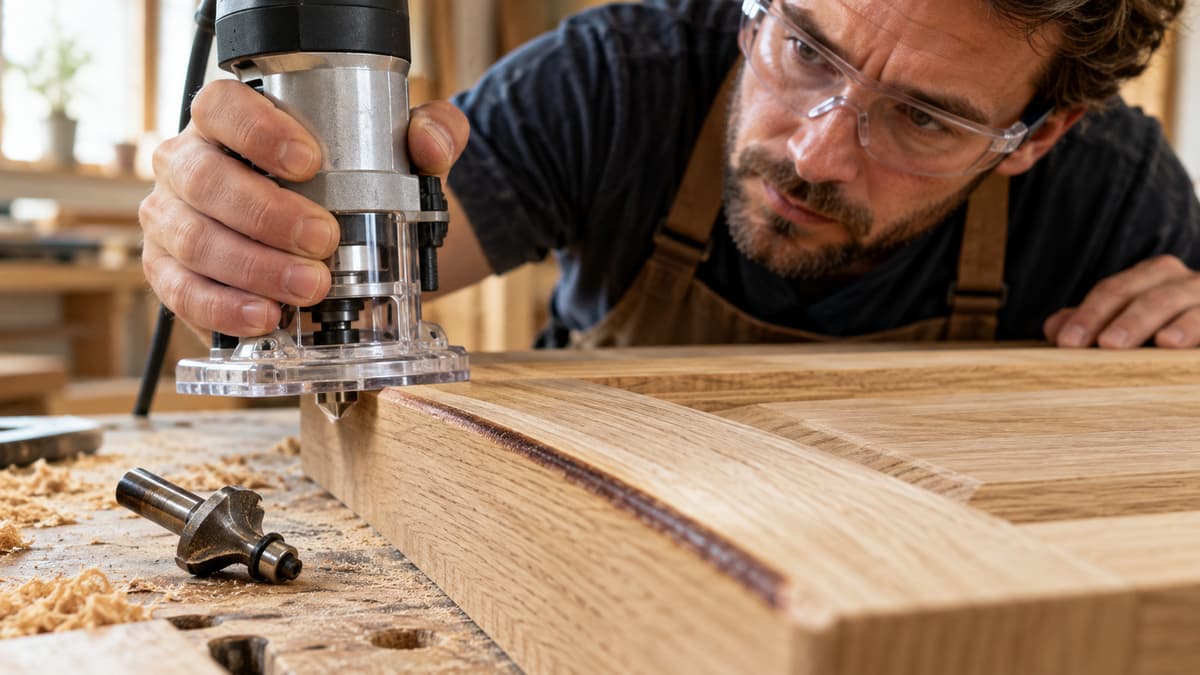
You have just run a rounding bit along a door edge. The shoulder is brown, the arris is fuzzy, and the motor still sounds willing. The cutter came out of the plastic wallet in the box. A blunt router bit is rubbing the timber instead of lifting a chip, and a different body will not put an edge back on that flute.
Trend’s UK notes on feeding the router say a blunt cutter, or the wrong speed, leaves a poor face and heats the cutter. The same brown line can come from a pass you walked too slowly. People hear the motor labour and order another router. The bit has often done the damage already.
The DeWalt router comparison uses the amazon.co.uk listings read for October 2026, plus Trend’s feeding page and a Machine Mart how-to that assumes a sharp cutter before it discusses feed. No lab test was run, and no metres of cut were counted. A qualifying purchase can earn a commission at no extra cost to you.
In short
Read the edge before you blame the motor. A brown line that survives a steady feed, a fuzzy shoulder, and a bit that snapped within the first inches are cutter problems. A shank that walks down the collet, or a nut that will not tighten, is a grip problem and can look the same. Boxed bits are a contents claim, not a finish cutter. This page will not quote a life in metres.
What a tired cutter does to the edge
A sharp flute lifts a chip and throws it clear. A tired flute smears the fibres, stays in contact longer, and dumps that friction into the timber as heat. You feel extra push. The motor note drops because the cutter is rubbing a wider patch on every revolution. The shoulder goes from clean to polished, then brown, and the grain lifts where the flute no longer slices the fibre.
Burn on its own is a weak verdict. If you hesitate at the end of the pass, a sharp bit still scorches the spot where it dwelt. Trend groups a blunt cutter and the wrong speed together. Machine Mart’s how-to takes a sharp cutter as the starting point, then talks about feed, so a dull bit and a crawl can write the same brown line. Keep the base flat, keep moving, and repeat the cut on scrap. If the scorch returns while the feed stays steady, that flute is finished for the job.
Wood Magazine’s shop tip is to draw a fingernail across the carbide: a keen edge snags, a dull one slides. That American habit was not used on this amazon.co.uk set. Judge the timber you just cut, then tug the shank with the battery off.
Bundled bits in budget kits
Several palm routers in this amazon.co.uk set advertise a wallet of bits beside a body sold tool only. A line that says 15 bits is a packing claim, not a clean first edge on a door you care about.
The JOJOCY at £69.99 lists 15 bits, at 4.1 from 22 reviews. UK reviews discuss the guide and the base: one wing nut lets the edge guide drop, and another buyer returned the tool because the base moved. The JOJOCY at £58.99 is 3.5 from two UK reviews and lists six bits. One review calls the bits and rail guides inadequate. Two reviews are the whole file.
The L1NXIXI at £54.99 claims fifteen quarter-inch bits, and a UK review says a bit broke within about 3 inches. The RAYLEEY at £61.99 claims 15 quarter-inch bits, and a UK review says they ride down the shaft. The Chengsuwei at £47.49 lists five quarter-inch bits, and the only UK review says the collet nut would not tighten.
The TOPWAY at £49.99 is the top pick for light edges if you already own a DeWalt 18 V pack: 4.3 from 47 reviews, fixed base, battery not included, and no bits on the included-components line. UK reviews mention doors, poor spanners and one slipped cutter. Prices are the October 2026 file and can move.
Snap, slip, and a collet that is not the same fault
A snap, a creeping shank, and a nut that never nipped are different jobs. They share a brown edge, which is why the next purchase is often another router.
The L1NXIXI review, a break within about 3 inches, is the snap in this file. A brittle flute, a grab on entry, and a cut that was too deep can all sit in that sentence. Switch off, take the battery off, and bin the stub. A shortened carbide can throw what is left of the tip. Match the next shank to the collet. A 6 mm shank is a different size from a quarter inch. The collet sizes guide keeps those sizes apart.
Bits riding down the RAYLEEY shaft, and the slipped cutter in the TOPWAY reviews, move the flute deeper as you travel. On the Chengsuwei the nut would not tighten, so the five bits never got a fair cut. Seat the bit with the battery off and tug it. If it moves, stop. The how to use page is the fitting sequence. If a second shallow pass on scrap still smears, you are back to the flute.
Sharpen, replace, or stop
When a router bit needs sharpening, and when it should be binned, is a trade this pass did not price. There is no quote from a UK sharpening service, so there is no saving to publish. A named carbide bit you will run along many doors can be worth a hone from someone who keeps that profile. A wallet bit that has burnt the first finish edge, or snapped, is a replace. Buying another body spends the money on the wrong part.
This page will not teach a home grind. A slipped angle changes the profile. If you do not already hone carbide, fit a new bit of the same shank and try it on scrap. Remove the battery first. The Chengsuwei bullet says that, and the nut still has to clamp.
Stop when you are pushing and the timber browns while you keep moving. On a bearing-guided bit, spin the bearing by hand with the battery off. A gritty bearing skids and scorches the arris even when the carbide is keen. A free bearing beside a fuzzy brown shoulder points at the flute. There is no life figure here for either part. Trial a kit bit with a light chamfer on scrap. Once the edge will be seen, fit a cutter you chose for the profile.
What not to promise about life
Carbide router bit life, asked as a distance, is a number this file does not contain. No listing recorded metres, hours, or a percentage of edge left. The L1NXIXI break within about 3 inches is one UK buyer’s cut. Species, depth, and a pause in the cut all move the result.
Seller limits are not life tests. The LIROPAU ACYK-XB-DEW, at £59.33, prints a 3 mm pass limit, and that sentence belongs to the seller. The L1NXIXI claim of a cutting depth up to 24 mm is a listing maximum, not a single pass. One full-depth pass overloads a small flute and can snap it on the opening move. How to step that cut is on the depth of cut page.
If the shank slips, fix the collet before you judge the edge. If the edge burns at a steady feed on scrap, replace that bit, or send a keeper for a professional hone. If it has snapped, bin the pieces. The DeWalt DCW620B in the same comparison, at £324.98 tool only, lists neither bits nor a collet size in the spec table. When a new bit, a tight collet and a shallow pass still burn, hand the door to a joiner.
Common questions
How do I know the bit is blunt?
Can I sharpen a carbide router bit?
Should I use the bits that came in the box?
Why did a bit snap straight away?
Is burn always a blunt bit?
Does a bearing-guided bit fail differently?
When is it the collet, not the edge?
How many metres should a bit last?

Peter F. is the editor for DIY & tools at productscompared.co.uk. Comparisons in this category are checked against amazon.co.uk listings, review evidence and public UK sources.
Related articles
Why a router burns the wood
Scorch on an edge can be a slow feed or a blunt bit. The motor is often blamed for a cutter that no longer takes a clean chip.

Router collet size: 6 mm or 1/4 inch
A 6 mm shank is a different size from a quarter inch, and 12 mm is not a half inch. The wrong collet lets the bit slip.

How deep to cut with a router
One full-depth pass overloads a small cutter. Step the turret so a fresh bit is not asked to clear the whole groove at once.