Independent comparisons. We may earn from shop links. More info

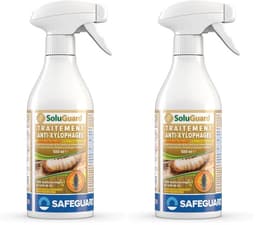
Woodworm killer for furniture

Updated: October 2026

A pale dusting under a dining chair, or fresh holes on the underside of a cupboard, is how this usually shows itself in a UK house. You can turn that piece and carry it into a spare room. A woodworm killer for furniture is for that job: bare wood on something you can isolate, including the joints and the underside. A floor joist, a stair, or a raised bed in soil is a different problem, and an interior tin is the wrong product there. Which bottle fits one small interior piece is on the [woodworm killer](/hub/raised-beds-greenhouses-and-compost/woodworm-killer) comparison. The rest of this page is when the piece should stay in the house.

A pale dusting under a dining chair, or fresh holes on the underside of a cupboard, is how this usually shows itself in a UK house. You can turn that piece and carry it into a spare room.

Our top picks

On this page

A piece you can move

Furniture here means a chair, table, sideboard, or cupboard you can lift, turn, and keep away from other timber while it dries. Which? treats that sort of piece as work you can do yourself, compared with structural timber you cannot move and with a dense hardwood that takes fluid slowly. The Property Care Association notes that furniture may be target-treated with an amateur product, if you pay attention to the undersides. A fixed greenhouse rail, or a planted raised bed, fails that test even when the boards look similar. Move the piece out of the room that holds other wood, and keep children and pets off it until the surface is dry.

Undersides, joints, and the finish

Flight holes often sit near the joints and on the underside, not on the polished top. Turn a chair over and look along the rails, the inside of the back legs, and the blocks under the seat. Varnish, paint, and wax stop a water-based fluid soaking in. Which? and Wood Finishes Direct both put stripping ahead of a full treatment. If you leave the finish on and only fill the holes, you are accepting a weaker spot treatment. Peter Cox warns that a water-based fluid can darken wood when moisture sits under wax or varnish. Rates and drying times are on how to use woodworm killer. If you cannot clear the finish from the faces with fresh dust, the tin will not reach the wood the larva is in.

What these listings' reviews say about furniture

The amazon.co.uk texts in this set are uneven, and a star average is not a furniture trial. Rentokil’s 250 ml reviews mention tables and sideboards, including a mango sideboard, and some people said the varnish was not marked. Others found the nozzle too big and used a pipette in the holes. In at least one report the dust was still there after repeated coats, so the fluid did not finish the attack by itself. A 250 ml tin is sized for one small piece, compared with a 5 litre can for a measured run of boards. Which tin states interior use, and which listing is a solvent or a stain under a woodworm title, is set out in the woodworm killer buying guide and among the best woodworm killers. A small water-based interior tin is the relevant end of that list for one modern chair, if the piece is not antique and a patch test does not darken the wood.

When the piece should leave the house

Send the piece out if it is antique, if the veneer cannot be stripped, or if the timber is water-sensitive. Cuprinol’s page draws that line. Stop if fresh dust returns after bare wood, the underside, and the joints have been treated. Dark old holes with no new dust are a reason to watch, which is the decision on is woodworm active or old. A raised bed stays outside this scenario, because you cannot isolate it like a chair and an interior-only fluid is wrong for soil contact.

Common questions

Can I treat a chair myself?
Yes, if you can lift it, turn it, and keep it away from other timber until the fluid is dry. Which? treats that as a DIY job, compared with structural wood and with a dense hardwood that takes fluid poorly. Keep children and pets off the chair until it is dry, as Rentokil’s DIY page states. If the chair is antique, water-sensitive, or still producing dust after bare wood has been treated, use a restorer instead of another coat.
Do I have to strip the varnish?
A full treatment needs bare wood. Paint, varnish, and wax block a water-based fluid, so stripping those faces is the reliable route. Spraying into the holes and leaving the finish on is a weaker spot treatment, which Wood Finishes Direct sets against a stripped coat. Extra coats on top of varnish, as some Rentokil reviewers tried, show that the finish is still in the way.
Will a water-based fluid mark the finish?
It can. Peter Cox notes darkening where moisture sits under wax or varnish, and Cuprinol’s page says some timber may darken, so test a patch where it will not show. Some Rentokil 250 ml reviews said a varnish was not marked, and others needed extra coats because the varnish blocked uptake. A clear result on one mango sideboard is not a promise for your waxed top.
Is a solvent tin safer for gilding?
Not on the evidence in this set. Timpest is a solvent fluid and the maker’s material refers to gilding, but the 497 review texts behind the 4.5 score are from Italy. That is not a UK record of gilt chairs, so it does not show that the solvent leaves gilding alone. For gilt or veneer you cannot strip, a restorer is the safer stop, compared with experimenting on the only ornate piece in the house.
When should I stop and use a restorer?
Stop for an antique or a water-sensitive finish, which Cuprinol’s page excludes even when the amazon.co.uk listing does not repeat the sentence. Stop if dust returns after bare wood, joints, and the underside have been treated. Stop if the holes are about 3 mm with bun-shaped pellets, because that is no longer a common furniture-beetle tin job. A sound modern chair with fresh 1–2 mm dust is the piece that can stay in the house.

Related pages

Sources

Public UK and manufacturer sources from the research digest, last checked on 16 October 2026.

  1. Health and Safety Executive — using biocides (retrieved 16.10.2026)
  2. Health and Safety Executive — product type 8 (retrieved 16.10.2026)
  3. GOV.UK — bat roosts and timber treatment (retrieved 16.10.2026)
  4. Property Care Association — woodworm (retrieved 16.10.2026)
  5. British Pest Control Association — insects that destroy wood (retrieved 16.10.2026)
  6. Society for the Protection of Ancient Buildings — wood-boring insects (retrieved 16.10.2026)
  7. Barrettine — 500 ml ready-to-use label (retrieved 16.10.2026)
  8. amazon.co.uk extracts, 16 October 2026 (retrieved 16.10.2026)