Independent comparisons. We may earn from shop links. More info

Is woodworm active, or are the holes already old?

Updated: October 2026

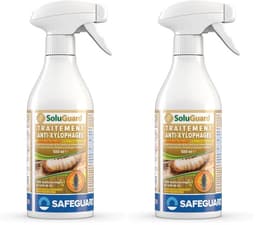
Is woodworm active in the timber you have just found, or are you looking at an exit from years ago? Fresh, pale dust on a cleaned surface is the live sign. Dark holes with nothing new are a reason to wait. The Society for the Protection of Ancient Buildings notes that much attack in old buildings is already extinct. Once the attack is live and the wood is bare enough to reach, bottles sit side by side on the [woodworm killer](/hub/raised-beds-greenhouses-and-compost/woodworm-killer) comparison. Products Compared drew these signs from SPAB, the PCA, the BPCA, and English Heritage on 16 October 2026, without a laboratory trial. A qualifying purchase can earn us a commission.

Is woodworm active in the timber you have just found, or are you looking at an exit from years ago? Fresh, pale dust on a cleaned surface is the live sign. Dark holes with nothing new are a reason to wait.

Our top picks

On this page

Holes are a record, not a live insect

An exit hole is where an adult beetle left the timber, and it stays after the insect has gone. Common furniture beetle holes are typically 1–2 mm across. The Property Care Association says that if the insect has died out because the timber is dry, or already treated, further treatment is not justified. Old holes look dark, with rounded rims. New holes are sharper, with fresher-coloured wood around them, which is the contrast SPAB draws. English Heritage’s furniture-beetle sheet says eggs and young larvae fail below about 12% moisture content, or below about 55% relative humidity. SPAB puts moisture below about 15% ahead of chemicals. Keep those figures apart.

Fresh frass, sharp edges, and a season of watching

Fresh furniture-beetle frass is fine, often lemon-shaped, pale, and gritty. English Heritage describes new holes as sharp, with that fresh dust beside them. Sweep the loose grains, lay a white card under the rail, and leave it from March through September. A small pile of fresh woodworm dust on that card is the sign that changes the decision. A card that stays clean across those months is a stronger argument for waiting than any star rating. Old frass also falls out when you move dry timber, and English Heritage says that fall is not a new attack by itself. If pale dust returns after you have treated bare, reachable wood at the label rate, stop, and do not empty a second 5 litre tin the same day.

Furniture beetle or something larger

Furniture beetle exits are typically 1–2 mm, with fine or lemon-shaped frass. Deathwatch holes are larger: SPAB gives 2–3 mm, and the BPCA’s PestWatch puts them at about 3 mm, with bun-shaped pellets, usually in damper oak rather than a pine chair. The BPCA says deathwatch larvae deep in the wood may survive a brush treatment, so fluid on the face of an oak beam can miss the insect. House longhorn beetle is a structural, often southern, case for a survey. Wood-boring weevils come with wet rot, so the decay comes before any insect fluid.

Buy, wait, or call

Wait when the holes are dark, dust fell only because you moved the piece, and a white card stays clean through a flight season. Look again next spring. Buy only when fresh frass keeps appearing, the holes are about 1–2 mm, and you can reach the wood bare: a chair, a mantel, or a greenhouse rail you can strip. Label checks are on the woodworm killer buying guide. Fluid on bare wood, at the printed rate, is on how to use woodworm killer. A piece you can take out of the room is on woodworm killer for furniture. Tins for a confirmed, reachable attack are on the best woodworm killer page, which still does not replace this dust test. Call someone for holes of about 2–3 mm with pellets in oak, for soft or rotten timber, or if fresh dust returns after a proper treatment of wood you could already reach.

Common questions

Are holes enough to buy a woodworm treatment?
Holes show that an adult beetle left the timber. They do not show that a larva is still feeding. SPAB describes much attack in old buildings as already extinct, and the Property Care Association says treatment is not justified when the insect has died out because the wood is dry or already treated. Buy only if fresh dust returns on a cleaned surface, and only where you can reach the timber bare.
What does fresh woodworm dust look like?
Fresh furniture-beetle frass is fine, pale, and often lemon-shaped, and it feels gritty, like sand. It sits by sharp holes with fresher wood at the rim, which is how English Heritage marks a new exit. Deathwatch dust is bun-shaped pellets from holes nearer 2–3 mm, usually in damper oak. Powder that appears only when you move a dry cupboard can be old frass from empty tunnels.
I moved a cupboard and dust fell out. Is that active?
English Heritage says old frass that falls when you move dry timber is not, by itself, a new attack. Clean it up, put white paper underneath, and watch through the flight months, often March to September. Grains that appear on a card you left still are the active sign. Powder that showed up only because you dragged the cupboard is a reason to watch, compared with buying a tin that evening.
How big is a furniture-beetle hole compared with deathwatch?
A furniture beetle hole is typically 1–2 mm, with fine or lemon-shaped frass. A deathwatch hole is larger: SPAB says 2–3 mm and the BPCA about 3 mm, with pellets, and larvae may live 4–12 years in damper oak. The BPCA warns that larvae deep in the wood may survive brushing. When the pellets and the oak are both there, a survey is the safer next step than a chair spray.
When do I call someone instead of watching?
Call a specialist for holes of about 2–3 mm with pellets in oak, for soft or rotten wood, or when fresh dust returns after you treated bare timber you could reach. House longhorn, often a southern structural case, and weevils that come with wet rot, belong in that call. A white card under a chair is a watch you can run yourself. A joist or a damp beam is where that watch should stop.

Related pages

Sources

Public UK and manufacturer sources from the research digest, last checked on 16 October 2026.

  1. Health and Safety Executive — using biocides (retrieved 16.10.2026)
  2. Health and Safety Executive — product type 8 (retrieved 16.10.2026)
  3. GOV.UK — bat roosts and timber treatment (retrieved 16.10.2026)
  4. Property Care Association — woodworm (retrieved 16.10.2026)
  5. British Pest Control Association — insects that destroy wood (retrieved 16.10.2026)
  6. Society for the Protection of Ancient Buildings — wood-boring insects (retrieved 16.10.2026)
  7. Barrettine — 500 ml ready-to-use label (retrieved 16.10.2026)
  8. amazon.co.uk extracts, 16 October 2026 (retrieved 16.10.2026)