Independent comparisons. We may earn from shop links. More info

How to assemble a wooden raised bed

Updated: 21 October 2026

The pack is on the lawn, the boards look damp, and the first screw is about to go into end grain. This page is how to assemble a wooden raised bed from the kits in this comparison: level the ground, pre-drill, and screw into the post, not into the plank end. Prices and which kit you bought stay on the [wooden raised bed comparison](/hub/raised-beds-greenhouses-and-compost/raised-bed-wood). Peter F. used the amazon.co.uk listings and public UK build notes, checked on 20 October 2026. No lab build. A qualifying purchase can earn a commission at no extra cost to you.

The pack is on the lawn, the boards look damp, and the first screw is about to go into end grain.

Our top picks

On this page

Tools and a flat site

None of these seven kits is tool-free. You want a drill, a driver, a spirit level, a tape, and gloves for fresh treated timber. Conka says the drill is not included and recommends a second person. Eco arrives with sides assembled and ends pre-drilled; you still need a driver. Quickcrop includes fixings; UK reviews still describe pilot holes. Lay the parts on level soil first. Grass can hide a slope that twists the rectangle. The RHS build advice starts with a level site. If the plot falls more than a board’s thickness, pack the low corners or cut a shallow trench. A bed that retains a slope, or posts set in concrete, is when you call a professional. Wear gloves on new tanalised boards. Do not burn offcuts.

Order of assembly

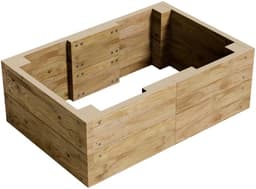
Fix the posts to the short ends first, then the long sides, so you drive into the post rather than into end grain. Quickcrop’s 7 inch sheet lists two sides, two ends, four 6 × 6 × 18 cm posts and 16 screws, kept off the timber edge. That count is the maker’s PDF, not an amazon.co.uk bullet. Reviews still cut pilot holes. Check every board before you commit a corner. Eco is half built: pre-drilled ends onto assembled sides. If a hole misses, drill a fresh pilot. Conka 30 cm boards are not planed and not pre-drilled. Runs over 4 ft can arrive as shorter boards plus a joiner. Start a pilot at least a centimetre in from the edge. The three 30 cm sizes share one review block.

Wet, rough and short of screws

Treated boards often arrive wet. Conka’s page tells you to dry them at home before you finish or line the wood. Leave the timber stickered with air gaps, not in a sealed wrap, until a screw does not pump water out of the hole. You can dry-fit the same day. Do not oil, stain, or fit a liner onto wet faces. One Conka buyer described about half the screws they needed. Quickcrop reviewers bought extras. Eco’s file shows uneven quality between two units, not a repeated missing-parts pattern. Count the hardware against the corners before you start. If the bag is short, stop while the bed is empty. Goods must match the description under the Consumer Rights Act 2015, section 11. Photograph a split, then decide on a return or a spare board. Do not burn the wasted length.

After the frame is square

Check the diagonals. When they match, the rectangle is square enough to fill. Conka says to sit the frame about 3 cm into the earth. That is the seller’s line, not a British Standard. Do not bury a 15 cm kit until the wall disappears. Brush preservative on any fresh cut and use corrosion-resistant fixings if you add screws. The Wood Protection Association’s buyer guide is the source for both habits. If the frame rocks, or a long side bows as you fill, call a professional. Which kit to buy is on the wooden raised bed buying guide.

Common questions

Which piece do you fix first?
On Quickcrop’s 7 inch sheet, the posts go to the short ends first, then the long sides, with screws kept off the timber edge. Eco is the exception: the sides are already assembled, so you only add the pre-drilled ends. Conka has no pre-drills; still start at a corner post so you are not screwing into end grain.
Do you need a drill for these kits?
Yes. Conka says so on the listing. Quickcrop reviewers use one for pilots even though fixings are included. Eco supplies screws for pre-drilled holes; you still need a driver. Nothing in this set is described as tool-free or click-fit.
What if the boards are wet?
Dry them at home with air around each plank before you stain, oil or fit a liner. Conka’s own page says that, and UK reviews describe damp timber on arrival. You can dry-fit the frame the same day. Driving every screw into wet wood makes splits more likely and traps moisture against a liner.
How close to the edge can a screw go?
Keep it off the arris. Quickcrop’s sheet tells you to keep screws off the timber edge. A centimetre of timber around the hole is a practical minimum on these thin boards. A screw in end grain is the split waiting to happen.
What if the long side is two short planks?
That is the joiner on longer Conka runs. Treat the joint as a third corner: pre-drill, screw into the joining piece, and have a second person hold the run straight. Do not rely on soil later to hide a dog-leg.
What if screws run out?
Stop before you fill. Count the bag against the corners. Buy matching exterior screws if you are only a few short and the timber is sound, or return the kit if the hardware cannot match the listing. One Conka text said the supply was about half of what that build needed. Goods must match the description under the Consumer Rights Act 2015.

Related pages

Sources

Public UK and manufacturer sources, last checked on 20 October 2026.

  1. RHS, How to make a raised bed (retrieved 20 October 2026)
  2. RHS, Growing veg in raised beds (retrieved 20 October 2026)
  3. RHS, Using sustainable materials (retrieved 20 October 2026)
  4. Wood Protection Association, Treated wood and raised beds (retrieved 20 October 2026)
  5. BSW, Specifying, buying and installing UC4 treated timber (retrieved 20 October 2026)
  6. Creosote (Prohibition on Use and Marketing) Regulations 2003 (retrieved 20 October 2026)
  7. House of Commons Library, Creosote and telegraph poles (retrieved 20 October 2026)
  8. Wood Protection Association, Buyer guide to preservative-treated wood (retrieved 20 October 2026)