When is compost ready: dark, crumbly, woodland smell

Ready home compost is dark, crumbly, and smells of damp woodland. UK pages quote three months to two years. Mulch at 5 cm, and do not sow seeds in it neat.
On this page
The hatch on the dalek sticks, the heap looks dark from the path, and you still do not trust it on the salad bed. When is compost ready is a look and a smell, not the month you wrote on the lid. Finished compost is dark brown and crumbly, and it smells like a damp woodland floor.
The Royal Horticultural Society, Garden Organic, Pembrokeshire County Council, Hampshire County Council, and the National Allotment Society are the public UK lines below. We did not run a heap trial or time a bin to a finished date. The price further down is GBP from the amazon.co.uk listing for a compost maker. A qualifying purchase through our links can earn us a commission at no extra cost to you.
In short
When is compost ready, you judge it by look and smell: dark brown, crumbly, and a damp-woodland or earthy smell. Published waits run from three months to two years, and six to eight weeks is only a best case, not a promise. Spread at least 5 cm as a mulch, and do not sow into home compost neat.
Look and smell, not the calendar
The Royal Horticultural Society calls finished compost dark brown and crumbly, with the smell of a damp woodland. Pembrokeshire County Council describes the same point as dark brown soil with an earthy smell, and that is the mature compost smell. A sharp smell, or a rotten one, means the bin is not ready to spread, however dark the crust looks from the path. Ammonia and rotten eggs are handled on why a compost bin smells, and a tub of maker does not stand in for that repair.
Take a handful from the middle, not from the dry cap under the lid and not only from the bottom hatch. A hatch can drop dark crumb while the top half is still last month’s caddy. Finished compost breaks apart when you poke it, while slime on the glove, or a ball that drips, is still wet waste. Pale, steamy grass is an earlier stage, and judging the lid-side crust by colour is how peelings end up on the bed.
Garden Organic separates a heap that has broken down from one that has matured: six to eight weeks is possible, a year or more is usual, and compost then matures for a month or two. A bin that turned dark on Saturday is not fit to spread on Sunday. Heat can mean the heap is working, but cold scraps you can still recognise are not finished compost.
Why the time ranges disagree
How long does compost take depends on which UK page you opened. Pembrokeshire County Council says anything from 3 to 12 months, Hampshire County Council says 6 to 9 months, and the Royal Horticultural Society and the National Allotment Society both say six months to two years. Garden Organic says six to eight weeks is possible and a year or more is usual. That spread is a hot, well mixed heap at the short end and a cool plastic bin through a wet winter at the long end, so one month is not the UK rule.
A dalek has no model-by-model time in any of these sources. A cone you top up from the caddy is not the six-to-eight-week case, which is only what Garden Organic calls possible. If you need the bed this month, buy bagged compost for that job and let the dalek finish.
A bin full by April and opened in October sits inside Hampshire’s six to nine months only if the mix was already a working heap. Wet grass with no dry material can sit for two years and still be slime. A November fill you barely open belongs at that two-year end, not on a date chosen because the bed is empty.
Lumpy compost and what goes back
Garden Organic says lumpy compost is usable, and the Royal Horticultural Society says uncomposted bits go back in. The dark, crumbly fraction is the compost, while twigs, woody stems, and pieces you can still name go back. Compost still has twigs in almost every home bin, because wood is slow, so pull the sticks out and return them. They are not a reason to reject the crumb or to spread a layer of sticks.
Eggshells sit in that gap. The guidance cited here does not name shells. If you can still see them, treat them as uncomposted bits: pick them back in with the twigs, and use the dark material when it is crumbly and smells earthy. A barrow that is mostly shell and peel is not the lumpy compost Garden Organic will let you use.
Is lumpy compost usable on the soil? Yes, for a mulch, which is why sieving is optional there. Sieve when you want a finer mix for pots, and put what stays on the mesh back in the bin. No page here prints a mesh size, so an ordinary garden sieve is enough, and the woody half goes back in the dalek rather than into the council green-waste bin.
Mulch, beds, and seedlings
The Royal Horticultural Society says use finished compost as a mulch at least 5 cm deep. Five centimetres is an even blanket, not a bucket in one corner. On one square metre, 5 cm is 50 litres, arithmetic from 1 m by 1 m by 0.05 m rather than a bag rate the Society prints. A bed of 2 m by 1 m needs about 100 litres. If the dalek gives you less, cover part of the bed at 5 cm instead of smearing 1 cm over the frame, because a skim was never the mulch they describe.
The layer sits on soil you already have, as a soil improver after the look and smell test, not as a seed compost. Hampshire County Council says home compost is too strong for bringing on young plants, and that you should mix it for potting. Do not fill a module tray from the dalek and sow into it neat. The lines used here do not print one parts recipe, so a half-and-half beside the water butt is your guess, not Hampshire’s. Sowing wants a bought seed compost.
Bagged materials for filling a bed are the raised bed compost comparison, and the fill itself is the raised bed compost how to fill guide. The frame, if you are still choosing a kit, is the raised bed comparison. How a finished heap goes onto a bed you already grow in is compost on raised beds. A mulch in October covers soil you will plant in spring. It does not make a March sowing safe in pure home compost. If the handful still smells of the caddy, neither job is ready.
An accelerator does not set the date
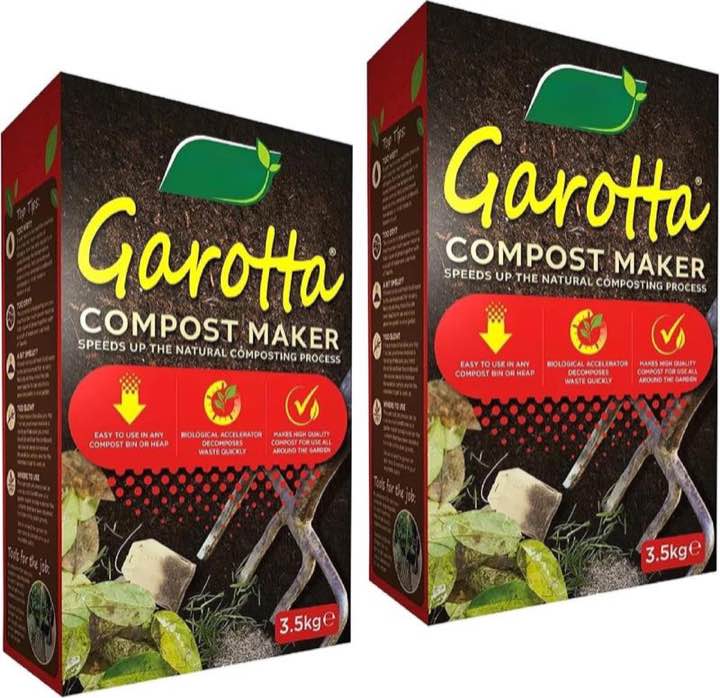
A tub does not move your bin onto Garden Organic’s six-to-eight-week line, and it does not shrink the Royal Horticultural Society’s six months to two years. None of the listings compared here has a tested ready-in-three-weeks result. Topline Garotta, two 3.5 kg boxes, is about £17.99 on amazon.co.uk, at 4.5 from 151 reviews. The listing prints no dose, and reviews mention split boxes and leaks in transit. None of that tells you the dalek is finished.
Buy a compost maker when the heap is already moist, aired, and short of green material. Do not buy one because the calendar feels late. Powder on a cold, wet, twiggy bin does not create a damp-woodland smell, and it does not turn sticks into crumb. The compost accelerator comparison sets that Garotta bundle, the top pick for a brown, moist outdoor heap, beside other makers. Box size and price per kilogram sit on the compost accelerator buying guide. Readiness stays on the handful from the middle.
If you empty the dalek because the tub has run out, you put unfinished material on the bed and you have nowhere to return the twigs. Keep a corner of the bin for the woody bits. The accelerator is not a bed fertiliser, and it is not a clock.
Common questions
How do I know compost is finished?
How long does a dalek take?
Can I use compost if I can still see eggshells?
Should I sieve home compost?
Can I sow seeds in pure home compost?
What does a 5 cm compost mulch mean?
Does a compost accelerator change the ready date?
What do I do with woody bits in finished compost?

Peter F. is the editor for DIY & tools at productscompared.co.uk. Comparisons in this category are checked against amazon.co.uk listings, review evidence and public UK sources.
Related articles

Compost on raised beds
Finished home compost is a mulch and a soil improver. It is too strong on its own for young plants.

How often to turn compost
A slow bin, a hot heap and a tumbler do not share one turning schedule, and winter is a different case.
Home compost in a greenhouse
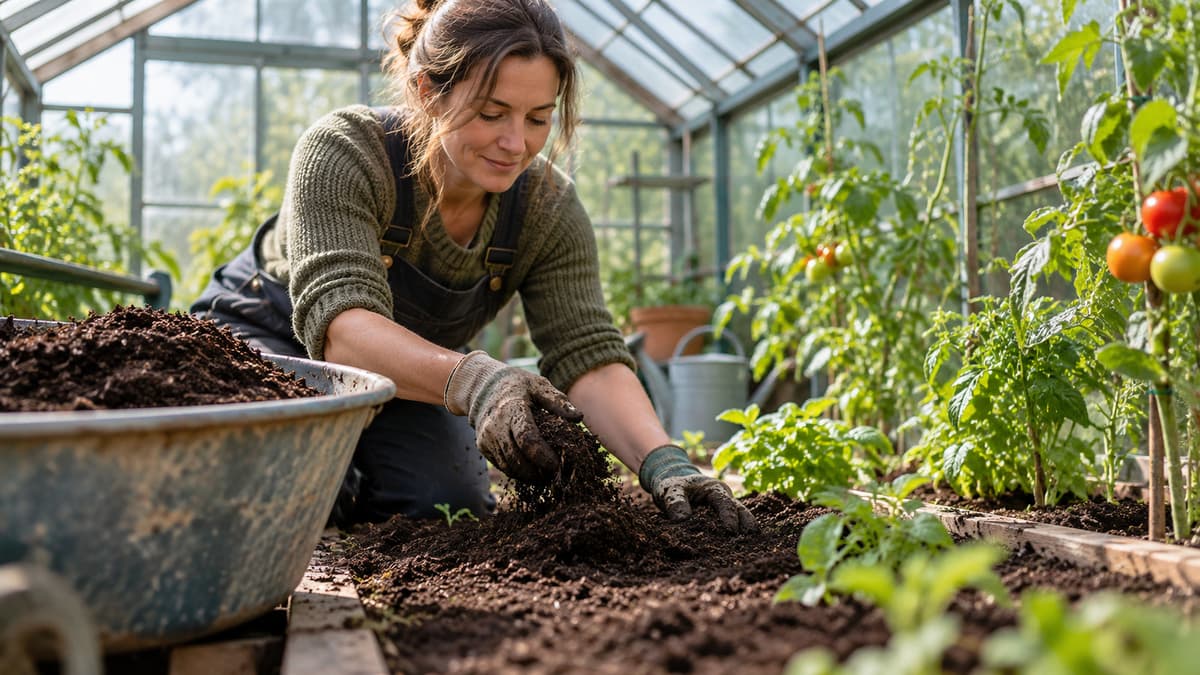
Finished home compost can go on greenhouse soil. Seedlings still need a gentler mix, and the heap is better kept outside.