Compost for greenhouse soil without harming seedlings
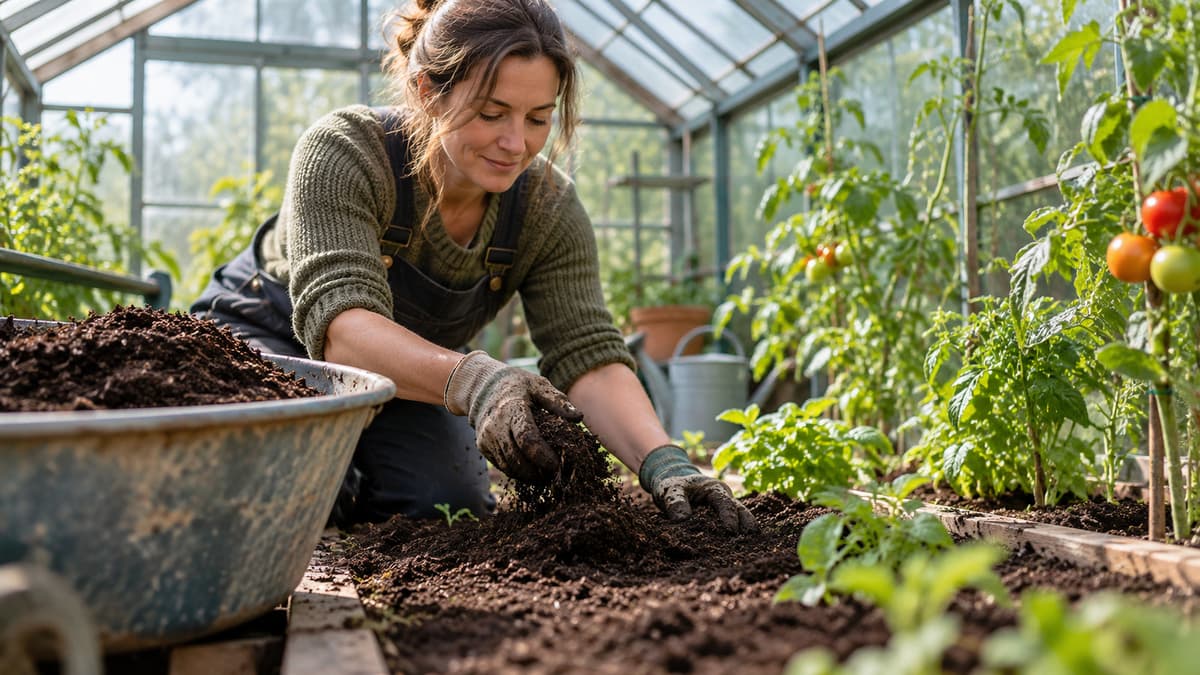
Compost for greenhouse soil should be mature. See why seedlings need a gentler mix, why a 5 cm mulch suits established beds, and why the heap stays outside.
On this page
Your compost heap has finally produced dark material, and the greenhouse bed looks like the obvious place to use it. That can work well around established tomatoes, but only when the compost has finished breaking down. Compost for greenhouse soil should be mature before it reaches the bed, and it should not be used neat for seedlings. Moving the whole heap under glass gives up growing space and can bring smells, drying and drainage. Keep the main system outside, then carry finished material in when the soil or established plants need it. The notes below follow public UK guidance from the RHS, Hampshire County Council, Garden Organic and compostthis.co.uk. We have not run a composting trial. A qualifying purchase through our links can earn us a commission at no extra cost to you.
In short
Use finished home compost on greenhouse beds or as a 5 cm surface mulch, and keep it away from seed trays as a neat growing medium because it can be too strong for young plants. A normal compost heap is usually better outdoors. A compost accelerator belongs in the composting process, not around greenhouse roots.
Use finished compost outside the seed tray
The useful dividing line is whether decomposition has finished, not whether the compost came from your own garden. The RHS describes ready compost as dark and crumbly, with a woodland smell. Those signs are more useful than guessing from the date, because a batch that still contains actively rotting waste has not reached the same stage as mature compost.
Hampshire County Council says home compost can be too strong on its own for young plants. A tray of newly germinated seedlings is the wrong place to test an uncertain batch. Seedlings need to begin growth without being placed straight into a rich, variable material.
For potting, Hampshire advises mixing home compost rather than using it neat. The guidance does not support one universal home-compost percentage, so a precise recipe would create false certainty. Each homemade batch varies, and a mix suited to an established potted plant is not automatically suitable for germination.
Keep the roles separate. Use an appropriate seed-growing medium for seedlings, and reserve mature home compost for greenhouse soil, surface mulching or a considered potting mix. If the material is not yet dark and broadly crumbly, or still smells of active decay rather than woodland soil, return it to the composting stage.
Why the compost heap stays outdoors
A greenhouse is warm space for growing. Filling part of it with a full compost bin creates an immediate trade-off: you lose room that could have held plants, and you gain no guarantee that an ordinary heap will behave like a purpose-designed hot system. The RHS distinguishes an insulated hot bin from an ordinary dalek-style bin. Sheltering a conventional bin under glass does not change what it is.
Compostthis.co.uk notes that a heap inside a greenhouse can smell more strongly in the enclosed space, dry out, or suffer from poor drainage. Warmth alone is not a good reason to surrender the greenhouse. A normal outdoor site keeps decomposition separate from protected growing space. When the compost is mature, move only the amount you need onto the beds or into a potting mix.
If convenience is why you considered an indoor bin, use a caddy by the greenhouse door. Put peelings and suitable plant scraps into it while you work, then empty it into the outdoor system. The caddy is a collection point, not a miniature compost heap, so transfer wet contents before they sit in the warm greenhouse and become noticeable.
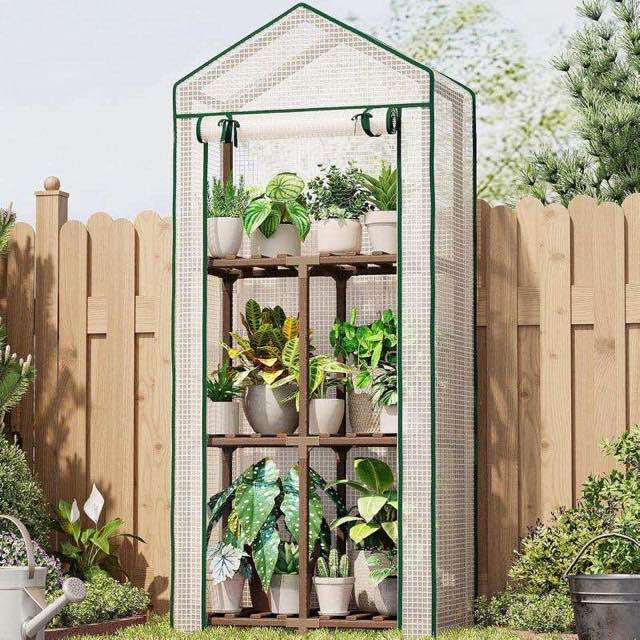
The covered frame itself is for plants. The top pick in our greenhouse comparison is the Bamworld 3-tier wood-frame cover, about £22.99, with 4.6 from 109 amazon.co.uk reviews. UK reviews say two seed trays fit a shelf. That is a tray house, not a place to park a heap. The greenhouse best guide sets out who that cover suits, and who should skip it if they need a walk-in crop.
Mulch greenhouse beds with home compost
Mature compost works as a surface treatment because it can improve the soil without placing unfinished material in the root zone. The RHS gives 5 cm as its figure for a mature compost mulch. Spread that layer over the greenhouse bed. Leave the plants established in the soil beneath rather than trying to grow them in a bed made only from fresh home compost.
You can see the condition of the material as you spread it and pick out pieces that clearly need more time. A mulch is still not permission to use immature compost. Dark colour, a crumbly texture and a woodland smell remain the readiness checks.
Do not turn the 5 cm figure into a claim that more must be better. It is a practical mulch depth from RHS guidance, not a recipe for filling pots, sowing seeds or rebuilding every greenhouse bed. Apply it across the surface of an existing bed rather than piling it against stems. Established tomatoes can receive mature compost on the bed. That does not make unfinished compost safe, and it does not turn an accelerator into plant feed. The tomato greenhouse grow bag guide covers the crop side of that decision.
Using home compost for tomatoes and pots
Established greenhouse tomatoes and tender seedlings do not share the same tolerance. Mature home compost can go onto soil around established tomatoes as a surface mulch. Fresh compost is still going through a biological process and should stay in the heap until the visible and sensory signs point to maturity.
Pots need more restraint because their contents form the plant's whole root environment. Hampshire's advice is to mix home compost for potting, not to use it neat for young plants. Without a supported universal ratio, avoid a made-up percentage and assess both the maturity of the compost and the needs of the plant.
One handful may be fine and crumbly while another contains recognisable material. Do not sift the presentable fraction into a seed tray and assume the rest of the batch is mature. Use the greenhouse bed for mature compost and established crops, and keep seed raising as a separate stage. That stops home compost for tomatoes from becoming a blanket instruction from germination to fruiting.
When woody compost is usable
Finished home compost does not need to resemble a perfectly uniform bagged product. Garden Organic notes that material can be lumpy and still be usable. A few woody pieces do not prove that the whole batch has failed, particularly when the main body is dark, crumbly and has the woodland smell the RHS uses as a readiness sign.
The opposite error is more costly: treating any brown, partly broken-down batch as finished. Garden Organic advises gardeners not to rush half-rotted material. Recognisable wet scraps, an obvious smell of decay, or a mass that has not developed a crumbly body are reasons to wait.
A mature batch can retain some lumpy pieces while the surrounding compost is ready to use. Half-rotted material is still in progress throughout the batch. The first may suit the surface of an established greenhouse bed. The second belongs back in the composting system. Published home-compost timelines vary with the material and the system, so use condition rather than the calendar alone.
What a compost accelerator does not do
A compost accelerator belongs with the heap, not in a watering can for greenhouse plants. Its role is connected to decomposition. It is not a tomato feed, a seed compost or a treatment to pour into pots, and using it cannot turn visibly half-rotted material into mature compost at the moment you want to spread it.
Managing a heap and feeding a crop are different tasks. Follow the intended composting role, then judge the finished material by colour, texture and smell before moving it under glass. You may not need an accelerator simply because composting has slowed. This article does not establish that adding more product solves moisture, drainage or siting errors. If you are comparing formats for an outdoor system, the how to use a compost accelerator guide explains the practical role. Keep that decision separate from what you apply around tomatoes. Adding an accelerator does not make neat home compost suitable for seedlings.
Common questions
Can I put home compost on greenhouse tomatoes?
Can I raise seedlings in home compost?
Should I keep a compost bin in the greenhouse?
How thick should a compost mulch be?
Can I use compost that is still woody?
Does a compost heap stay hotter in a greenhouse?
Is compost accelerator a feed for greenhouse plants?
Where should greenhouse peelings go if the bin is outside?

Peter F. is the editor for DIY & tools at productscompared.co.uk. Comparisons in this category are checked against amazon.co.uk listings, review evidence and public UK sources.
Related articles

Compost on raised beds
Learn how finished home compost works as a soil improver and surface mulch.

When home compost is ready
Use colour, texture and smell to decide whether your compost is ready for the garden.

Greens and browns for a compost heap
Balance fresh, moist material with dry, carbon-rich additions in your home compost.