Independent comparisons. We may earn from shop links. More info

Einhell table saw fence not square

Updated: 21 October 2026

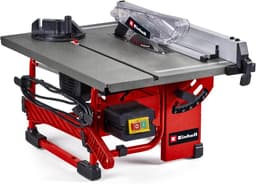
The first rip is wide at one end and narrow at the other, and the sticker on the rail still says the width you wanted. If your Einhell table saw fence is not square, the printed scale is the usual reason UK buyers give, not a mystery fault in the timber. This page is the check for the corded TC-TS 2025/2 U and the TC-TS 8 I: prove the fence against the blade, keep it slightly open at the back, and measure with a rule. The [how to use an Einhell table saw](/hub/power-saws/einhell-table-saw/sub/einhell-table-saw-how-to-use) page assumes the fence is already true enough to cut. The [Einhell table saw buying guide](/hub/power-saws/einhell-table-saw/sub/einhell-table-saw-buying-guide) only warns you. The [Einhell table saw comparison](/hub/power-saws/einhell-table-saw) is the four listings. Peter F. wrote this on 19 October 2026 from those UK reviews, Einhell’s clamp descriptions and public setup guidance. It is not a measured lab error, and it is not a hex-key procedure from Einhell’s manual. A qualifying purchase can earn a commission at no extra cost to you.

The first rip is wide at one end and narrow at the other, and the sticker on the rail still says the width you wanted.

Our top picks

Einhell Einhell TE-TS 36/210 Li-Solo

Best overall

Einhell Einhell TE-TS 36/210 Li-Solo
7.4/10about £269.04
Einhell Einhell TC-TS 8 I

Best value

Einhell Einhell TC-TS 8 I
6.8/10about £99.95
On this page

What UK buyers reported

On the TC-TS 2025/2 U the word fence appears in 17 of 50 UK review chunks. Buyers say the rip fence is not square, or the table scale is out by a few millimetres, so they set the width with a rule or a digital angle finder. One buyer set the tilt to 0 and measured about 10 degrees out. Another found the table bent and eased the thin metal back with a spirit level. One buyer faced the fence with plywood and a toggle. That is one owner’s fix, not a part Einhell supplies. On the TC-TS 8 I the word fence appears in 12 of 50 UK review chunks. Buyers call the scales inaccurate stickers and say the fence has to be squared by hand. The mitre gauge is described as having a lot of play. One of those chunks is written about a TC-TS 200, so do not hang every fault on the TC-TS 8 I alone. The bullets still call the fence a rip fence that clamps on both sides. The item highlight says an angle stop of ±60°. The bullets say ±45°. A bullet that says precise is not a measurement. The cordless TE-TS 36/210 is a shorter note. UK reviews say the fence is fiddly and easy to clamp crooked, and accurate once it is set. One buyer found the measuring sticker peeling on arrival. No public source used here is a lab figure for a fixed millimetre error on every Einhell fence. A secondary page has claimed 3 mm on “the 2025 series”. That is not this page’s measurement, and it is not repeated as a fact.

The order of the check

Check the saw before you blame the sticker. A UK Workshop thread on rip fences, which is general workshop talk and not an Einhell manual, puts the mitre slots first: they should be parallel to the blade. Then the fence is set parallel to the slots, with the faces at 90° to the table. Axminster’s setup note says the same in buyer language. The fence is then parallel to the blade, or it tails away very slightly, so there is no pinch at the back. Use the order. Do not treat an American article as Einhell’s procedure, and do not follow a hex-key sequence that is not in your manual. Toe-in is the dangerous direction. If the back of the fence is closer to the blade than the front, the timber pinches as it passes the teeth and the saw can throw it. Toe-out, a slight opening at the outfeed, is the direction both the UK Workshop thread and Axminster prefer. A practical check is a scrap of 18 mm board, about 600 mm long, ripped at a width you have marked with a rule at both ends. If the offcut binds at the back of the blade, the fence is closing. Stop, open it a fraction at the outfeed, and try the scrap again. Do not push harder. Einhell’s own pages describe the clamp, which is not the same as a square fence. The TC-TS 2025/2 U page describes the rip-fence fastening as front. The TC-TS 8 I page describes front and rear. A front-only clamp can lock a fence that looks seated and is still angled. Lock it, then measure. The measurement is a rule from a tooth to the fence, at the front of the blade and at the back, with the saw unplugged and the blade down to a marked tooth.

Scale, riving knife, and kickback

Once the fence is parallel, or slightly open at the back, you can read a width. Read it with the rule, and treat the printed scale as a rough guide you might correct with a pencil mark. A scale that is out by a few millimetres will repeat that error on every rip if you trust it. The tilt scale is a separate sticker. The buyer who measured about 10 degrees at the zero stop was not describing the rip width. Check bevel with a square against the blade before you cut a chamfer you cannot spare. The riving knife has to agree with the plate. HSE’s rip-saw guidance, written for saws used at work, wants the knife within 8 mm of the blade, thicker than the plate and thinner than the kerf. If the knife is offset, it will steer the board even when the fence is parallel. WIS16 wants the front of the fence no further forward than the gullet of the blade at table level. The same rip-saw page limits fence overlap to 18 mm when the machine is work equipment. Those sentences bind an employer under PUWER. A householder is not that employer. A fence that extends past the blade and closes on the kerf is still how a board kicks. Do not correct a crooked rip by taking a second, deeper pass. HSE tells workplaces not to rip in two passes on a deep cut, because the second pass can close on the back of the blade. If the first scrap is tapered, fix the fence. If the first scrap burns, the fence is pinching or the blade is blunt. Changing the blade does not square the scale.

Adjust, or send it back

Adjust when the table is flat, the blade runs true, and the only error is a fence or a scale you can set with a rule. That is the pattern in the majority of the fence comments: annoying, and workable once you stop reading the sticker. Mark the rail if you want, and recheck when you move the fence for a new width. A front clamp, on the stand saw, needs that recheck every time you unlock it. Send it back, or stop using it, when the table is bent and you cannot get a straight edge, or when the blade is not square to the frame. One stand-saw review describes a bent table. One TC-TS 8 I review says the blade was not running true because the motor was not square to the frame, and that buyer returned it. Those are single reports, not a rate. They are also faults a pencil mark on the scale will not fix. A splitter you cannot bring into line with the plate is the same class of stop. If you are not confident which screw the manual allows you to move, the return window is safer than a stripped adjuster. The cordless fence is the fiddly clamp rather than this corded sticker story. Set it, measure both ends, and do not expect the peeling sticker one buyer found to be a width standard. If the scrap rip is still tapered after the fence is open at the back, that is the return, not another pass.

Common questions

Why is the Einhell scale wrong if the bullet says precise?
The bullet is listing copy. The UK reviews are the check. On the stand saw, fence comes up in 17 of 50 UK review chunks, with a scale described as a few millimetres out. On the TC-TS 8 I it comes up in 12 of 50, as sticker scales. Nobody in the sources used here measured a single millimetre error that applies to every Einhell fence. Precise, in the bullet, is not a calibration certificate. Use a rule from the tooth to the fence, at both ends of the blade, with the saw unplugged.
What do you check first, the fence or the blade?
You check that the blade is parallel to the mitre slots, then you set the fence parallel to those slots, with the face at 90° to the table. That order is the UK Workshop thread and Axminster’s setup note. Starting with the fence sticker skips the case where the blade itself is out. One TC-TS 8 I buyer returned a saw because the motor was not square to the frame. The fence could not fix that.
Should the fence toe in or toe out?
It should not toe in. Toe-in, closer at the outfeed, pinches the wood and can throw it. A slight toe-out, open at the back, is what Axminster and the UK Workshop thread describe. Prove it on a scrap of about 600 mm, marked with a rule at both ends. If the offcut binds behind the blade, stop and open the fence a fraction. Do not feed harder to force a pinched cut.
Does a plywood fence face fix it?
One stand-saw buyer faced the fence with plywood and a toggle. That can give a taller, flatter face if the original face is short or bowed. It does not square the fence by itself, and it is not an Einhell part. If you add a face, the fence must still be parallel to the blade after the face is on, and the face must not push the timber into a pinch at the back of the blade. If you do not want to alter the saw, a rule and the existing fence are the first step.
How does this relate to the riving knife?
A fence can be parallel and the cut can still wander if the riving knife is offline and steers the board. HSE wants the knife within 8 mm of the blade on saws used at work, thicker than the plate and thinner than the kerf. One TC-TS 8 I review says the splitter needed a small move. Check the knife with the saw unplugged, after the fence is set, and before you trust a width. A missing knife is a stop, not a fence problem.
When is the fence a reason to return the saw?
Return it when a rule and a slight opening at the outfeed still leave a tapered scrap, when the table is bent, or when the blade will not run square to the frame. A scale that is simply out, on a straight table, is the ordinary UK complaint and is not by itself the return. One stand-saw buyer had a bent table. One compact-saw buyer returned the saw for a motor that was not square. If the manual’s adjusters are already at their limit, stop turning them.
Is this the same job on the cordless saw?
The idea is the same, and the review story is shorter. UK buyers of the TE-TS 36/210 say the fence is easy to clamp out of square and accurate once it is set. One sticker was peeling on arrival. You still measure at the front and the back of the blade, unplugged, and you still avoid toe-in. The long sticker complaints, 17 of 50 and 12 of 50, are the corded saws. Do not copy a stand-saw fence fix onto the cordless clamp without looking at that saw’s own manual.

Related pages

Sources

Public UK sources and the amazon.co.uk listings compared on this page. Prices captured 19 October 2026.

  1. Einhell TC-TS 2025/2 U (retrieved October 2026)
  2. Einhell TC-TS 8 I (retrieved October 2026)
  3. Einhell table saws (retrieved October 2026)
  4. Datasheet TE-TS 36/210 Li-Solo, 4340450 (retrieved October 2026)
  5. HSE: Circular saw benches (retrieved October 2026)
  6. HSE: Wood dust (retrieved October 2026)
  7. GOV.UK: Supply of Machinery (Safety) Regulations 2008 (retrieved October 2026)
  8. Control of Noise at Work Regulations 2005, regulation 4 (retrieved October 2026)