Energy-saving fan heater running cost
You want pence, not a box percentage. The energy saving fan heater running cost of a full-power hour in Great Britain is watts divided by 1,000, times the unit rate. From 1 October to 31 December 2026, Ofgem’s typical Direct Debit cap is 26.32p per kWh in England, Scotland and Wales. Eco mode only helps while the element is off. Shelf prices are on the [energy-saving fan heater comparison](/hub/portable-heaters/energy-saving-fan-heater). The Products Compared editorial team worked these hours on 16 October 2026 from that Ofgem rate and these wattages. We did not meter a home. A qualifying purchase can earn a commission at no extra cost to you. Northern Ireland is outside this cap.
You want pence, not a box percentage. The energy saving fan heater running cost of a full-power hour in Great Britain is watts divided by 1,000, times the unit rate.
You want pence, not a box percentage. The energy saving fan heater running cost of a full-power hour in Great Britain is watts divided by 1,000, times the unit rate. From 1 October to 31 December 2026, Ofgem’s typical Direct Debit cap is 26.32p per kWh in England, Scotland and Wales. Eco mode only helps while the element is off. Shelf prices are on the energy-saving fan heater comparison. The Products Compared editorial team worked these hours on 16 October 2026 from that Ofgem rate and these wattages. We did not meter a home. A qualifying purchase can earn a commission at no extra cost to you. Northern Ireland is outside this cap.
Our top picks
| Badge | Product | Top output | Lower setting | Full-power hour | Note | Price | Offer |
|---|---|---|---|---|---|---|---|
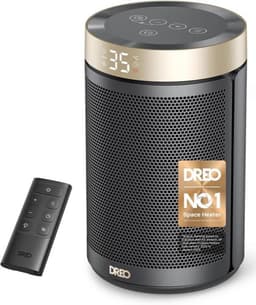
| Best overall |  Dreo Dreo Atom 316 1500 W | 1,500 W | Not stated | about 39p | 9.2 | about £49.99 | View offer |
| Alternative |  Philips Philips CX2120/01 1500 W | 1,500 W | 600 W | about 39p, or about 16p at 600 W | 8.4 | about £49.99 | View offer |
| Preis-Tipp |  Warmlite Warmlite WL44002 2000 W | 2,000 W | 1,000 W | about 53p, or about 26p at 1,000 W | 8.0 | about £9.00 | View offer |


On this page
The full-power hour
Pence at the wattages these listings state
What eco mode does to the bill
One room versus the heating system
Common questions
How much is a 2,000 W fan heater per hour in Great Britain this quarter?
Does eco mode cut that figure by 25%?
Is a £9 heater cheaper to run than a £50 heater?
Does the standing charge go up because I used the heater?
Does this cap apply in Northern Ireland?
Is a fan heater cheaper than leaving the boiler on?
Related pages
Sources
Public UK sources for the running-cost and safety points. Star lines and shelf prices are from the amazon.co.uk listings in this set. Last checked 16 October 2026.
- Ofgem price-cap unit rates (retrieved 16 October 2026)
- Centre for Sustainable Energy: room heaters (retrieved 16 October 2026)
- Energy Saving Trust: electric heaters compared (retrieved 16 October 2026)
- GOV.UK: placing energy-related products on the UK market (retrieved 16 October 2026)
- Electrical Safety First: portable heaters (retrieved 16 October 2026)
- Electrical Equipment (Safety) Regulations 2016 (retrieved 16 October 2026)
- BS EN 60335-2-30: room heater safety (retrieved 16 October 2026)
- Hertfordshire Fire and Rescue: portable heater safety (retrieved 16 October 2026)