Independent comparisons. We may earn from shop links. More info

How to use an energy-saving fan heater

Updated: 16 October 2026

You have a fan heater out of the box for a cold evening. This is how to use an energy saving fan heater so the element is not on longer than the room needs. Use a wall socket, keep about a metre clear, choose the lowest useful setting or a moderate setpoint, and switch off when you leave or sleep. Ranks are on the [energy-saving fan heater comparison](/hub/portable-heaters/energy-saving-fan-heater). This page does not pick a winner. The Products Compared editorial team wrote this on 16 October 2026 from Electrical Safety First, fire-and-rescue guidance and Which?. We did not lab-test the heaters. A qualifying purchase can earn a commission at no extra cost to you.

You have a fan heater out of the box for a cold evening. This is how to use an energy saving fan heater so the element is not on longer than the room needs.

Our top picks

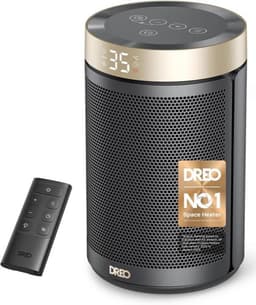
Dreo Dreo Atom 316 1500 W

Best overall

Dreo Dreo Atom 316 1500 W
9.2/10about £49.99
Philips Philips CX2120/01 1500 W

Alternative

Philips Philips CX2120/01 1500 W
8.4/10about £49.99
Warmlite Warmlite WL44002 2000 W

Preis-Tipp

Warmlite Warmlite WL44002 2000 W
8.0/10about £9.00
On this page

Before you switch it on

Put the heater on a firm, level floor where it cannot be kicked into a curtain, a sofa or washing. Electrical Safety First asks for about one metre of clearance, a UK three-pin plug in a wall socket, and no extension lead. If the plug is two-prong, or the listing says 120 V, stop. Check the BS 1363 marks on a plug. Keep the blast off bedding and clothes. Hertfordshire Fire and Rescue repeats the clearance and the switch-off. Stay for the first evening and listen for hot plastic at the plug. Voltage and tilt-switch checks are on the buying guide if you have not done them.

Set a lower wattage, a thermostat or a timer

Use the lowest setting that makes the room usable, or a moderate target if there is a thermostat. A 2,000 W blast draws 2,000 W for every minute the element stays on. Eco mode is cycling after the set temperature, not a lower wattage. Shut the door and give the timer a real end time. The sensor sits in the heater, so it can switch off before the far side feels warm. The pence are on the running-cost page. Zuquik says its fan may run for 30 to 60 seconds after the target to clear heat. That is one listing’s cool-down, not a step every brand must copy. When you leave, switch off at the heater and at the socket if you will be gone for a while.
Dreo Dreo Atom 316 1500 W

Testsieger

Dreo Dreo Atom 316 1500 W
9.2/10about £49.99

If it smells or smokes

A warm dusty smell on the first autumn run of a wire element is a known pattern. It should fade on a short supervised run, with nothing on the grille. Smoke is different. One review of the Philips CX2120/01 reports smoke. If you see smoke, switch off, unplug once it is safe, and do not switch back on to see if it clears. Do the same if the plug smells of hot plastic, the flex is hot, or the breaker trips again. Do not open the case.

Overnight, bathrooms and when to get help

Switch off before you sleep. Electrical Safety First does not recommend leaving a portable heater on overnight, and Hertfordshire Fire and Rescue says to turn heaters off when you leave or go to bed. A thermostat does not make an unattended night a good idea. A bathroom tick on amazon.co.uk is not permission. None of these heaters states an IP rating. Do not take a plug-in fan heater into a bathroom or drape a towel on it. Call an electrician if the breaker keeps tripping, a socket is scorched, or the plug smells of hot plastic after a normal run.

Common questions

Where do I put it in the room?
Use a firm, level surface in a dry room, about one metre from curtains, bedding and furniture. Electrical Safety First uses that clearance, and the plug goes into a wall socket, not an extension lead. Keep it where a child, a pet or a chair cannot knock it into fabric. If the listing does not state a tip-over switch, that placement matters more, because the heater will not cut the element when it falls.
Can I use an extension lead?
No. Electrical Safety First says to plug a portable heater straight into a wall socket. A 2,000 W element is a heavy load for a reel, a cube or a thin lead, and a coiled reel traps heat. If the socket is too far from the cold spot, move the heater or accept that the room is a poor place for this product. Do not bridge the gap with an adaptor on a two-prong plug.
How do I set eco mode so it is not on full power all evening?
Set a moderate target, use a lower wattage if there is one, and set the timer for the time you will be in the room. Eco mode then cycles around that target. It does not make 2,000 W draw 600 W while the element is heating. Shut the door so you are not heating the landing.
Why does eco mode switch off before the far side is warm?
The sensor is in the heater, so it reads air at the case, not the cold corner by the window. When that local air hits the setpoint, the element cycles off even if your chair is still chilly. A higher setpoint extends the on-time and the bill.
Is a burning smell on first use normal?
A short dusty smell can be normal on a first run, especially on a wire element stored since last winter. Stay nearby, keep the metre clear, and air the room if you need to. Smoke is not that smell. One Philips review reports smoke, and smoke means switch off and unplug when it is safe. Hot plastic at the plug is also a stop. If the odour returns on later days, stop using the heater.
Can I leave it on overnight or dry a towel on it?
No to both. Electrical Safety First does not recommend overnight use, and fire-and-rescue advice is to switch off when you sleep or leave. Do not hang a towel or clothes on the heater. A covered grille traps heat. These listings do not state an IP rating, so a bathroom towel rail is a different job.

Related pages

Sources

Public UK sources for the running-cost and safety points. Star lines and shelf prices are from the amazon.co.uk listings in this set. Last checked 16 October 2026.

  1. Ofgem price-cap unit rates (retrieved 16 October 2026)
  2. Centre for Sustainable Energy: room heaters (retrieved 16 October 2026)
  3. Energy Saving Trust: electric heaters compared (retrieved 16 October 2026)
  4. GOV.UK: placing energy-related products on the UK market (retrieved 16 October 2026)
  5. Electrical Safety First: portable heaters (retrieved 16 October 2026)
  6. Electrical Equipment (Safety) Regulations 2016 (retrieved 16 October 2026)
  7. BS EN 60335-2-30: room heater safety (retrieved 16 October 2026)
  8. Hertfordshire Fire and Rescue: portable heater safety (retrieved 16 October 2026)