Independent comparisons. We may earn from shop links. More info

How to use a construction heater

Updated: 16.10.2026

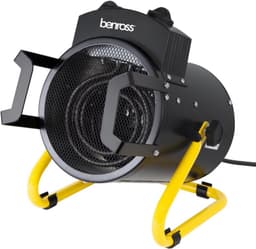
The fan is in the garage, or just out of the box, and you want it on without cooking a plug. This is how to use a construction heater of the kind in our set: a 2–3 kW electric fan, not a diesel blower. The [construction heater comparison](/hub/portable-heaters/construction-heater) lists the eight amazon.co.uk models. Stand it safely, feed it from the wall, wait out the cold blow, and switch it off when you leave. Products Compared did not lab-test these units. The steps follow HSE and fire-safety guidance, plus the review patterns in our research. A qualifying purchase can earn us a commission at no extra cost to you.

The fan is in the garage, or just out of the box, and you want it on without cooking a plug. This is how to use a construction heater of the kind in our set: a 2–3 kW electric fan, not a diesel blower.

Our top picks

On this page

Put it down before you plug it in

Stand the heater on a flat floor before you look at the socket. Warwickshire County Council asks for about three feet from anything that can burn. A workplace note from All in One Pro PAT asks for about a metre, and for the plug to go into the wall rather than a reel. Use the larger gap if you can. Neither page states one legal minimum. Keep the grille clear. HSE’s CIS59 says not to dry clothes on heaters. IPX4 on the Benross is a splash code, and the field still says Indoor. Only the TCP listing states a tip-over switch. Put the others where they cannot be kicked, then plug in.

The socket

Use one heater in one sound wall socket. Fire-service guidance treats about 3,000 W as the top of that socket and a hot plug as a fault. A 2 kW fan is about 8.7 A at 230 V, and the 2 kW DAHTEC listings state 8.33 A. A 3 kW fan is the whole outlet. The Benross states 13.64 A, and its reviews include hot plugs and hot sockets. Do not add a kettle to that socket, and do not run the lead from a coiled reel. The fuse arithmetic is on the construction heater buying guide. The plug goes into the wall. If it becomes hot, you stop. Benross reviews call the lead short. Move the heater. A reel is not the fix.

The first few minutes

A cold blast at switch-on is not, by itself, a broken fan. The 2.8 kW DAHTEC coil listings say about 5–10 minutes to feel comparable with ceramic. Benross reviews describe cold air until the element warms. The BGP1506-02 claims noticeable warmth in about 3 seconds. Give a coil those minutes before you return it, and stay in the room. Point the outlet into the room, not out of an open door. That split is on the electric garage heater page.

When you leave

Switch off and unplug when you leave, including at bedtime. Warwickshire says so. A thermostat is not permission to leave the fan in an empty garage. The SISUPASSIE listing asks about unattended use and does not answer. Take the fire-safety line, not the blank. Dual overheat protection, which the Benross bullets claim, is not a licence to hang overalls on the case or to leave the fan running while you are out.

Stop and get help

Three signs end the job: a hot plug or socket, a burning smell, or a breaker that trips again. The burning-smell report is one review of the DAHTEC BGP3003-28, after a few months. Hot plugs sit mainly on the Benross. Call an electrician if the socket has been stressed. Do not fit a larger fuse or a longer reel. If you need to heat a whole building, hire the right machine.

Common questions

Where should the heater stand?
On a flat floor, grille clear of fabric, timber and solvents. Warwickshire says about three feet from flammables. A workplace note says about one metre, and says to use the wall socket. Leave a gap of that order. Do not stand it in a puddle, and do not read IPX4 as rain protection. Only the TCP states a tip-over switch, so the others need a spot where they will not be knocked over.
Can it go on an extension lead?
No. Use one sound wall socket and no coiled reel. A reel under a 2–3 kW load is a common way to overheat a lead. If the factory lead is short, move the heater. Benross reviews call the lead short, and the BGP1506-02 states 1.60 m, which buyers still found tight. An extension does not fix that safely.
Why does it blow cold at first?
The fan starts before the element is hot. Coil listings here say about 5–10 minutes before the heat feels like a ceramic unit. The BGP1506-02 claims warmth in about 3 seconds. Benross reviews describe a cold blow first. Wait those minutes while you are in the room. A long cold blow after that, or a burning smell, means switch off.
Can I dry gloves on the grille?
No. CIS59 says not to dry clothes on heaters, and HSG150 treats clothing on electrical heaters as a fire cause. That covers gloves and overalls on a garage fan. Use a line away from the outlet. An overheat cut-out, where one is stated, is not a substitute for a clear grille.
Can I leave it running while I go out?
Switch off and unplug when you leave, including overnight. Warwickshire’s advice says so. A thermostat only cycles heat while power is connected. It does not watch the room. The SISUPASSIE page asks about unattended use and does not answer. If you need the bay warm for an hour, stay nearby, then turn it off.
What if the plug or the socket gets hot?
Switch off, unplug, and leave that socket alone until someone competent has checked it. A hot plug is a fault, not proof a 3 kW fan is working hard. Benross reviews describe hot plugs, sockets and extensions. If the faceplate is discoloured or the breaker has tripped, call an electrician. Do not fit a larger fuse or move the load onto a reel.

Related pages

Sources

Public UK sources last checked on 15 October 2026. Prices and star ratings are from the amazon.co.uk listings captured the same day.

  1. Ofgem: Changes to the energy price cap between 1 October and 31 December 2026 (retrieved 15.10.2026)
  2. The Workplace (Health, Safety and Welfare) Regulations 1992, regulation 7 (retrieved 15.10.2026)
  3. HSE: Temperature in the workplace, the law (retrieved 15.10.2026)
  4. HSE CIS59: welfare heat on construction sites (retrieved 15.10.2026)
  5. HSE: Carbon monoxide in construction (retrieved 15.10.2026)
  6. GOV.UK: Electrical Equipment (Safety) Regulations 2016 (retrieved 15.10.2026)
  7. Electrical Equipment (Safety) Regulations 2016, regulation 35 (retrieved 15.10.2026)
  8. Travis Perkins: How to use construction site heaters (retrieved 15.10.2026)