Independent comparisons. We may earn from shop links. More info

Sodium bisulphate vs hydrochloric acid for pools

Updated: 21 October 2026

Pool acid on a UK search is not one chemical. It can mean sodium bisulphate granules, hydrochloric acid in a drum, or sulphuric acid, a harsher liquid again. This page is the family choice: when dry acid is the pH correctant, and when PWTAG's notes point at hydrochloric acid or carbon dioxide instead. None of the amazon.co.uk tubs in the [pH minus comparison](/hub/pool-care/ph-minus) is liquid acid or a CO2 set. We used PWTAG's acid, sulphate and carbon-dioxide notes, plus HSE guidance, on 19 October 2026. We did not test an ASIN. A qualifying purchase can earn a commission at no extra cost to you.

Pool acid on a UK search is not one chemical. It can mean sodium bisulphate granules, hydrochloric acid in a drum, or sulphuric acid, a harsher liquid again.

Our top picks

On this page

Three chemicals, one search phrase

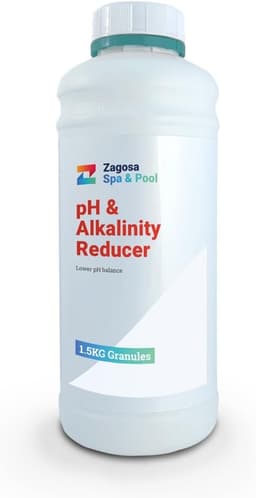
Sodium bisulphate is the dry acid. On the listings in our set it appears as granules, microbeads, or a page that forgets to name it. Where the name is printed, that is the powder people call pH minus. You add a measured amount to water in a bucket. Hydrochloric acid is the liquid many plant rooms call pool acid. PWTAG treats a strength under about 15 per cent as the milder liquid form. It still fumes. Sulphuric acid is a third chemical, not a stronger granule tub. Carbon dioxide is the non-acid option PWTAG prefers for many pools at or below about 150 mg/l alkalinity and about 300 mg/l calcium hardness. It is a gas system, not a sack.

What you gain and what you leave behind with dry acid

Sodium bisulphate is a powder, so some spills of a liquid drum are easier to avoid. It drops alkalinity faster than hydrochloric acid, which helps when alkalinity is high and hurts when you only wanted a small pH nudge. It can damage eyes. Easier than a drum is not safe. The residue is sulphate. Hydrochloric acid leaves chloride, and at lower strengths PWTAG says it fumes less. Bayrol's bullet about less corrosion is the seller's sentence, not a PWTAG test of that listing. CPC describes dissolved sodium bisulphate as a sulphuric acid solution and says keep it apart from hypochlorite.

Tiled pools and liner pools are not the same decision

PWTAG's ceiling for sulphate in pool water is 360 mg/l, because cement grout can be attacked above that. The sulphate-attack note describes dry acid, plus other sulphate chemicals, pushing a pool from about 6 mg/l in the supply up to 1,582 mg/l, with the grout eaten. That is a tiled commercial pool over years, not a single Sunday dose in a liner. If the cement may not be sulphate-resistant, ask a pool technician. A vinyl liner or a plastic hot tub does not have that grout joint. Carbon dioxide is a poor fit for spas, because aeration strips it out. If you only needed the 7.0–7.6 band, read pH minus for a hot tub.

The rule both acids share

Dry acid and hydrochloric acid both make chlorine gas if they meet hypochlorite. HSE guidance on pool management is blunt about that reaction. A shared scoop, a bucket that held liquid chlorine, or two tubs in one damp cupboard are the domestic versions of a plant-room incident. The powder does not get a free pass because it fumes less than a strong acid drum. Keep them apart. The granule's GB classification is serious eye damage, so goggles apply to the bucket as well as the drum. If powder is in an eye, or anyone is coughing after a mix, get emergency help. Liquid acid and a CO2 rig are not the contents of the tubs in this comparison.

Common questions

Is pH minus the same as hydrochloric acid?
No. pH minus in this category is dry acid, sodium bisulphate where the listing names it, sold as granules. Hydrochloric acid is a liquid, often called pool acid or muriatic acid, and PWTAG treats a strength under about 15 per cent as the milder liquid form. They both lower pH. They leave different residues, sulphate or chloride, and they are not interchangeable in one bucket. Sulphuric acid is a third chemical, not a stronger pH minus.
What does sulphate do to grout and tile?
PWTAG limits sulphate to 360 mg/l where cement grout can be attacked, and it says to use sulphate-resistant cement when that construction risk applies. One note describes pool sulphate rising from about 6 mg/l in the supply to 1,582 mg/l where dry acid and other sulphate chemicals were used, with grout damage. That is a reason to test a tiled commercial pool and to ask a technician. It is not a description of a single dose in a vinyl liner.
Does a plastic hot tub have that grout problem?
The grout risk is about cement joints, not about a moulded plastic shell or a typical inflatable. You do not apply the sulphate-resistant-cement rule to a Lay-Z-Spa as if the shell were tiled. You still have the eye hazard, the storage rules, and the chlorine-gas rule. A small granule tub is the matching buy for that spa. An 18 kg bucket is still the wrong object for that spa.
When does PWTAG prefer carbon dioxide?
For many pools at or below about 150 mg/l alkalinity and about 300 mg/l calcium hardness, where a gas system can hold pH without adding sulphate or chloride. Spas and water features are a poor fit, because aeration strips the carbon dioxide and the pH rises again. CO2 is not a granule and it is not in this amazon.co.uk set. If you do not have that plant, a domestic liner or hot tub is still a dry-acid decision, made with a current test.
Can I mix dry acid with liquid chlorine to save a step?
No. Acid plus hypochlorite can release chlorine gas. That is the HSE point, and it applies to both dry acid and hydrochloric acid. Use a clean bucket, keep the products apart in storage, and do not combine the families. If a mix has already happened and someone is coughing or distressed, get out of the area and get emergency help. Do not finish the dose.

Related pages

Sources

Public UK sources used for this page in October 2026. Shelf prices and star lines are the amazon.co.uk figures for these eleven listings.

  1. PWTAG: Choosing an acid pH correctant (retrieved 21 October 2026)
  2. PWTAG: Carbon dioxide for pH control (retrieved 21 October 2026)
  3. PWTAG: Sulphate attack TN3 (retrieved 21 October 2026)
  4. HSE: Swimming pools (retrieved 21 October 2026)
  5. HSE: Managing health and safety in swimming pools (HSG179) (retrieved 21 October 2026)
  6. BISHTA: Water treatment (retrieved 21 October 2026)
  7. BISHTA: Daily, weekly, monthly and annual hot tub checks (retrieved 21 October 2026)
  8. All Swim: Pool acid safety data sheet (retrieved 21 October 2026)