Independent comparisons. We may earn from shop links. More info

Viburnum hedge

Updated: October 2026

You want a viburnum hedge that still has leaves in January, and you are about to copy a spacing number from the first nursery that sounds confident. For Viburnum tinus, laurustinus, the figures on UK pages run from about 25 cm to about 75 cm, and they are not the same instruction. This page follows one screen: evergreen, winter flowers, small pots from the amazon.co.uk set, and a clip you only make after you have looked for nests. The [viburnum plant comparison](/hub/plant-accessories/viburnum-plant) lists the plants. We did not measure a row. A qualifying purchase can earn a commission at no extra cost to you.

You want a viburnum hedge that still has leaves in January, and you are about to copy a spacing number from the first nursery that sounds confident.

Our top picks

On this page

Live plants, not seed

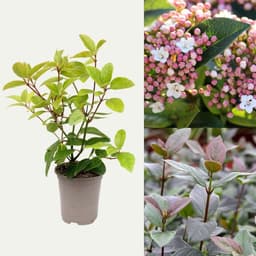
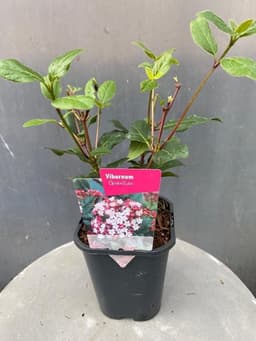
A hedge this year starts with a rooted plant. In this set that means one of three listings. Chelsea Direct's 'Gwenllian' is an 11 cm pot, about 30 cm on the arrival bullet, at about £14.02, and the bullets name screening. Carbeth's Purpureum is a 9 cm pot at about £9.99, or three 9 cm pots at about £16.99. None of those files states a width that will touch its neighbour in the first summer. The five seed packets, at about £13.50 to about £14.47, do not plant a hedge this season, even when the title says hedge. How you get them into the soil is on how to plant viburnum. The spacing decision is the rest of this page. Guelder rose as a native deciduous hedge is a different job, on the laurustinus or guelder rose page.

How far apart

The RHS hedge table gives 'Eve Price' code 6, defined as 60 cm, for a hedge kept medium to large. Start there. The table does not print that figure beside 'Gwenllian' or Purpureum, so 60 cm on those plants is a rule of thumb. UK sellers also quote about 30 cm for a faster close, 45–60 cm, four a metre, or three a metre (about 50 cm). On a 5 metre run, 60 cm between plants is about nine plants if you include both ends. Four a metre is about 20. Those tighter counts are seller densities, not a correction of the RHS code. A 9 cm plant will not close a 60 cm gap this season. Hedges Online gives about 20–45 cm of growth a year as a nursery rule of thumb, not a promise. Do not renovate a new 9 cm plant to the ground.

When to clip

The RHS evergreen pruning guide says to prune V. tinus after flowering if you want shape more than berries. Leave the flowered wood if you want the blue-black fruit, which is ornamental and not for eating. May is still a trim month on the RHS monthly page, and the same page says beetle grubs start. Informal hedges are cut back to size, not turned into a formal box in their first year. May is also when a nest may be in use. The Wildlife and Countryside Act 1981 makes it an offence to damage or destroy the nest of a wild bird while that nest is in use or being built. Look before you cut. If you can see a nest in use, wait. A 9 cm plant in its first spring rarely needs a clip. The first cut is more often the second year. Viburnum beetle larvae hole V. tinus from late April to June, and plants usually recover.

Height and shade

What you will eventually stand beside is not the 30 cm in the box. The RHS species page puts V. tinus at about 2.5–4 m. The RHS 'Gwenllian' page says 1.5–2.5 m. BBC Gardeners' World says about 3 m for 'Gwenllian'. Keep both bands. The growing guide's sketch of about 1.5–1.8 m is for 'Eve Price', which is not in this set. Species and the seed trap are on the viburnum plant buying guide.

Common questions

How far apart should I plant laurustinus?
Start at 60 cm if you are following the RHS code for 'Eve Price'. That code is not printed for 'Gwenllian' or for Carbeth Purpureum, so 60 cm on those plants is a rule of thumb. UK sellers also quote about 25 cm (four a metre), 30 cm, 33 cm, 45–60 cm and 50 cm. Those are their densities. They are not a single correct gap.
How many plants for a 5 metre run?
At 60 cm, about nine plants, counting both ends: eight spaces of 60 cm cover 4.8 m. At 50 cm, about 11. At four plants a metre, about 20. The nine-plant figure is the RHS-linked spacing applied as a rule of thumb. It is not a promise that nine 9 cm pots will look solid this year.
When do I clip without losing berries?
After flowering, if you want a tidy outline more than fruit. If you want the blue-black berries, leave that wood. The RHS still lists May as a time you may trim V. tinus. The first year of a 9 cm plant often needs no clip. Do not cut an established shrub's advice into a new plant and take it to the ground.
Can I cut in May if birds are nesting?
Not while a nest is in use or being built. That is the Wildlife and Countryside Act 1981. Look first. RHS advice on birds is to delay hedge cutting until late August where nests are the reason to wait. May is also when viburnum beetle grubs begin, so a May inspection is for nests and for holed leaves, not only for shape.
What if leaves are holed in May?
Check the RHS viburnum beetle page. Larvae hole V. tinus leaves from late April to June, and plants usually recover. Do not treat every hole as a reason to spray, and do not diagnose from a sticky parcel in a review. If the shrub is tall and the work needs a ladder, ask someone equipped for it. A new 9 cm plant is more often a case of watching than of cutting back hard.

Related pages

Sources

Public UK sources checked for this comparison, plus the amazon.co.uk listing facts in the display file on 16 October 2026. Shelf prices and star lines are those UK figures. They can change.

  1. RHS: Viburnum tinus (retrieved 16 October 2026)
  2. RHS: Viburnum growing guide (retrieved 16 October 2026)
  3. RHS: Viburnum tinus 'Gwenllian' (retrieved 16 October 2026)
  4. RHS: Viburnum beetle (retrieved 16 October 2026)
  5. RHS: Viburnum opulus (retrieved 16 October 2026)
  6. GOV.UK: Issuing plant passports in Great Britain (retrieved 16 October 2026)
  7. APHA: Protecting online plant buyers, 31 January 2025 (retrieved 16 October 2026)
  8. BTO: Berry identification guide (retrieved 16 October 2026)
  9. Wildlife and Countryside Act 1981, section 1 (retrieved 16 October 2026)