Independent comparisons. We may earn from shop links. More info

Moss pole for monstera

Updated: October 2026

Your Swiss cheese plant is leaning toward the window, the leaves are still solid or finally splitting, and a forum thread insists a moss pole will fix it. The Royal Horticultural Society says Monstera deliciosa can be tied to a moss or coir pole kept moist, and that once it feels it is climbing you may see larger, more fenestrated leaves, if light and age cooperate. A pole from our [moss stick comparison](/hub/plant-accessories/moss-stick) can hold the stem up. It does not by itself put holes in juvenile foliage, and a thin dry coir stick is not a damp shop pole of about 4 cm. This page is the cheese-plant case, not a pothos and not a general size guide.

Your Swiss cheese plant is leaning toward the window, the leaves are still solid or finally splitting, and a forum thread insists a moss pole will fix it.

Our top picks

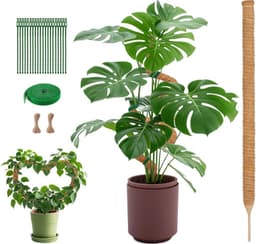
SZMDLX SZMDLX (120 cm)

Best overall

SZMDLX SZMDLX (120 cm)
9.2/10about £10.99
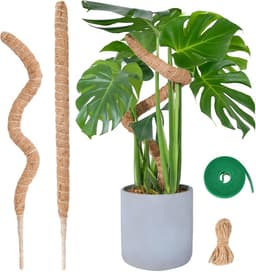
Aileem Aileem (2 × 60 cm)

Best value

Aileem Aileem (2 × 60 cm)
8.4/10about £7.99
On this page

What a cheese plant is doing

In nature the stem scrambles up a tree. Indoors it sprawls without something vertical. Aerial roots look for a rough, damp surface. Fenestrations follow maturity and light. The RHS notes that low light means fewer holes, and that a hard spring prune can reset leaves to a juvenile form. No amazon.co.uk review file in this comparison is a controlled leaf test. Many UK buyers of slim coir never report a root mat. They still use the pole for tying. Expect an upright stem. An automatic Swiss-cheese upgrade needs the light and age the RHS describes, not a sleeve near £8.

A small plant and a heavy one

SproutMaven's 60 cm pair, the top pick here, fits young and window-scale monsteras. The same threads wish the coir were thicker later. Aileem at about £7.99 gets the same small-plant praise, with half the printed length sometimes sitting in the compost. Both suit a juvenile plant in a pot of about 15 cm to 18 cm. A heavy monstera levers a slim pole and a light pot together. Short pairs weigh 150 g to 180 g. Large stacks weigh 670 g to 730 g, still little beside wet compost. A LANNEY review mentions a plant about 5.5 ft tall. SZMDLX claims about 3 cm, and nineteen UK texts split between strong and flimsy. For a top-heavy stem, one 120 cm piece and a heavier pot beat a full tower of joints.
SZMDLX SZMDLX (120 cm)

Testsieger

SZMDLX SZMDLX (120 cm)
9.2/10about £10.99

The pot has to outweigh the lean

Centre the stake when you repot, bury enough bare tip that the pole does not rock, then tie the stem with slack. If the pot skids when you tug the pole, add ceramic mass or move to a floor tub before you add another section. UK notes on tipping pots say the same thing: make the container heavier, not only the pole taller. A hard spring cut back to the main stem can return leaves to a juvenile form, which the RHS warns about. A pole sized for last year's height can be wrong for the new flush. Loosen old bands rather than leaving them on thinner growth.

Sap, children and pets

Monstera deliciosa is harmful if eaten, and it is a skin and eye irritant, according to the RHS plant record. Wear gloves when you handle it, wash after sap contact, and keep the plant out of reach of children and pets. Pets are listed as harmed if they eat the material. That is the plant, not the coir stake. Fitting a pole still means handling stems and aerial roots you might otherwise leave alone. Do not chew-test a pole, and do not let a pet treat coir as a toy. If a child or a pet has eaten plant material, use NHS 111 or a vet. The pole's sharp soil tip is a separate puncture hazard in the listings. Store unused sections where a toddler cannot pull the stack down.

Support that matches the plant

If the cheese plant is small, stable and not yet leaning, wait until the next repot. If it is juvenile and already flopping in a modest pot, a slim 60 cm coir pair is a fair stake, not a leaf programme. If the stem is heavy, put the weight in the pot first, then consider one longer piece rather than a full stack. Gloves stay on whenever sap is in play.

Common questions

Does my cheese plant need a pole?
If it is leaning, or you want vertical growth, support helps. If it is small and stable, you can wait until you repot and set the stake in the fresh compost rather than forcing it through a full root ball.
Will the leaves get holes because of the pole?
Fenestrations follow maturity, light and climbing conditions in RHS guidance. A product badge on amazon.co.uk does not add holes to juvenile foliage. Low light still means fewer splits, pole or no pole.
Is a slim pole around £8 enough for a mature plant?
Usually not, once leverage is the problem. Reviewers call slim coir fine for young plants and too light for a heavy stem. Pair any pole you do use with a container that will not skate across the floor.
Should I cut aerial roots?
Do not routinely cut healthy roots. Guide them toward damp coir if you are keeping the sleeve moist. The tie and moisture steps are on how to use a moss pole.
Is the plant safe around a cat or a child?
Treat Monstera deliciosa as harmful if eaten and as a skin and eye irritant. Keep it out of reach, wear gloves when you tie the stem in, and wash after sap contact. The coir sleeve does not cancel that.
Will a stack hold a top-heavy stem?
Two sections may, if the pot is heavy and the joint is tied. Upper joints wobble in UK reviews. Bind them, and do not read a four-section tower as one rigid pole.
What if I prune it hard in spring?
Expect a flush of juvenile leaves. Resize the support and the ties after growth restarts, rather than leaving last year's bands on thinner new stem.

Related pages

Sources

Public UK sources used for this comparison. Shelf prices, stars and review counts are the amazon.co.uk figures captured for these ten listings. Last checked 22 October 2026.

  1. RHS: how to grow Swiss cheese plants (retrieved 22 October 2026)
  2. RHS: philodendron growing guide (retrieved 22 October 2026)
  3. RHS: epipremnum growing guide (retrieved 22 October 2026)
  4. RHS: coir questions answered (retrieved 22 October 2026)
  5. RHS: how to tie in climbers (retrieved 22 October 2026)
  6. General Product Safety Regulations 2005 (retrieved 22 October 2026)
  7. Consumer Rights Act 2015: goods rights (retrieved 22 October 2026)
  8. GOV.UK: guidance for safe foraging (retrieved 22 October 2026)