Independent comparisons. We may earn from shop links. More info

Coir pole vs sphagnum moss pole

Updated: October 2026

The amazon.co.uk search said moss pole, the photo showed green sphagnum, and the description still says moss while the material line says coconut fibre. That mix-up costs money. A coir pole vs sphagnum moss pole is two jobs, not two colours of the same stick. Every row in our [moss stick comparison](/hub/plant-accessories/moss-stick) is coir. Not one of the ten kept listings is sphagnum. This page separates a stake you tie to from a surface aerial roots can grow into, and it notes the UK limits on wild moss. Length comes after you know which material you actually need.

The amazon.co.uk search said moss pole, the photo showed green sphagnum, and the description still says moss while the material line says coconut fibre. That mix-up costs money.

Our top picks

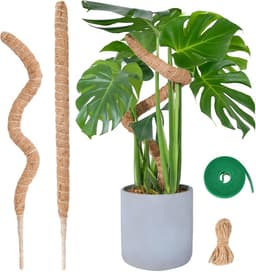
Mactoou Mactoou (4 × 41 cm)

Alternative

Mactoou Mactoou (4 × 41 cm)
8.8/10about £11.99
Aileem Aileem (2 × 60 cm)

Best value

Aileem Aileem (2 × 60 cm)
8.4/10about £7.99
On this page

Same word, two products

Coconut coir is husk fibre wrapped around PVC or aluminium. Sphagnum poles pack bog moss around a core, sometimes so you can refill it. The RHS shop calls its coco product a moss pole: coir on plastic, about £6.99 to £16.99, near 4 to 4.5 cm across. Extendable sphagnum poles from other UK sellers start around £17, and they were not scored here. Coir is scaffolding you tie against. Sphagnum is a damp column roots can enter. The RHS says these climbers may root into a moist moss or coir covering. Damp coir is allowed for epipremnum. The two fibres still differ in water hold and upkeep.

When coir is enough

Buy coir when the job is to tie. A young plant in a UK flat often needs a stake, soft ties, and a pole that stops the stem flopping across a radiator. Dry coir in these thin sleeves behaves as that stake. Reviewers praise it on small monsteras and philodendrons. They do not describe root mats in the fibre. Coir dries faster than sphagnum in a heated room, so the sleeve is less likely to mould, and roots rarely attach unless you mist. Coir is a by-product, with salt-washing notes in RHS compost advice. It is not peat taken from a bog. If you wanted upright growth and the odd tie, the rows from about £7.99 to £14.99 are the amazon.co.uk path here. Length and joints are in the moss pole buying guide. Do not buy sphagnum if you will never keep it damp.

When you want roots in the pole

Choose sphagnum, or a mesh pole you pack yourself, when aerial roots gripping the support matter and you will water the column. Revised comparisons stress anchorage against a moist rooting surface, and they drop the older claim that dry coir pulls water out of aerial roots. Dry coir does not offer the same hold. It is not automatically harmful. Keeping sphagnum damp means misting or pouring onto the moss, and keeping the compost below out of standing water. If you will drop that after a fortnight, the moss dries and you have paid for capacity you do not use. Coir, used honestly as a stake, can be the better fit. Neither fibre in this amazon.co.uk set was trialled here for leaf size. The RHS links mature cheese-plant foliage to climbing on a moist support in general, not to a slim stick near £8.

Peat, bogs and what not to claim

Sphagnum builds peat. Uprooting a wild plant, including bog moss, without the landowner's permission breaches the Wildlife and Countryside Act 1981. Do not harvest a bog for a homemade pole. A March 2026 written answer says the government intends to legislate on peat and peat-containing products when parliamentary time allows. That does not certify these coir poles as peat-free, and it does not mean a shop banner has already banned them. Coir is not peat. A material row that says wood, while the bullets say PVC or aluminium, is a listing conflict, not hidden sphagnum.

Which job you are buying

If you will tie a stem and you may leave the sleeve dry, stay with coir and shop inside the comparison. If you will keep a column moist so aerial roots can grow into it, shop a sphagnum or mesh pole outside that table. Do not pull moss from a bog, and do not read a coir listing's wood row as a moss core.

Common questions

Is the brown fur on these poles moss?
No. In this comparison it is coconut coir. A real moss pole is labelled and sold as sphagnum, or as a mesh kit you pack, and it is a different purchase from these coir sleeves.
Will roots grow into coir if I never wet it?
Unlikely. Attachment needs a damp covering, which is what RHS climber advice describes. Dry coir is support you tie to. It does not become a rooting surface by sitting in the pot.
Is sphagnum worth the extra work in a heated UK room?
Only if you will keep the column moist. Otherwise coir used as a dry stake matches how many amazon.co.uk buyers actually run these products. A dried sphagnum pole is capacity you are not using.
Does dry coir damage aerial roots?
Revised specialist guidance focuses on the lack of attachment, not on roots being drained by dry fibre. Dry coir does not offer the same hold as damp sphagnum. That is not the same as a claim that it harms the root.
Is a coir pole peat-free?
Coir is not peat. These listings were not audited here for a certification mark. Peat policy for compost is a separate question from the fibre on a pole.
Can I pull sphagnum off a bog for a homemade pole?
No. Taking a wild plant, including bog moss, without the landowner's permission is unlawful under the Wildlife and Countryside Act 1981. Buy retail moss, or use coir.
Which of the ten products is sphagnum?
None. All ten kept listings are coir. The RHS shop still calls its coco pole a moss pole, which is trade naming for the support. Read the material line. A row that says wood does not turn the sleeve into sphagnum.

Related pages

Sources

Public UK sources used for this comparison. Shelf prices, stars and review counts are the amazon.co.uk figures captured for these ten listings. Last checked 22 October 2026.

  1. RHS: how to grow Swiss cheese plants (retrieved 22 October 2026)
  2. RHS: philodendron growing guide (retrieved 22 October 2026)
  3. RHS: epipremnum growing guide (retrieved 22 October 2026)
  4. RHS: coir questions answered (retrieved 22 October 2026)
  5. RHS: how to tie in climbers (retrieved 22 October 2026)
  6. General Product Safety Regulations 2005 (retrieved 22 October 2026)
  7. Consumer Rights Act 2015: goods rights (retrieved 22 October 2026)
  8. GOV.UK: guidance for safe foraging (retrieved 22 October 2026)