Independent comparisons. We may earn from shop links. More info

How to attach trellis to a fence without splitting it

Updated: October 2026

You have opened the lattice against the fence, but the box contains no obvious screw kit and the adhesive hooks look too small for a windy garden. Attaching trellis to a fence starts with the surface. Sound timber can take suitable exterior screws, masonry needs the correct plugs, and a framed topper needs support from posts rather than fence boards alone. Thin pine also needs gentle handling and pilot holes. The steps below assume the panel or obelisk is already in your hands. Listings and prices are on the [lawn trellis comparison](/hub/plant-accessories/lawn-trellis). A qualifying purchase can earn us a commission at no extra cost to you.

You have opened the lattice against the fence, but the box contains no obvious screw kit and the adhesive hooks look too small for a windy garden. Attaching trellis to a fence starts with the surface.

Our top picks

Gardman Gardman 07250 lattice

Best overall

Gardman Gardman 07250 lattice
9.3/10about £7.14
RAM ONLINE RAM 2 m obelisk

Rank 2

RAM ONLINE RAM 2 m obelisk
8.5/10about £8.95
KANTA KANTA 3-pack lattice

Best value

KANTA KANTA 3-pack lattice
8.9/10about £13.99
On this page

Check what is not in the box

Lay out every part before marking the fence. The wooden listings mention nails, hooks or brackets without listing a complete kit. KANTA tells you to use brackets and screws, while one Bamworld review describes pre-drilled holes but no fixings. Buy exterior-grade hardware suited to both surfaces, and ensure no screw emerges through a thin fence board. Treat stick-on hooks cautiously on rough timber. XIANTIAN reviewers report hooks falling from wooden fences within hours. Inspect for split strips, loose rivets, sharp ends and protruding nails. LATERN reviews mention rear nails, while Bamworld has a reported break at a knot. Do not install a damaged panel and hope the fixing holds it together. If you have not chosen the construction yet, start with the lawn trellis buying guide.

Fix a light lattice to a fence or wall

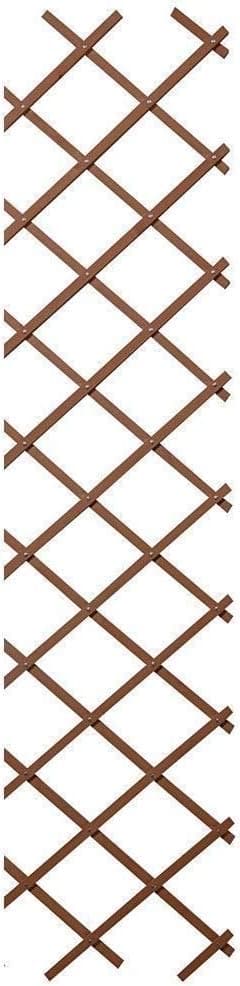
Decide the final opened size on the ground. Expanding a lattice farther sideways reduces its height, so set the shape before transferring marks. Hold it against the fence with the lower timber clear of soil. RHS guidance for wall-trained climbers suggests placing the bottom of timber about 30 cm above soil and leaving roughly 5 cm between support and wall. Check that the fence is sound. Light lattice can attach to sound boards or rails, but a framed topper needs posts. If posts move or the boundary is shared, ask a competent fencer before adding weight. Drill pilot holes through thin pine. Gardman and KANTA reviews report splitting without them. Match the hole to the screw and timber, and tighten only until held. If the lattice tops a boundary, check the trellis fence-height rules before drilling.
Gardman Gardman 07250 lattice

Testsieger

Gardman Gardman 07250 lattice
9.3/10about £7.14

Put an obelisk or coated frame in the ground

Assemble a freestanding support on a flat surface and compare the parts with the instructions. RAM's listing says assembly is not required, yet UK reviewers describe nuts and bolts, including missing fasteners and a build that can need two people. Count the hardware first, keep connections loose until the frame is aligned, then tighten evenly. Its legs are stated to enter soil by 40 cm, but that seller claim is not a guarantee in shallow, stony or waterlogged ground. Prepare holes instead of forcing light tubes through compacted soil. MYMULIKE says to pre-drill the ground and insert the longest pipes as the lower layer. Reviews mention snapped plastic joints. Set flowlamp's clipped shape before loading it with stems. Test stability with a gentle hand load before tying in the plant. A small obelisk can often be pushed into prepared soil. The RHS notes that larger supports may need a footing. If the frame rocks, do not rely on the climber to brace it.

Tie in the climber without damaging it

Install the support before planting where possible. Against a wall, the RHS suggests planting around 30–45 cm out rather than in the dry rain shadow beside the masonry. Guide stems towards the lattice without bending them sharply, then use soft garden twine or purpose-made soft ties. Wire and tight plastic twist ties can cut into stems as they thicken. Climbing roses need tying because they do not cling. Train flexible young stems while they are manageable, and loosen any tie that starts to cut in. Clematis stems are more fragile: handle them near a leaf joint and use a loose figure-of-eight tie. RHS clematis guidance calls for at least 2.5 cm of standoff. Recheck fixings after wind. Wood against a fence and a frame in the bed are different objects. The choice is on the wood-or-metal guide.

Common questions

Can I use stick-on hooks on a wooden fence?
Only if the hook maker rates them for exterior, textured timber and the expected load. XIANTIAN buyers report supplied or associated adhesive hooks falling from timber fences within hours. Screws into sound timber are more dependable for a growing climber, provided you pre-drill thin lattice strips.
Do I need battens behind a trellis?
Battens are useful when you need a gap for air and twining stems or must reach sound structure behind a surface. RHS general guidance suggests about 5 cm off a wall. A light fence lattice may use spacers, while a framed topper needs a fixing system supported by suitable posts.
How do I stop pine splitting?
Inspect the strip, mark away from existing splits or knots and drill a pilot hole before inserting the screw. Tighten only enough to hold the lattice. There is no single drill-bit diameter for every panel and screw, so match it to the fixing.
How deep should obelisk legs go?
Follow the product instructions and ground conditions. RAM claims 40 cm penetration, but shallow or stony soil may prevent that. A small obelisk can be pushed into prepared ground. A larger or unstable structure may need a proper footing, as RHS guidance notes.
When should a professional take over?
Ask a fencer or appropriate tradesperson if posts are rotten, the boundary is shared, a framed topper lacks sound post support, or the finished enclosure may exceed planning limits. Use a competent installer for masonry when you cannot identify the substrate or safely avoid buried services.
Does adding trellis change fence height?
Yes, if the trellis becomes part of the boundary enclosure, its height is considered with the fence. Permission limits differ across the four UK nations and may be restricted further by listed status, conservation-area rules, Article 4 directions or planning conditions.

Related pages

Sources

Public UK sources for fence height, climber training, timber treatment and consumer law, plus the amazon.co.uk listing facts in the display file. Shelf prices and star lines are those UK figures, from about £7.14 to about £29.99.

  1. England Class A: gates, fences, walls and other means of enclosure (retrieved 16 October 2026)
  2. Planning Portal: fences, gates and garden walls (retrieved 16 October 2026)
  3. Scotland Class 3E: gates, fences, walls and other means of enclosure (retrieved 16 October 2026)
  4. Welsh Government: planning permission for fences, gates and garden walls (retrieved 16 October 2026)
  5. Northern Ireland 2015 Order, Part 3, Class A (retrieved 16 October 2026)
  6. RHS: training climbers on planting (retrieved 16 October 2026)
  7. BSI: BS 8417, preservation of wood, code of practice (retrieved 16 October 2026)
  8. Consumer Rights Act 2015, section 9 (retrieved 16 October 2026)