Independent comparisons. We may earn from shop links. More info

How to use a bulb planter

Updated: 22 October 2026

The bag of tulips is open, the cone is in your hand, and the first hole already feels too shallow or the soil will not drop out. A bulb planter only makes a hole. The bulb’s height sets the depth, and the nose goes up. This page is the sequence for a UK garden: water if the ground is dry, cut the plug, set the bulb, put the plug back. It does not rank the eleven listings in the [flower bulb planter comparison](/hub/plant-accessories/flower-bulb-planter). If you still need to know which type you bought, the [bulb planter buying guide](/hub/plant-accessories/flower-bulb-planter/sub/flower-bulb-planter-buying-guide) is the criteria. Prices were captured on 19 October 2026. This is not a laboratory soil test. A purchase through our links may earn a commission at no extra cost to you.

The bag of tulips is open, the cone is in your hand, and the first hole already feels too shallow or the soil will not drop out. A bulb planter only makes a hole. The bulb’s height sets the depth, and the nose goes up.

Our top picks

Gardena Gardena 3412-20

Best overall

Gardena Gardena 3412-20
9.1/10about £15.49
Fiskars Fiskars Ergo

Alternative

Fiskars Fiskars Ergo
7.9/10about £36.99
Draper Draper 21861

Best value

Draper Draper 21861
8.3/10about £8.49
On this page

Before the first hole

Measure the bulb. RHS planting puts most bulbs at two to three times their height: a 5 cm bulb wants a 10–15 cm hole, nose up, spaced at least twice the bulb’s width. Daffodils are often at three times their height. If your tool stops at 100 mm or 9.4 cm, a large daffodil may need a second bite or a trowel. The marks are a scale, not the RHS depth. Water dry ground the night before. A dry crust is where hand cones skate and cheap chrome buckles. Wear closed-toe shoes on a foot tread, and keep fingers out of spring handles. Gloves help if tulip bulbs irritate your skin. Know the release before you kneel. Gardena dumps with a trigger. Draper and Spear & Jackson squeeze spring handles. Fiskars Ergo uses a lever. Eadwiella has no opening action, so you tap. Standing tubes without a lever often push the last plug out on the next hole.

Hand planter sequence

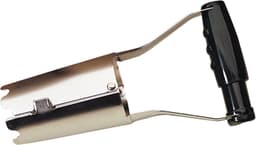
Kneel beside the mark. Push the cone in with a slight twist so the teeth cut rather than compress. Lift the plug and check the hole against the bulb. If it is short, go again or switch to a trowel. Drop the bulb nose up. The pointed tip faces the sky. The basal plate, often flatter and with dried roots, faces down. A daffodil planted nose-down wastes energy and may flower late or not at all. On Gardena, squeeze the trigger. On a spring handle, squeeze the grips. Firm with your hand or a shoe so there is no air pocket. Space the next hole at least twice the bulb’s width, working around existing plants rather than a grid. If the plug stays in the cone, invert it and tap the rim, or poke the core with a stick. Do not lever spring handles until they fire. Wipe the cone before mud dries in the hinge.
Gardena Gardena 3412-20

Testsieger

Gardena Gardena 3412-20
9.1/10about £15.49

Standing planter sequence

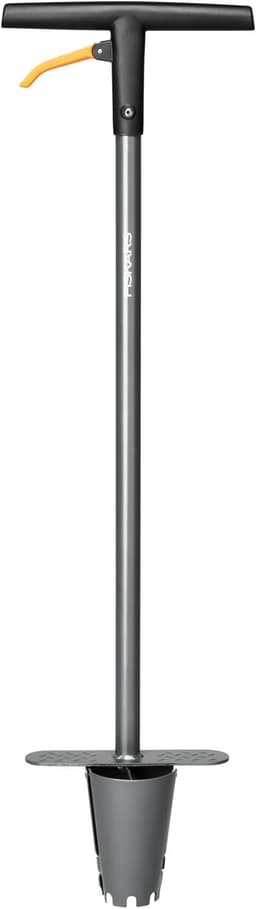
Stand over the mark with the shaft vertical. Put your foot on the tread, drive the head in, then twist and lift. The Fiskars lever dumps the core. On BARAYSTUS, Orientools and the Jardineer long tools the next hole often extrudes the last plug, or you tap the tube. Set the bulb nose up, return the plug flush and firm it with your foot. Closed-toe shoes matter. A trainer on a metal tread is how a slip starts. Fiskars lists up to 15 cm, which covers a 5 cm bulb at three times. Orientools lists 9.4 cm, which does not. If the head bottoms out, do not hop on the T-handle. Take a second bite or use a trowel. A floppy bolted joint is the point to stop. Sticky loam packs a standing tube. Poke from the top with a stick if the plug will not move.

When the plug sticks or the hole is too shallow

A stuck plug is soil physics until the cone distorts. Invert and tap, or poke with a stick. On a tube, cut the next hole so the old core extrudes. Damp plugs that will not drop are already in the Spear & Jackson reviews in this set. That is the soil, not a separate defect. A shallow hole means the listed maximum is shorter than the bulb needs. Draper’s 100 mm and a 5 cm daffodil at three times its height do not meet. Take a second bite or use a trowel. Do not jump on a bending cone. UK texts say Draper buckles in hard lawn, and the Jardineer long handle bent after about 20 holes. Consumer Rights Act 2015 covers a cone that crumples in ordinary soil. It does not cover stamping dry clay until the chrome folds. Stop if a fork will not open the ground, if you suspect a cable, or if your back has had enough. For turf scatter and the mowing pause, use plant bulbs in a lawn. For the shaft and the tread, use the long handled bulb planter page.

Common questions

What are the steps?
Water dry ground the night before. Push or tread the cone in with a twist, lift the plug, check the depth against the bulb’s height, drop the bulb nose up, and return the plug. Firm so there is no air gap. Space holes at least twice the bulb’s width. The tool only cuts the hole. The RHS two-to-three-times rule still sets how deep that hole should be.
Which way up does the bulb go?
Nose up. The pointed growing tip faces the sky. The basal plate, usually flatter, faces down. That is the same for tulips, daffodils and crocus. A bulb planted upside down will often still shoot, but it spends the season correcting itself and may not flower. If you cannot see a nose, look for dried roots on the base.
How deep for tulips and daffodils?
Most bulbs at two to three times their height, and daffodils often at three times. A 5 cm bulb needs a 10–15 cm hole. In grass, RHS says no deeper than three times. If your tool maxes at 100 mm or 9.4 cm, take a second bite or use a trowel. Depth marks on the cone are a scale, not a certificate that the hole is deep enough.
Why will the plug not drop?
Sticky or damp soil packs the cylinder. Invert and tap, poke with a stick, or on a standing tube cut the next hole so the old plug extrudes. Gardena’s trigger and Fiskars’ lever are built for this. Eadwiella has no opening action. Do not lever spring handles until they fire. A wipe after the job stops the next session starting with a mud hinge.
Should I water first?
Yes if the ground is dry. Water the night before so the crust softens. You are not flooding a clay pan into compost. Wet, smearing soil can stick in the cone, which is the opposite problem. In a normal UK autumn the soil is often already workable. Water is for the dry spell before you plant.
When do I stop and use a trowel instead?
When the listed maximum is shallower than the bulb needs, when the cone starts to bend, when stones stop the twist, or when the hole is among plants a cylinder cannot miss. A trowel is slower and kinder in a tight border. The planter’s job is a clean plug in open soil, not a hole everywhere a bulb might fit.

Related pages

Sources

Public UK sources used for this comparison. Shelf prices, stars and review counts are the amazon.co.uk figures captured for these eleven listings. Last checked 19 October 2026.

  1. RHS, Bulbs: planting tips (retrieved 19 October 2026)
  2. RHS, How to plant bulbs in grass (retrieved 19 October 2026)
  3. RHS, How to grow daffodils (retrieved 19 October 2026)
  4. BBC Gardeners’ World Magazine, Best bulb planters (Oct 2024) (retrieved 19 October 2026)
  5. BBC Gardeners’ World Magazine, How to plant bulbs in lawns (retrieved 19 October 2026)
  6. GARDENA UK, Bulb Planter 3412-20 (retrieved 19 October 2026)
  7. GOV.UK, General Product Safety Regulations 2005 (retrieved 19 October 2026)
  8. Business Companion, GPSR producers (retrieved 19 October 2026)
  9. amazon.co.uk, Draper 21861 (retrieved 19 October 2026)