Independent comparisons. We may earn from shop links. More info

How to choose a bulb planter

Updated: 22 October 2026

You are standing in a UK garden in late September with daffodils, a trowel that already hurts, and thumbnails that make an £8 hand cone look like a £37 standing tool. A bulb planter is a hollow steel cone that lifts a plug of soil so you can drop a bulb at a known depth and put the plug back. The right buy depends on the job, the soil and the hole, not on the highest star line. This page is the criteria. The eleven amazon.co.uk listings are in the [flower bulb planter comparison](/hub/plant-accessories/flower-bulb-planter). Prices and stars were captured on 19 October 2026. This is not a laboratory soil test. A purchase through our links may earn a commission at no extra cost to you.

You are standing in a UK garden in late September with daffodils, a trowel that already hurts, and thumbnails that make an £8 hand cone look like a £37 standing tool.

Our top picks

Gardena Gardena 3412-20

Best overall

Gardena Gardena 3412-20
9.1/10about £15.49
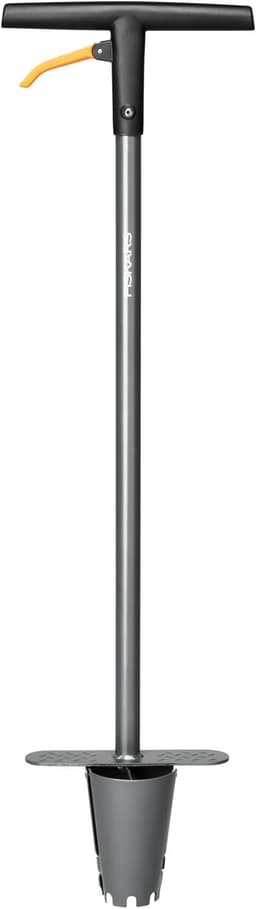
Fiskars Fiskars Ergo

Alternative

Fiskars Fiskars Ergo
7.9/10about £36.99
Draper Draper 21861

Best value

Draper Draper 21861
8.3/10about £8.49
On this page

Hand cone or standing shaft

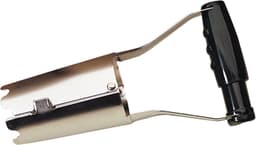
Start with your body and the bulb count, then the soil. A handheld cone means you kneel or bend. That fits a few dozen bulbs in a prepared border, a pot or a trough. It is not a standing lawn machine, even when the listing says turf. A long-handled planter is a 90–100 cm shaft with a foot tread, so you plant upright. That is the tool for a lawn drift of 50–150 bulbs, or for anyone who cannot kneel. The extra money buys the shaft, not a different horticultural rule. If knees or a lawn are why you are shopping, the long handled bulb planter page is the next read. Compacted turf and dry clay punish a light chrome cone. Water dry ground the night before. If a fork will not open the ground, stop.

Depth marks are not the bulb’s depth

The RHS rule is two to three times the bulb’s height: a 5 cm bulb goes in a 10–15 cm hole, nose up, spaced at least twice the bulb’s width. Daffodils are often planted at three times their height, and in grass you should not go deeper than three times. That is a horticultural depth, not a promise on the tool. Draper 21861 states 50–100 mm. Orientools lists 9.4 cm. Fiskars Ergo lists up to 15 cm. Gardena shows a depth scale without a numeric maximum. A 100 mm head can plant a small crocus and still leave a 5 cm daffodil too shallow. Measure the bulb. If the tool maxes out first, take a second bite, use a trowel, or buy a deeper head. About 60 mm of core covers many tulips. The Jardineer 9 inch transplanter is not a 60 mm turf cylinder.
Gardena Gardena 3412-20

Testsieger

Gardena Gardena 3412-20
9.1/10about £15.49

Steel, teeth and how the plug leaves

Stainless versus coated steel is a rust and stiffness trade. Spear & Jackson 3060EL is the stainless hand body at about £9.99. Gardena’s cone is steel with a Duroplast coat. A serrated base helps in turf. Ignore a title that says stainless when a bullet says carbon steel, as Eadwiella does, if a clean spec matters. Gardena’s trigger dumps sticky border loam. Spring handles on Draper and Spear & Jackson suit lighter compost. Eadwiella has no opening action. Standing tubes often push the last plug out on the next hole. Fiskars Ergo has a lever. Cheap standing models fail at bolted joints: the Jardineer long handle had bolts that did not fit, and a cone that bent after about 20 lawn holes. Garden tools under the General Product Safety Regulations 2005 do not need UKCA by default. A cone that crumples in ordinary soil is a Consumer Rights Act 2015 point.

What to spend in this amazon.co.uk set

Shelf prices here were checked on 19 October 2026. Entry hand cones run about £8–12. Draper 21861 at about £8.49, with 4.2 from 2,363 reviews, is the cheapest high-sample listing. Gardena 3412-20 is about £15.49 with 4.5 from 2,400 reviews. Standing tools run about £26–37, up to Fiskars Ergo at about £36.99. Spend at the bottom for pots and a prepared border if you will not stamp the cone into dry lawn. Spend on a standing shaft if you cannot kneel or you are naturalising a drift. The 2024 Gardeners’ World Best Buys named Kent & Stowe and Fiskars Xact, and those SKUs are not in this table. Named picks are on the best bulb planter UK page.

Decide the type before the model

If you can kneel, choose a hand cone and check the listed maximum against the bulb. If you cannot kneel, or you are planting 50–150 bulbs through turf, pay for a standing shaft and check the head reaches two to three times the bulb’s height. If the tool is already on the way, use how to use a bulb planter.

Common questions

Hand cone or long handle?
A hand cone is the fit for a few dozen bulbs in a prepared border, pot or trough, where you can kneel. A long handle, about 90–100 cm with a foot tread, is the fit if you cannot kneel or you are planting a lawn drift of 50–150 bulbs. The extra spend buys the shaft, not a different RHS depth rule. Match the tool to the job first, then check the listed maximum depth.
How deep must the tool go for daffodils?
RHS guidance plants most bulbs at two to three times their height, and daffodils often at three times. A 5 cm bulb therefore wants a 10–15 cm hole. Draper’s listed maximum is 100 mm and Orientools lists 9.4 cm, so those heads can leave a large daffodil too shallow if you stop at the stop. Fiskars Ergo lists up to 15 cm. Measure the bulb; do not assume the marks equal RHS depth.
Stainless or coated carbon steel?
Stainless, as on Spear & Jackson 3060EL, shrugs off wet storage better. Coated carbon steel, as on several standing listings, is stiff if the coat holds. Neither metal plants a bulb by itself. Ignore a listing that says stainless in the title and carbon steel in a bullet if a clean spec matters to you. Choose steel after you have chosen handle length and hole depth.
Will it work in clay?
Only if the ground will take a fork. Dry clay and compacted lawn are where UK texts say light chrome cones buckle, and where one BARAYSTUS buyer returned the standing tool. Water the night before. If the head distorts, stop; that is a rights issue, not a reason to jump harder. A standing serrated head is the more honest clay attempt in this set, though it is still not a crowbar.
Is a £9 Draper enough?
It is enough for pots, troughs and prepared borders, with a stated 60 mm core and 50–100 mm depth, and 2,363 reviews behind the 4.2 line. It is not enough as a standing lawn plugger. UK texts say the cone can buckle if you lean on it in grass or hard clay, and 100 mm is shallow for a large daffodil under a three-times rule. Treat it as a border tool.
What diameter for tulips versus crocus?
About 60 mm, as on Draper 21861, covers many tulips and daffodils. Crocus corms can share a hole. A large allium may need a wider head or a trowel. Orientools prints 8.9 cm, which is generous for the bulb and still only 9.4 cm deep. Diameter without depth still leaves a daffodil too high. Check both numbers, then the bulb in your hand.

Related pages

Sources

Public UK sources used for this comparison. Shelf prices, stars and review counts are the amazon.co.uk figures captured for these eleven listings. Last checked 19 October 2026.

  1. RHS, Bulbs: planting tips (retrieved 19 October 2026)
  2. RHS, How to plant bulbs in grass (retrieved 19 October 2026)
  3. RHS, How to grow daffodils (retrieved 19 October 2026)
  4. BBC Gardeners’ World Magazine, Best bulb planters (Oct 2024) (retrieved 19 October 2026)
  5. BBC Gardeners’ World Magazine, How to plant bulbs in lawns (retrieved 19 October 2026)
  6. GARDENA UK, Bulb Planter 3412-20 (retrieved 19 October 2026)
  7. GOV.UK, General Product Safety Regulations 2005 (retrieved 19 October 2026)
  8. Business Companion, GPSR producers (retrieved 19 October 2026)
  9. amazon.co.uk, Draper 21861 (retrieved 19 October 2026)