ZZ plant low light care: keep it healthy in a dim room
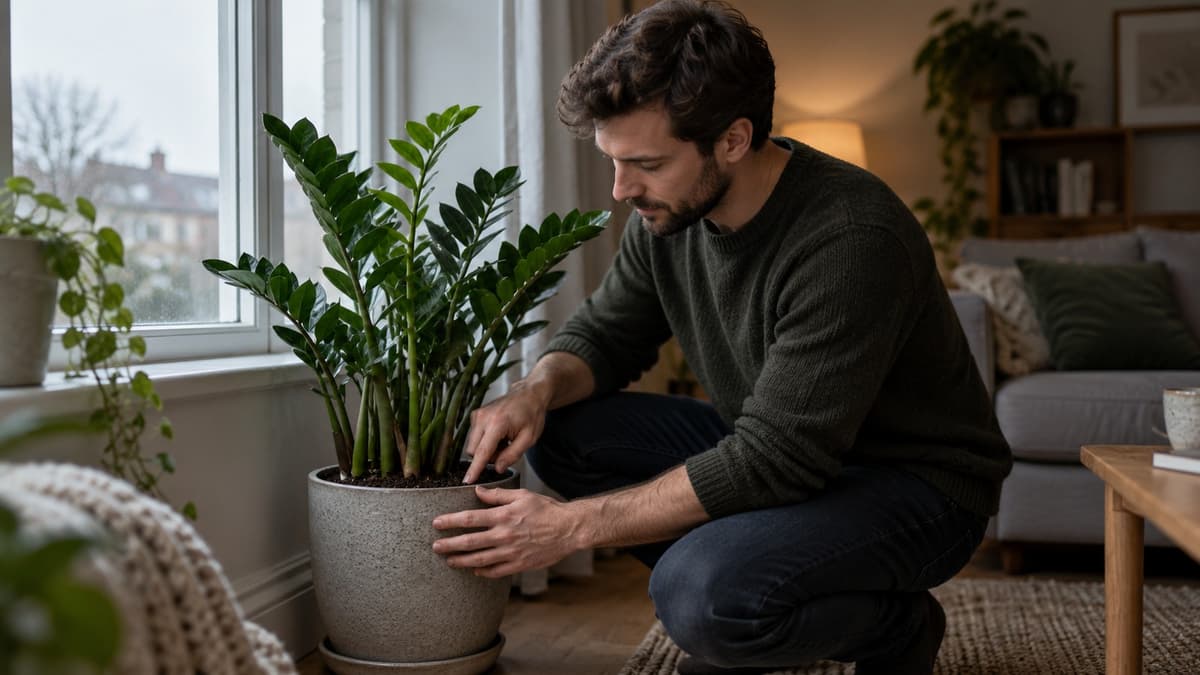
Learn how to keep a ZZ plant healthy in a dim British room, including sensible watering, winter temperatures, lamp use and signs of excess water.
On this page
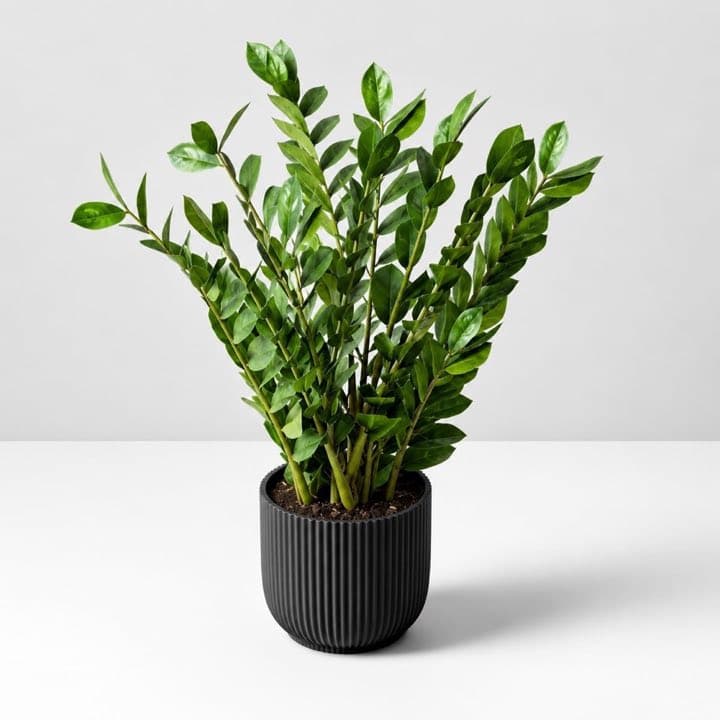
A north-facing sitting room can look bright enough to you while offering little energy for a houseplant, especially through a grey British winter. ZZ plant low light tolerance makes Zamioculcas zamiifolia a sensible candidate, but tolerance is not the same as vigorous growth. The practical bargain is simple: accept slow development, keep it indoors and resist watering compost that has not fully dried.
In short
A ZZ plant can live in indirect light or substantial shade, provided the room is not permanently dark. Let the compost dry completely before watering, keep the plant around 15–24°C where possible, and never leave the pot standing in water. In very poor light, a modest grow lamp can help, but it cannot correct wet compost or cold draughts.
Low light is allowed. No light is not
The useful feature of a ZZ plant is its ability to tolerate a position that would be disappointing for many foliage plants. The RHS describes conditions from indirect light to full shade, so a north-facing room, hall with borrowed daylight or ordinary office can work. That does not mean the plant will behave as it would in brighter indirect light. In a dim position, expect long pauses between new shoots and little visible change during winter.
Judge the position during the darkest part of the day, not at midday in June. If you can see natural daylight reaching the leaves and the room is used without electric lights during daytime, the plant has a realistic starting point. A windowless internal bathroom, closed cupboard or corner behind heavy curtains is different: “low light” should not become shorthand for no useful light at all.
Slow growth has one important consequence: the plant uses water slowly. Do not try to stimulate it by watering more frequently. The limitation in a dim room is light, while wet compost creates a separate and more immediate problem around the underground rhizomes. If you are still choosing a plant and pot, our ZZ plant comparison can help you assess the available options.
Water the compost, not the calendar
A ZZ plant stores resources in thick underground rhizomes, which helps it cope with missed watering. The same structure is vulnerable when compost stays wet for too long. The dependable rule is to let the compost dry completely, then water thoroughly and allow the excess to leave through the drainage holes. Tip away water collected in a saucer or decorative outer pot rather than letting the nursery pot soak in it.
Fixed schedules are especially unreliable in a British home. A pot might dry reasonably quickly near a bright window in May, then remain damp for weeks in the same room during December. Pot diameter, compost texture, central heating and the amount of leaf growth all alter demand. Check below the surface rather than adding a small drink because Sunday has come round again.
Yellowing leaves are a warning associated with overwatering. If they appear while the compost is wet, pause watering and inspect the setup before reaching for feed. Confirm that drainage holes are open, remove standing water and ask whether somebody else has also been watering. In an office, assigning one named person is more useful than leaving care to everyone's good intentions.
Self-watering containers deserve caution here. A reservoir can suit a thirsty species, but the design works by maintaining access to moisture; that conflicts with a ZZ plant's need to dry. If you already own one, do not assume the reservoir must always be filled. A straightforward draining nursery pot inside a removable cover pot makes the wet-or-dry decision easier to see.
Temperature in a British home
The comfortable temperature band cited for ZZ plants is approximately 15–24°C, which overlaps with many occupied British rooms. The bigger risks are local cold spots and abrupt changes. A plant can sit in a heated room yet experience a much lower temperature against a single-glazed window overnight, beside an opening external door or in an unheated conservatory.
The RHS hardiness classification H1B does not make it hardy in a British garden. It indicates a plant suited to indoor growing here, with only warm summer conditions outdoors at roughly 10–15°C. Frost, cold rain and a winter patio are outside that category. If you put the plant outside during a warm spell, treat the move as temporary and bring it in well before autumn nights become cold.
When a grow light is worth it
A grow light is optional for a ZZ plant, not standard equipment. First make free changes: open curtains during the day, clean dusty glazing, and move the plant nearer usable daylight without pressing it against cold glass. Then watch the position over several weeks. Slow growth alone is normal in shade and is not evidence of an emergency.
A lamp becomes reasonable when the only practical position is well inside a room, winter daylight is heavily obstructed or you want steadier growth than the site permits. It can also make sense in an office where blinds remain closed for screen visibility. The goal is a repeatable period of supplementary light, not continuous illumination. Plants still need a dark period, and a timer removes the need to remember the switch every day.
Choose equipment by how it fits the space and directs light onto the leaves, rather than by a dramatic listing photograph. A tiny USB lamp may cover one compact plant but not a broad arrangement. A powerful lamp placed too close can cause unnecessary heat or harsh exposure. Our plant lamp comparison is the relevant starting point if moving the pot is not enough.
Light does not cancel the watering rule. Even with a lamp, check that the compost has dried before watering; do not infer thirst from the mere presence of new equipment. Increase care gradually and observe the response. If the room remains cold, the pot has no drainage or roots sit in water, spending more on lighting addresses the wrong limitation.
A simple care routine
Keep the routine deliberately uneventful. ZZ plants suit owners who check conditions and then leave the plant alone when no action is needed. The following sequence separates useful maintenance from nervous interference:
- Check the light and temperature weekly. Make sure curtains have not begun blocking the plant, a radiator has not been switched on directly beneath it and leaves are not touching cold glass.
- Test the compost before considering water. Check below the surface and lift the pot if it is manageable. If moisture remains, put the watering can away and check later.
- Water fully only when the compost is dry. Let water pass through the pot, wait for it to finish draining, then empty the saucer or outer container.
- Feed cautiously during active growth. From April to September, half the pack rate is the conservative instruction used in RHS guidance for the Raven form. Do not feed as a response to winter dormancy or wet roots.
- Review the pot every two to three years. A ZZ plant tolerates being slightly root-bound. Repot only when crowding warrants it, moving up by a modest size and retaining free drainage.
What to skip
Skip the weekly splash of water. Small, frequent amounts make it harder to know which parts of the root ball are wet and encourage a permanently damp zone without properly flushing the compost. A full watering followed by a genuine dry period is easier to manage. In winter, that interval may be long, and waiting is an active care decision.
Skip standing water, sealed ornamental pots without an inner draining pot, and an automatically topped-up reservoir. These products are not inherently poor; they are simply mismatched to a plant that should dry between waterings. If appearance matters, use a cover pot but remove the inner pot to water and inspect the cover before replacing it.
Finally, skip extravagant claims about what the plant does to room air. The sound reasons to own a ZZ plant are its sculptural foliage, tolerance of neglect and ability to cope with lower light than many houseplants. Those benefits still have limits. Give it some daylight, indoor warmth and restraint with water, and it can be a calm presence rather than a recurring rescue project.
Common questions
Will a ZZ plant survive in a north-facing room?
How often should I water a ZZ plant in winter?
Why are my ZZ plant's leaves turning yellow?
Does a ZZ plant need a grow light?
Can a ZZ plant go outdoors in summer?
How cold is too cold for a ZZ plant?
When should I repot a ZZ plant?
Is a ZZ plant safe around pets?

Products Compared publishes British-English buying guides based on amazon.co.uk listings and public UK sources. We do not run a lab and we do not invent test scores.
Related articles

Self watering pot for holiday: a safer fortnight
Choose and test a self-watering pot for a holiday, match the wick to your plant, and avoid leaving drought-tolerant roots in wet compost for weeks.

USB grow light UK plug: check power before buying
Learn how to match a USB grow light to a safe UK plug, check 5 V wattage claims, estimate running costs and decide whether a power bank will work.

Protect pots from frost UK: winter cover guide
Learn how to protect patio pots from frost, choose fleece or insulation, manage winter wet and uncover plants safely during milder British weather.